
20+ Years Extruder Manufacturing Expert
Industrial Single Screw Extruders | Custom Lines for Pipes, Films, Sheets & Pellets
Our operators in Nanjing call this machine the “workhorse” because it runs three shifts without babysitting. Swapping a worn screw takes two guys and a standard wrench — no hydraulic puller, no waiting for a service tech.
CE Certified
ISO 9001:2015
SGS Verified
Factory Direct
5,600+Units Shipped Since 2005
12,000hNitrided Screw Life
±0.05mmWall Thickness Tolerance
−15%kWh/kg vs Older Models
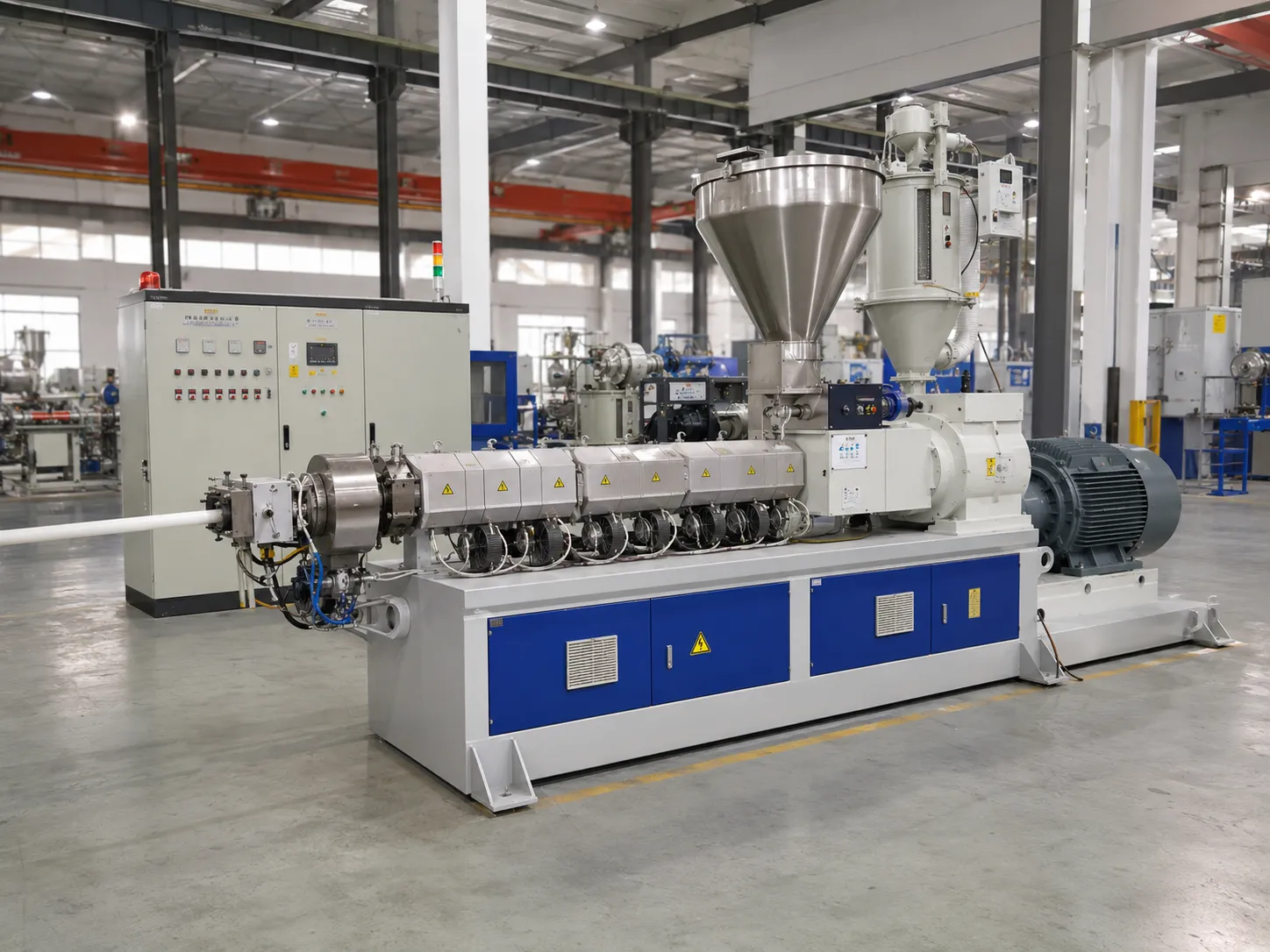
72-Hour Test Run Before Shipping
Shop-Floor Reality
What Actually Is a Single Screw Extruder?
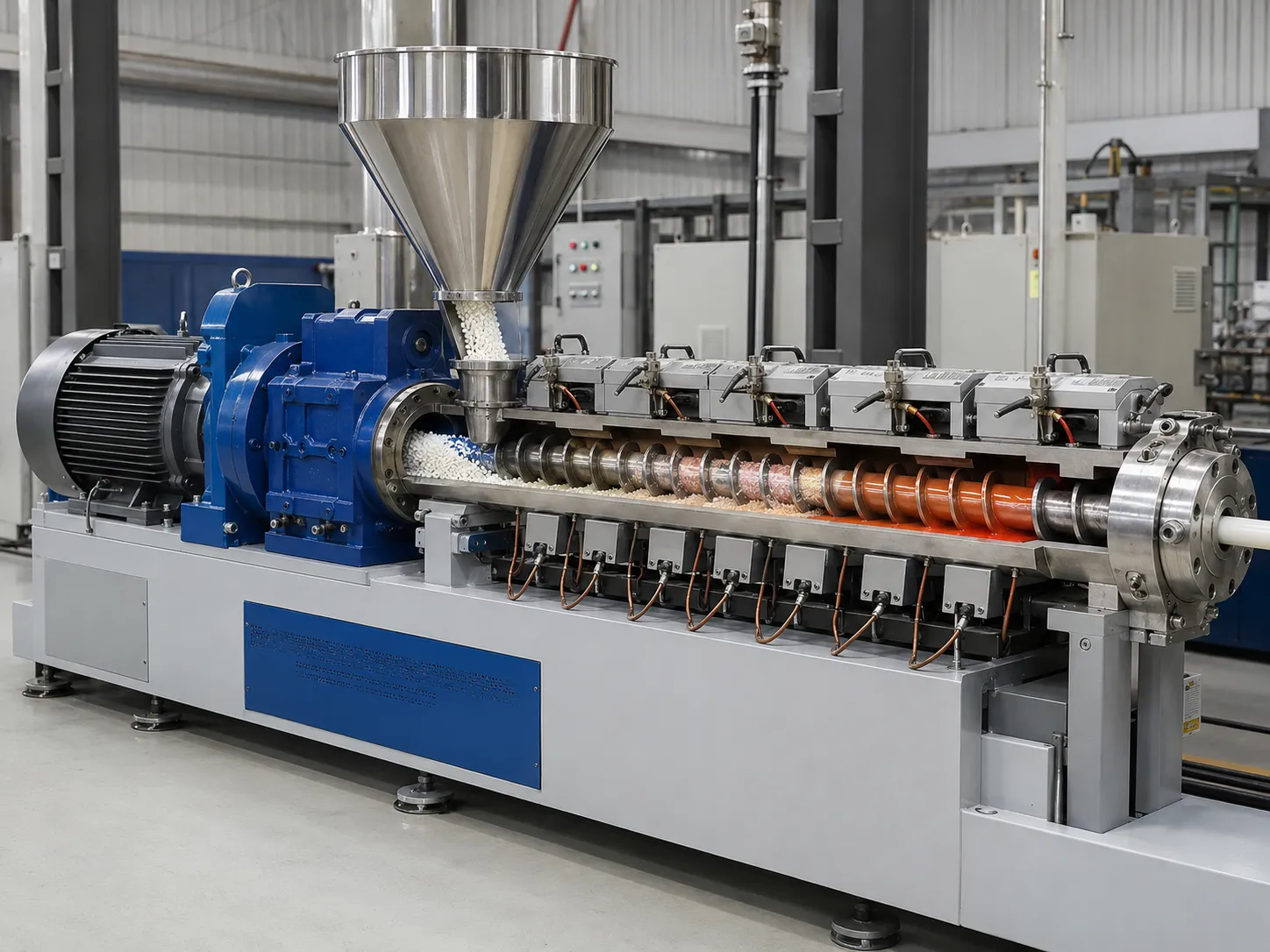
If you walk into any plastic pipe or profile factory in the world, the machine making the noise is probably a single screw extruder. It’s a simple, brutal concept: a heavy steel screw turning inside a heated barrel, dragging pellets forward, melting them against the hot wall, and pushing the melt out through a die.
The basic design hasn’t changed much since the 1950s because, frankly, nothing else does the job cheaper or more reliably. The platform has far fewer wear parts than a twin screw. At our Nanjing plant, we’ve shipped over 5,600 of these since 2005. The ones we built in 2012 are still running in Vietnam and Mexico today, holding the same wall-thickness tolerance they had on day one.
The rest of this page skips the marketing fluff. We’ll cover what the machine can actually run, where it fails, how to size it right, what it really costs, and how we test every single unit before it gets bolted to a shipping crate.
~70%of global extrusion capacity
8+Polymer families compatible
6+End-product categories
20+ yrsNanjing manufacturing base
Why Our Machines Last
Design Decisions That Lower Your Daily Operating Cost
We don’t build machines to look pretty on a brochure. We build them to survive the night shift when no maintenance guy is around.
Barrel Insulation
We wrap the barrel in aerospace-grade insulation blankets. It keeps the heat inside the plastic instead of warming up your factory floor, dropping the electricity bill by about 15%.
No Special Tools Needed
When a screw wears out, your maintenance guy can pull it out with a standard overhead crane and swap it in an afternoon. No waiting three weeks for a specialized hydraulic puller.
Zoned PID Control
Independent heating zones adapt to the specific melting curve of your resin. If Zone 3 gets too hot on PVC, it only affects Zone 3 — the whole barrel doesn’t degrade.
One-Click Recipe Recall
New operators make mistakes. Our HMI stores exact temperature and speed profiles for every material. The morning shift just hits “Load Recipe” and the machine runs itself.
15-Minute Purging
The barrel geometry doesn’t have dead spots where old material hides and carbonizes. Purging a color change takes 15 minutes instead of two hours of scraping.
Heavy-Duty Gearboxes
We overspec the gearbox torque rating by 20%. It costs us more upfront, but it means the gears won’t strip when the operator accidentally drops a metal bolt into the hopper.
The Lineup
Three Platforms We Actually Build in Nanjing
From small workshop trials to 24/7 continuous mass production. Pick the chassis, we engineer the screw around your material.
Best Value
General Type Series
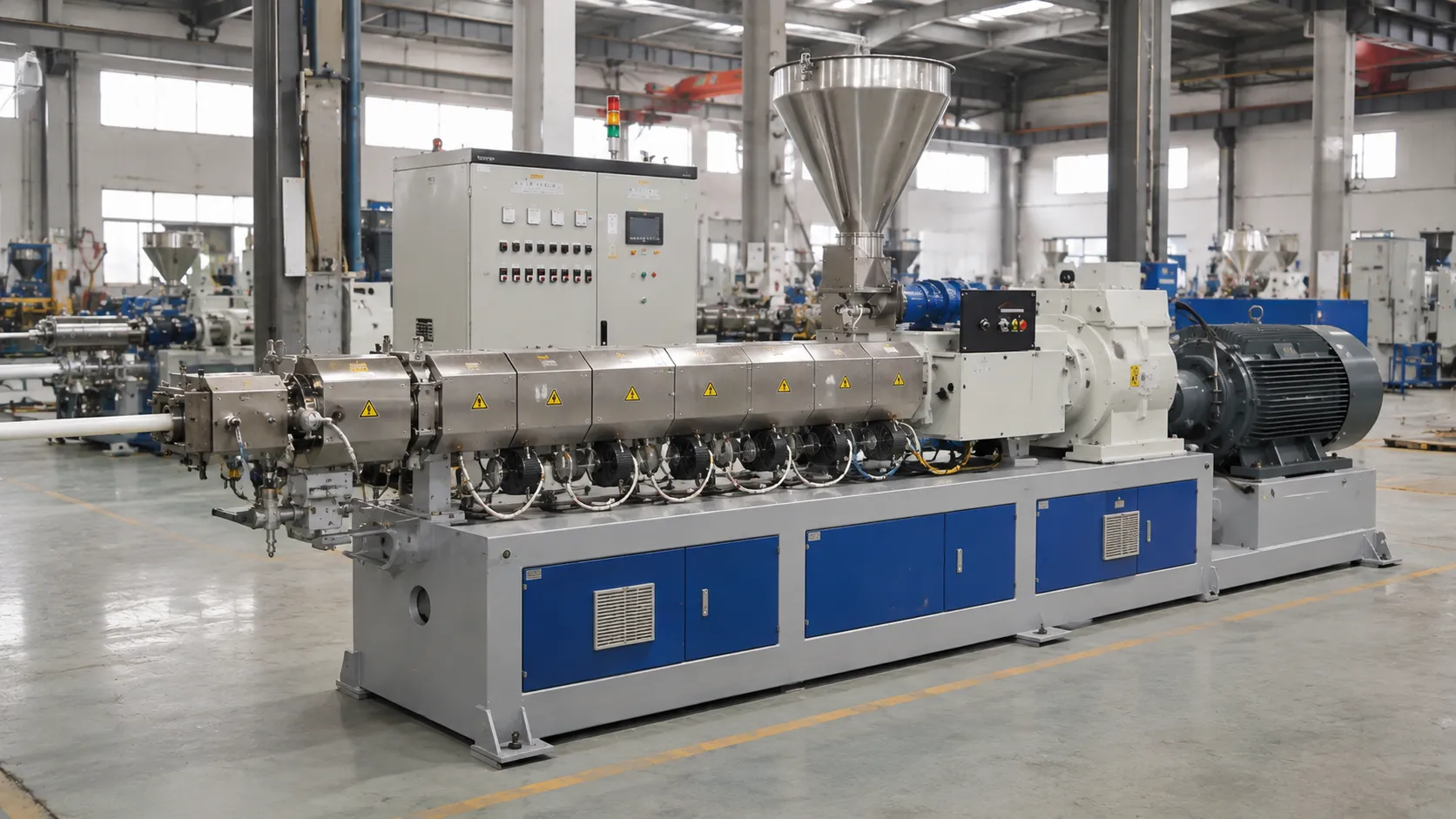
Tapered screw design specifically for PE/PP pipes and window profiles. Handles the daily abuse of a standard extrusion plant.
90–110 kg/hL/D 18–3535 kW
Get Quote
Most Popular
Energy-Efficient Series
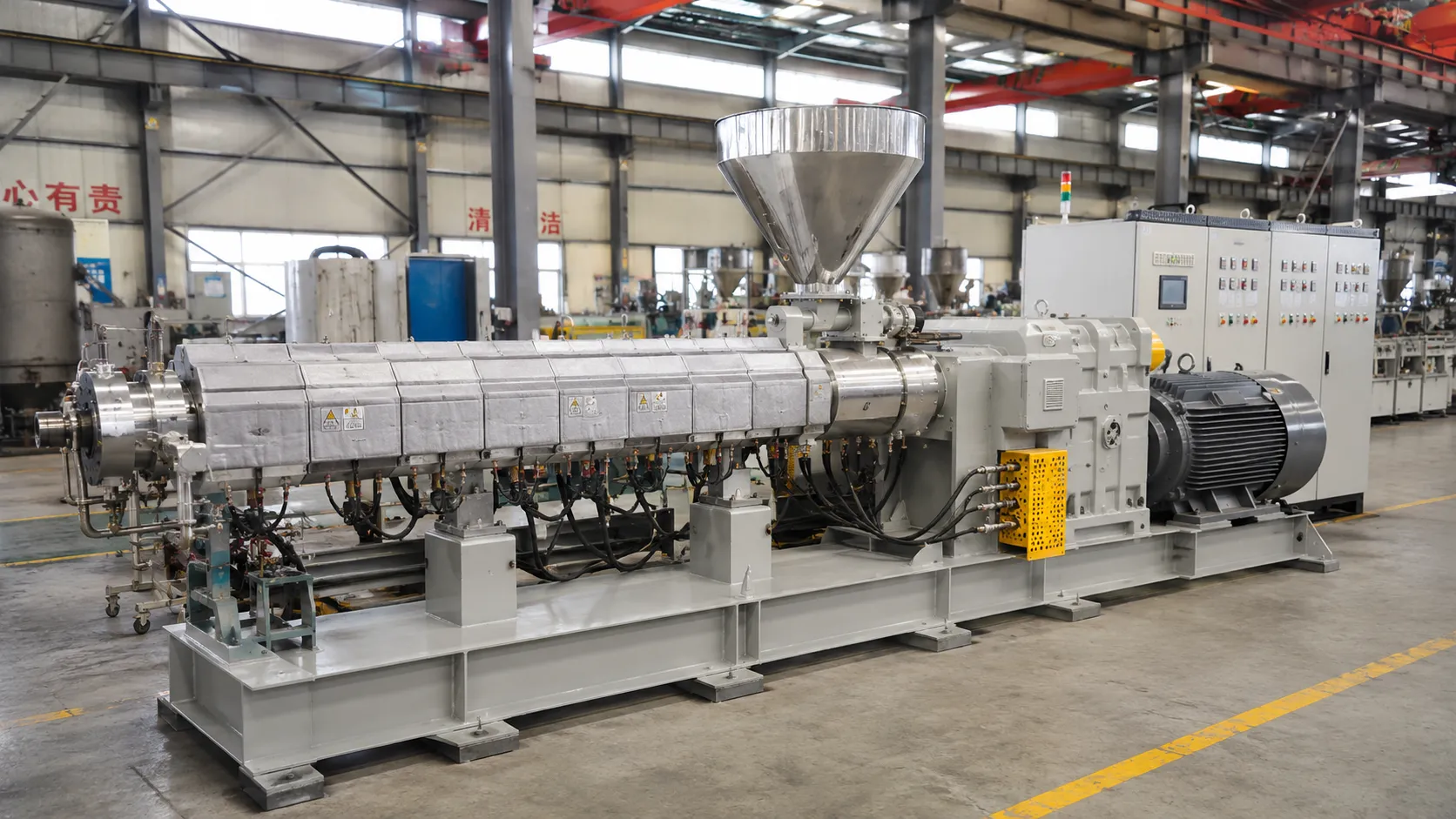
Insulated barrel + Siemens high-efficiency motor. This is the mainstream workhorse for pelletizing plants running 24/7 shifts.
550–650 kg/hL/D 18–35170 kW
Get Quote
Compact
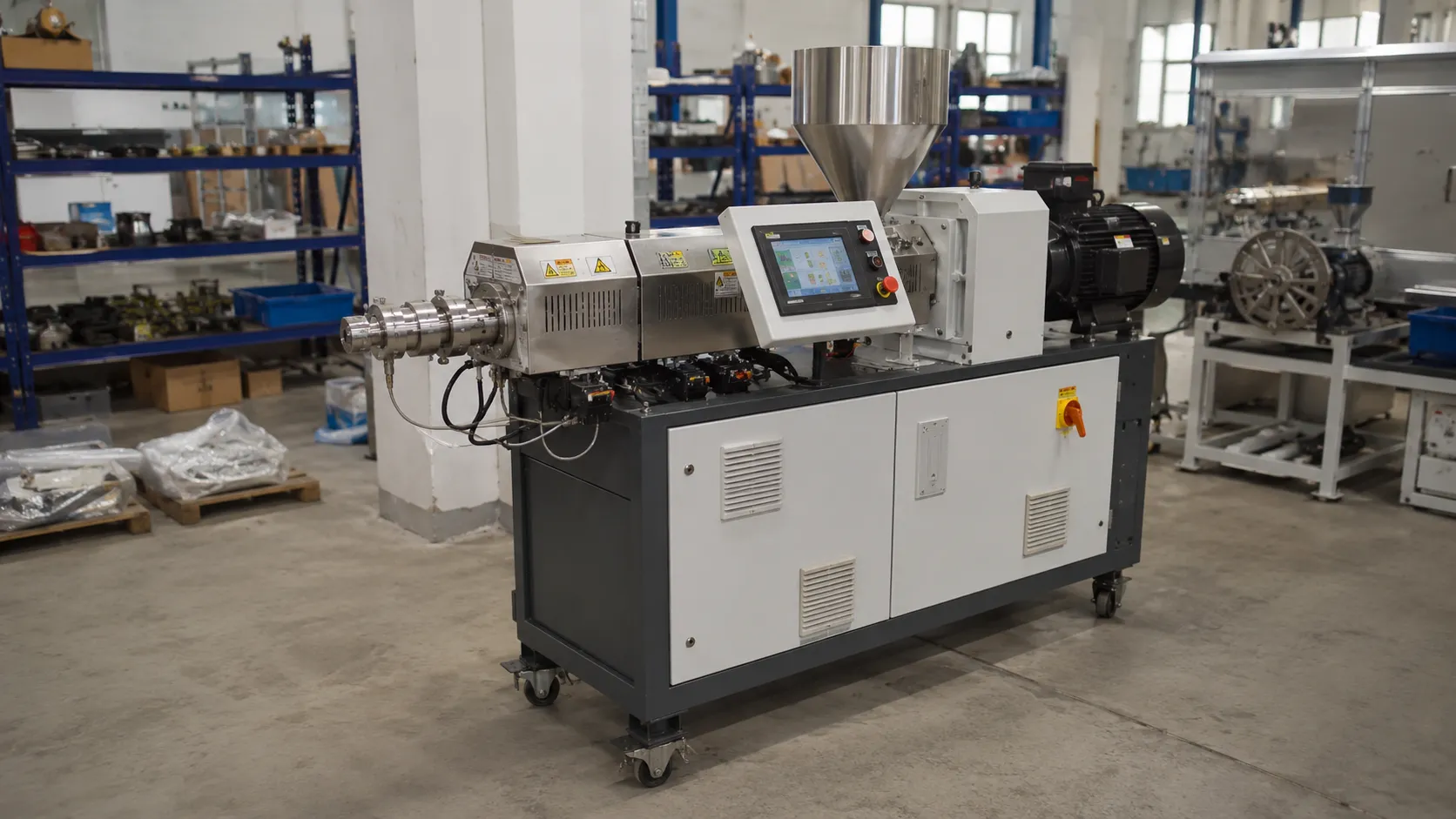
Flexible Small-Batch
Fits in a small workshop corner. Fast changeovers for job shops making custom plastic accessories, medical tubing, or packaging.
8–15 kg/hL/D 18–354 kW
Get Quote
The Hard Numbers
Single Screw Extruder Specifications
These are the actual parameters from our current production drawings, not the inflated numbers some suppliers put in brochures.
| Model | Screw Ø (mm) | Max Speed (rpm) | Motor (kW) | L/D | Real Output (kg/h) |
|---|---|---|---|---|---|
| UET25 | 25 | 95 | 4 | 18–35 | 8–15 |
| UET70 | 70 | 95 | 35 | 18–35 | 90–110 |
| UET125 | 125 | 90 | 170 | 18–35 | 550–650 |
| UET160 | 160 | 90 | 220 | 18–35 | 750–950 |
| UET190 | 190 | 90 | 300 | 18–35 | 900–1,400 |
| UET210 | 210 | 85 | 370 | 18–35 | 1,300–1,600 |
| UET250 | 250 | 85 | 480 | 18–35 | 1,600–2,200 |
| Core Component | What We Actually Put Inside |
|---|---|
| Screw & Barrel | 42CrMo nitrided surface (HRC 58–62), 12,000h+ wear life on clean resin |
| Motor / Inverter | Siemens or ABB (we don’t use cheap no-name clones that burn out in year two) |
| Voltage | 380V / 220V / 440V, 50/60Hz — matched to your local grid standard |
| Control | PLC + touch screen with recipe memory and remote diagnostic port |
| Certification | CE (real machinery directive compliance, not just a sticker), ISO 9001 |
| Warranty | 12 months on the machine, 24 months specifically on screw & barrel |
Under the Hood
Anatomy of the Machine: Where the Money Goes
Understanding what’s inside helps you spot the difference between a machine built to last and one built to flip for a quick profit.
The Screw
The heart of the machine. We use 42CrMo nitrided steel (HRC 58–62) or bimetallic options if you are running abrasive glass fiber or calcium carbonate.
The Barrel
Hardened steel housing. The inner surface is nitrided to resist wear. If you run highly corrosive PVC, we line it with a bimetallic alloy.
Motor & Gearbox
We couple a Siemens or WEG motor to a hardened gearbox. The torque ratio is specifically matched to your screw diameter so it doesn’t stall under load.
Heater Bands
Cast-aluminum or ceramic bands. Each zone has its own thermocouple. If a band burns out, the PLC throws an alarm before the plastic degrades.
Control Cabinet
PLC + HMI with recipe memory. It logs alarms so when a pipe comes out bad, you can look back and see exactly which zone spiked in temperature.
The Die Head
Custom-machined to your exact product geometry. We polish the internal flow channels to a mirror finish so material doesn’t hang up and carbonize.
How It Actually Works
The Physics of Melting Plastic in a Steel Tube
The trick is keeping the plastic solid in the feed zone. If it melts too early, it wraps around the screw and “bridges” — the machine starves and output drops to zero.
MOTOR+ Gearbox
SOLIDPellets
SEMI-MELTCompacting
MELTHomogeneous
Feeding Zone
Compression Zone
Metering Zone
Heater Bands
1. Feeding
Pellets drop in by gravity. The feed throat has a water cooling jacket specifically to prevent premature melting.
2. Compression
The screw flights get shallower, compacting the pellets and squeezing out the air before it can form bubbles in the final product.
3. Melting
Barrel heaters plus the mechanical shear friction from the screw turning create a uniform, homogenous melt.
4. Metering
The final zone builds steady pressure to push the melt through the die without surging or pulsating.
What It Makes
End Products Running on UET Lines Today
Change the die head and the downstream cooling equipment, and the exact same extruder can make any of these.
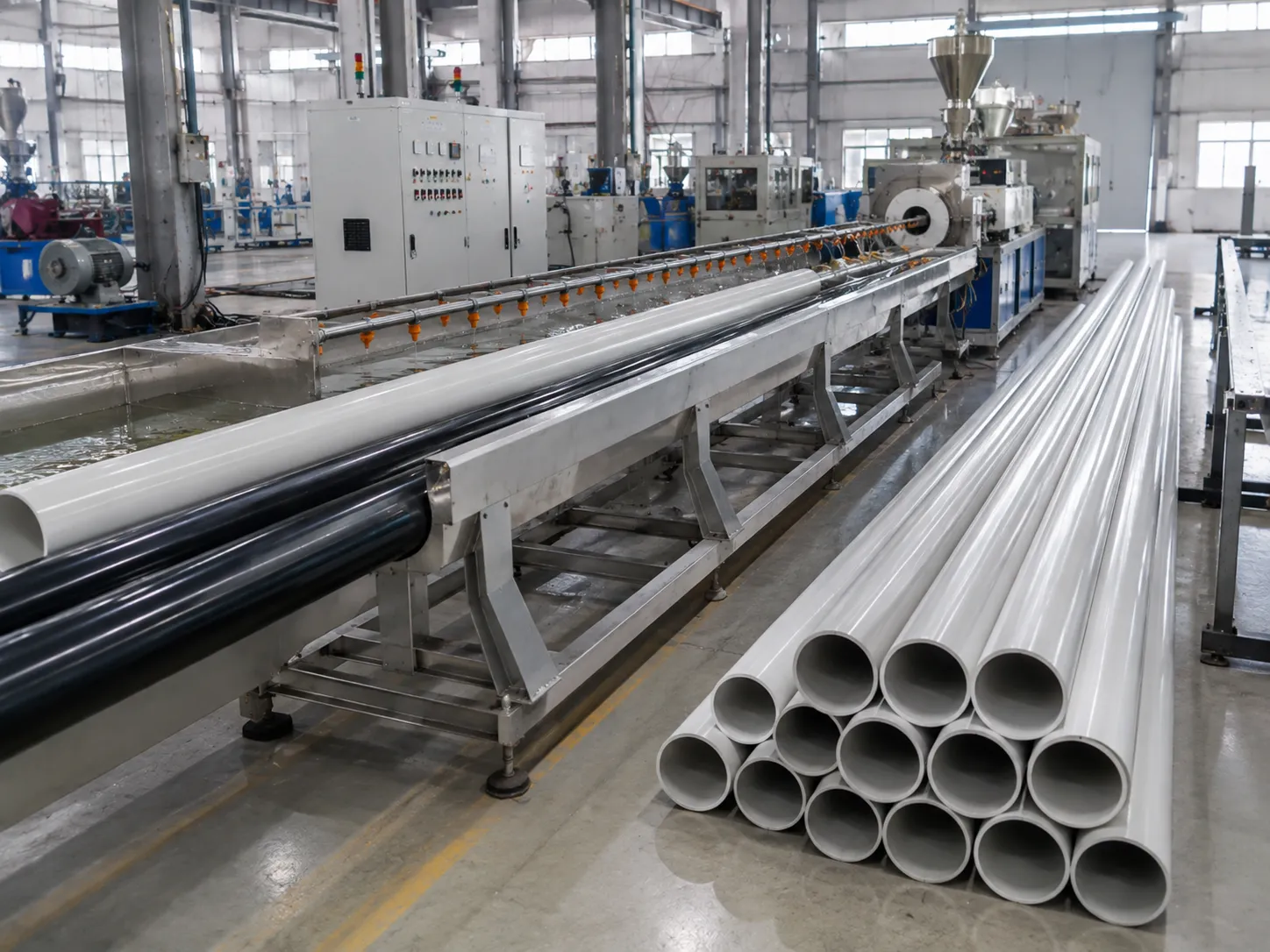
Pipes & Conduits
Water supply, drainage, electrical conduit — holding ±0.1 mm wall thickness.
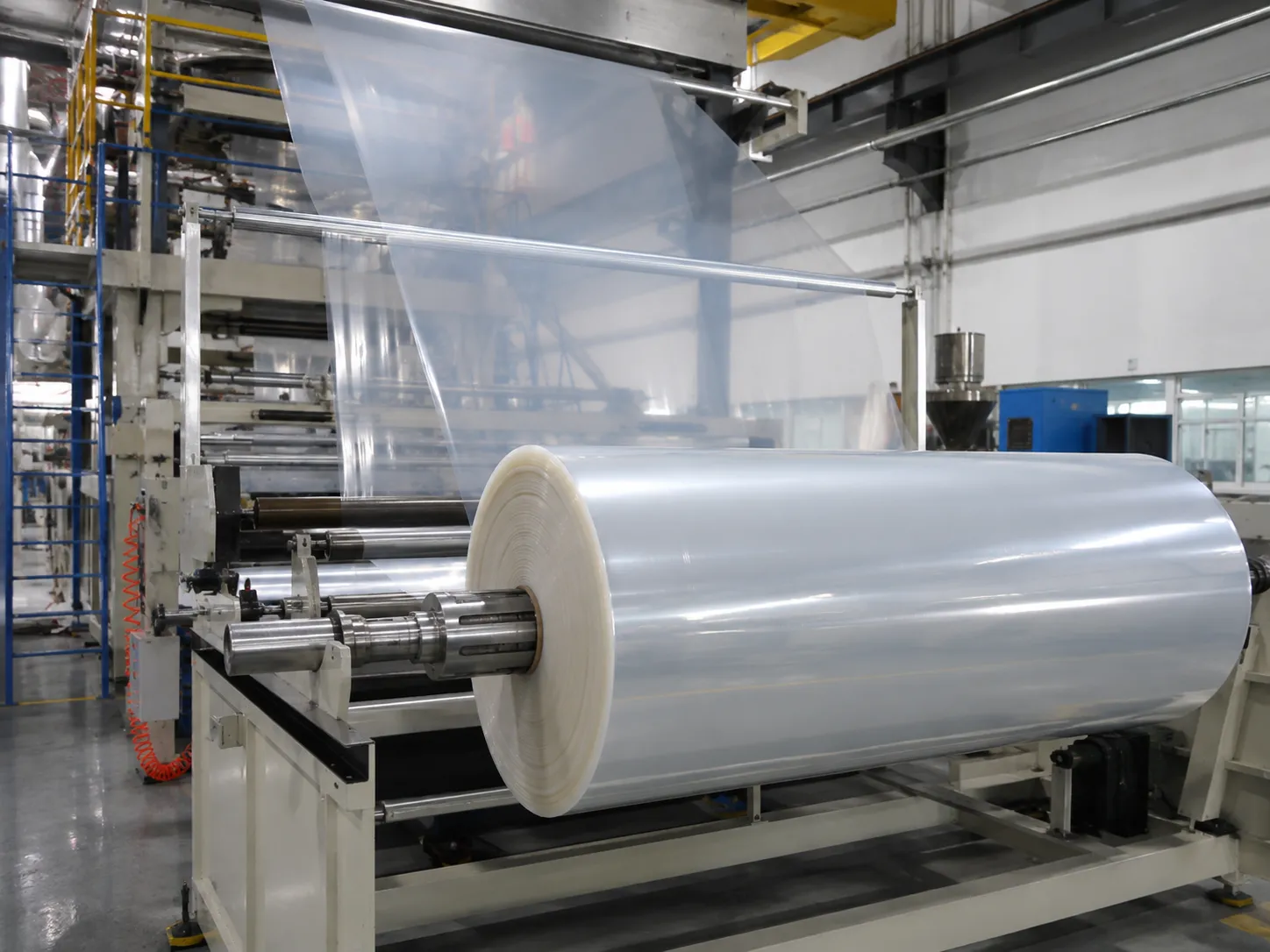
Sheets & Films
PE shrink film, agricultural mulch, packaging sheeting.
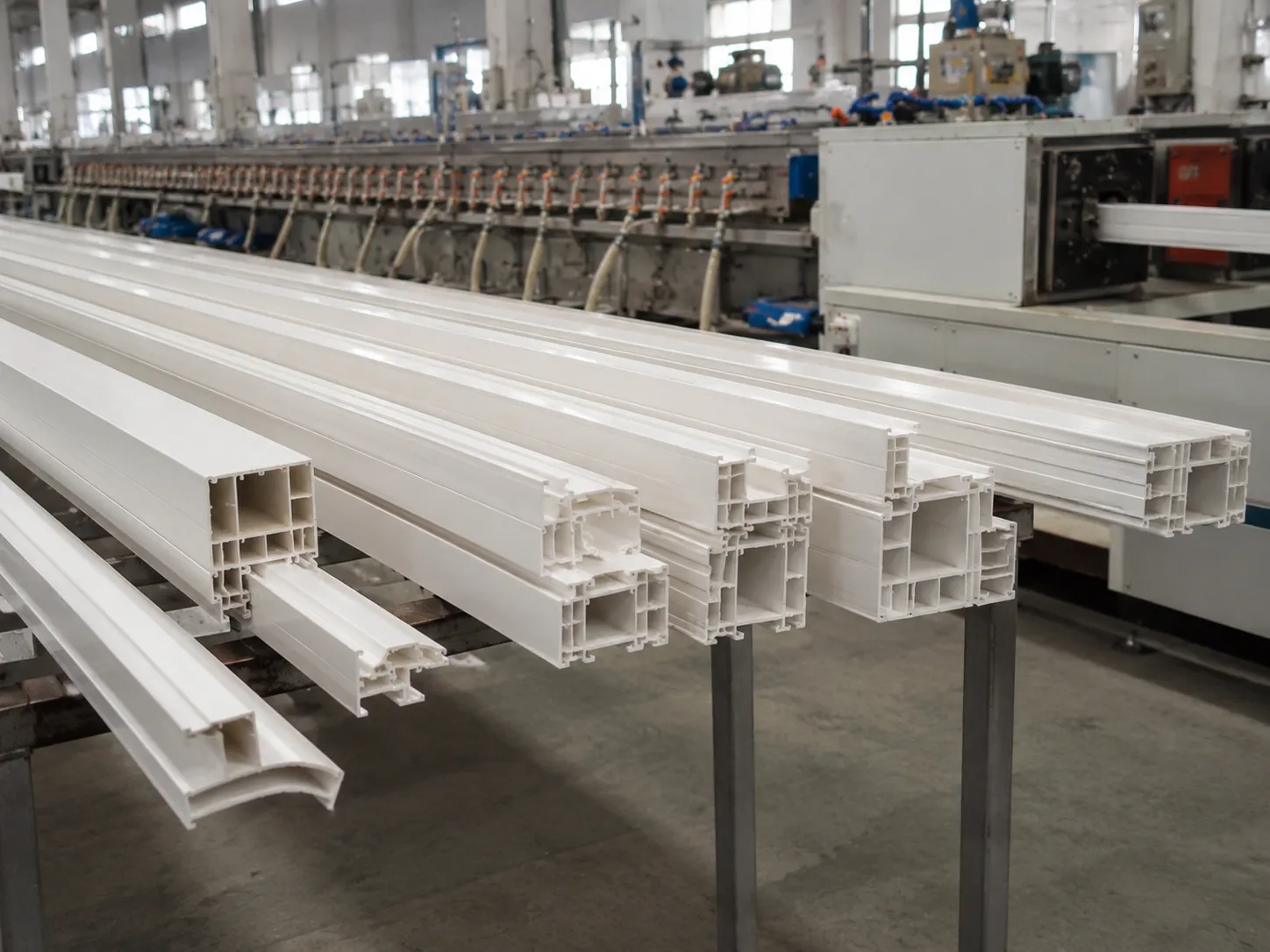
Profiles & Frames
PVC window profiles, edge banding, custom cross-sections.
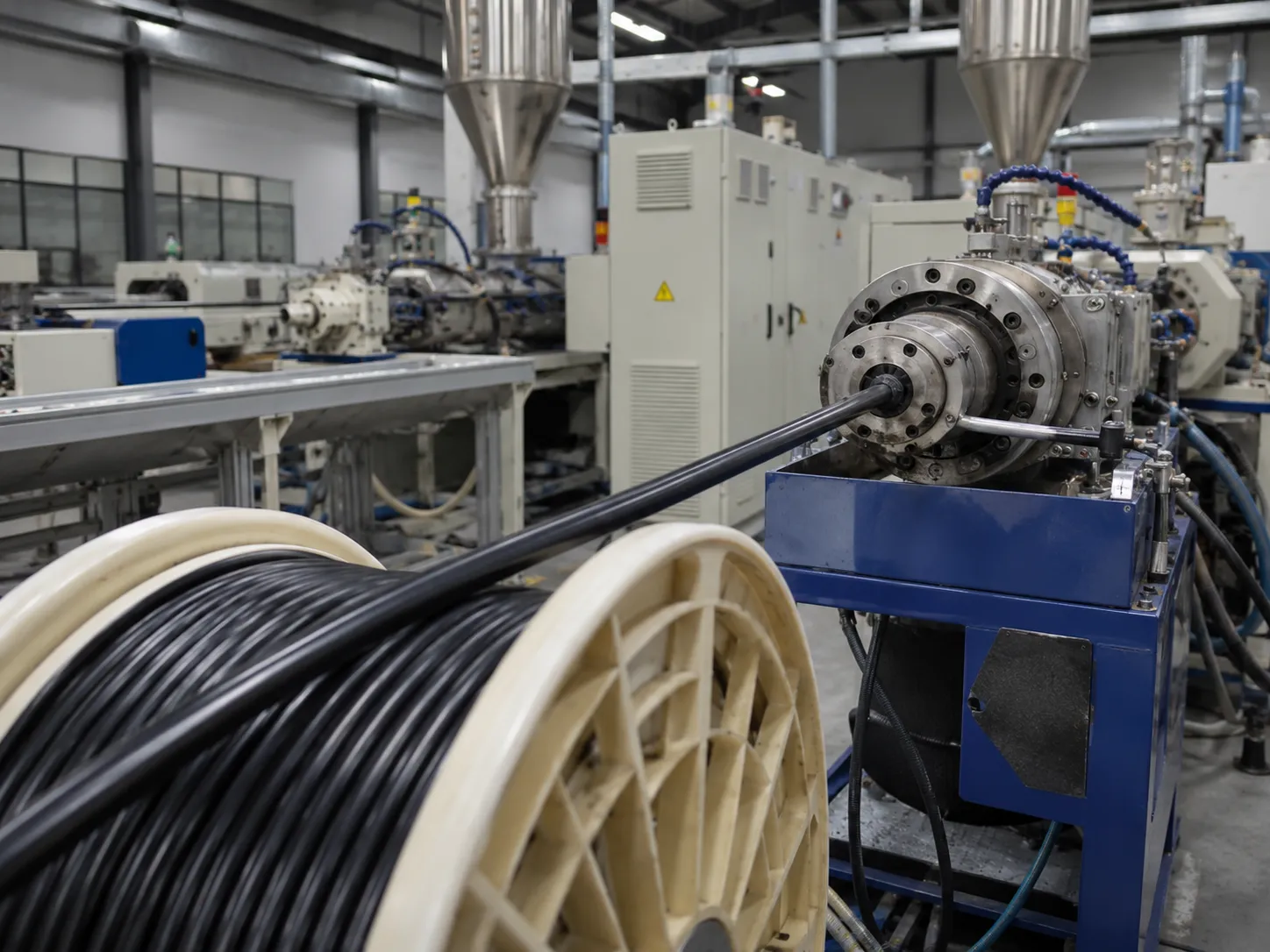
Wire & Cable
Insulation and sheathing with strict dielectric strength requirements.
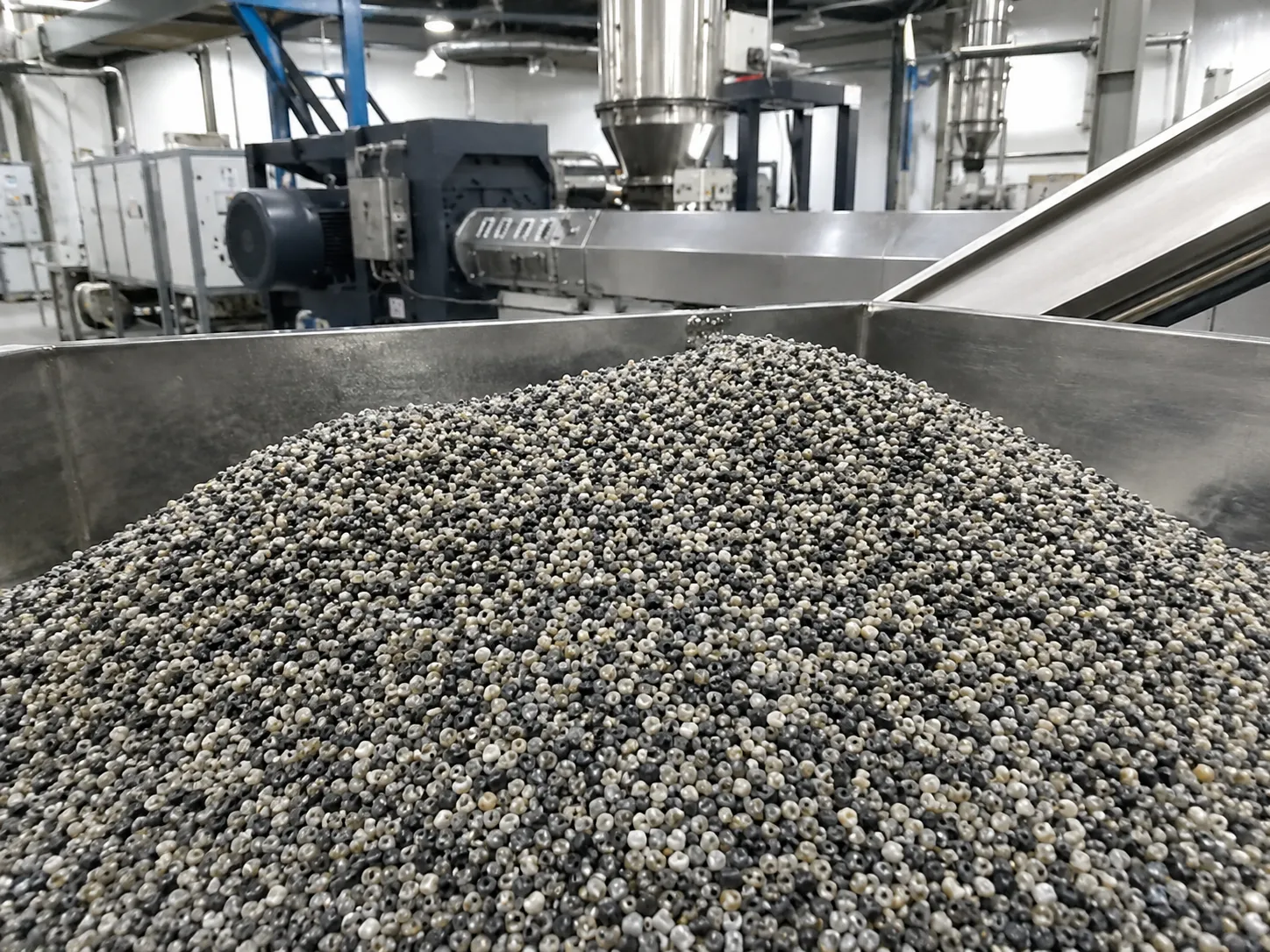
Recycled Pellets
Clean, uniform pellets from washed post-consumer PE / PP.
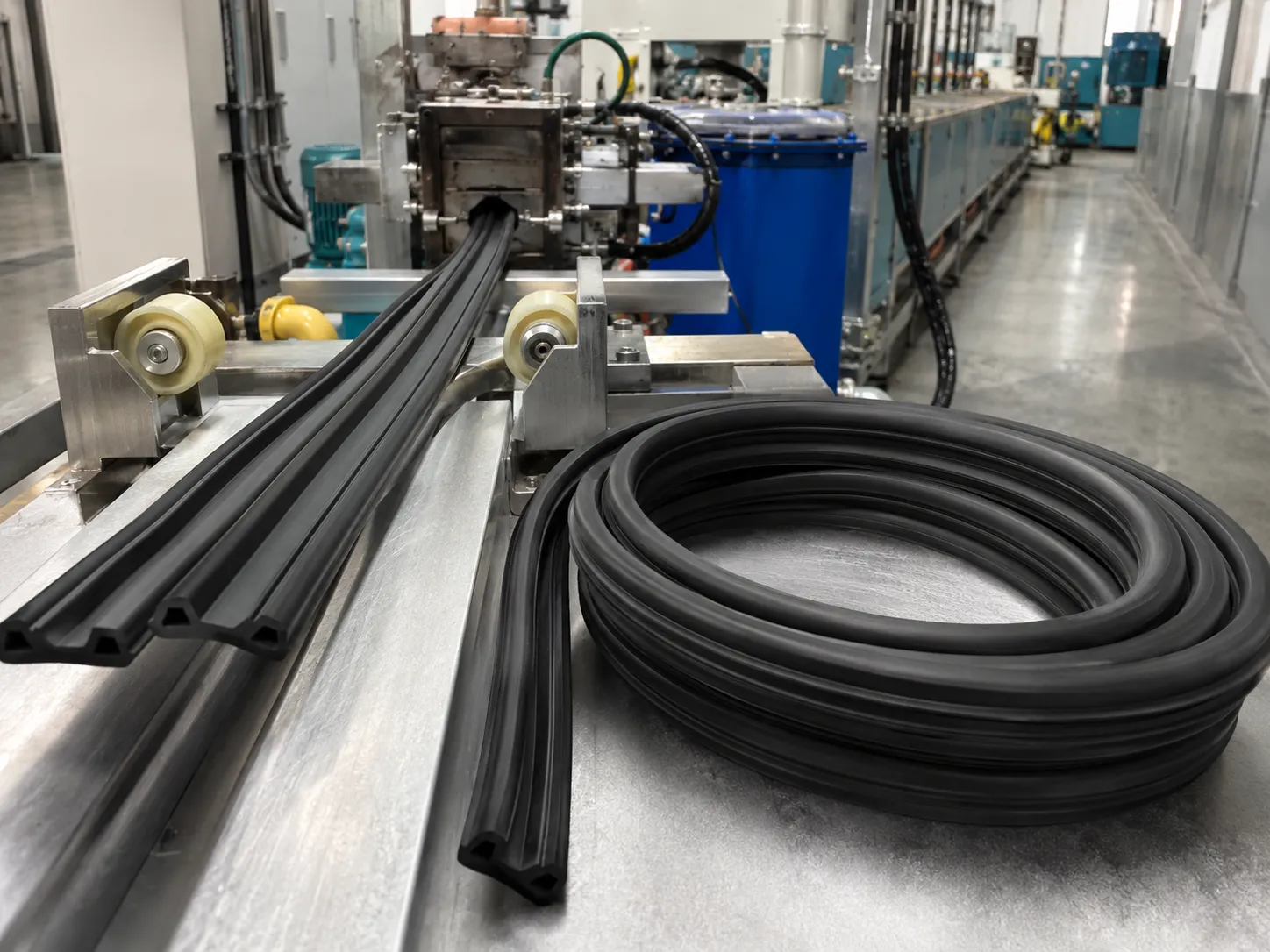
Rubber Seals
EPDM weather stripping, hoses, and tire components.
Material Matrix
What Resins Can This Machine Actually Handle?
These are the exact processing parameters we use in our test lab. If you run something else, send us a sample.
| Material | Melt Temp °C | L/D Ratio | Typical Output | Best Application |
|---|---|---|---|---|
| PE (HDPE / LDPE) | 180–240 | 25–30 | 150–1,800 kg/h | Pipes, films, bags |
| PP | 200–250 | 25–32 | 150–1,600 kg/h | Profiles, sheets, packaging |
| PVC (rigid / flex) | 160–190 | 20–26 | 100–900 kg/h | Pipes, cables (needs low shear) |
| ABS | 200–240 | 28–35 | 100–600 kg/h | Housings, appliance parts |
| PS / HIPS | 190–230 | 25–30 | 120–800 kg/h | Packaging, containers |
| PLA / PBAT | 160–185 | 30–35 | 80–500 kg/h | Biodegradable films |
| TPE / TPU | 170–220 | 28–32 | 80–400 kg/h | Seals, soft-touch parts |
| PA6 / PA66 | 250–280 | 30–35 | 100–500 kg/h | Engineering parts (needs high temp) |
Running heavily filled CaCO3 or glass fiber? Send us your recipe and we’ll tell you if you need a bimetallic barrel upgrade.
Site Prep
What You Need to Have Ready Before the Crate Arrives
Don’t let the machine sit in your yard for a month because you forgot to pour the concrete foundation.
Power Supply
Voltage: 380V / 220V / 440V
Frequency: 50Hz or 60Hz (tell us your local grid)
Phases: 3-phase, 4-wire
Capacity: 5–500 kVA by model
Floor & Space
Foundation: Level concrete, 150 mm min. thickness
Footprint: 2.5m × 1.0m up to 6m × 1.6m
Clearance: 1.2m service space around the barrel
Headroom: 2.5m minimum for hopper loading
Cooling Water
Type: Closed-loop circulating water (not tap water, it scales up)
Temp: 15–25°C
Pressure: 0.3–0.5 MPa
Flow: 1.5–8 m³/h by model
Environment
Ambient: 5–40°C
Humidity: < 85% non-condensing
Ventilation: 8–12 air changes/h to exhaust fumes
Dust: Keep it away from the control cabinet fans
Don’t Oversize It
How to Size the Machine So You Don’t Waste Electricity
Buying a machine twice as big as you need is the most common mistake buyers make. It wastes power and degrades the plastic.
01
Tell us the exact recipe
Virgin PE? Recycled PP with 30% talc? This decides if we give you a standard nitrided screw or an expensive tungsten-carbide coated one.
Decides: screw metallurgy, barrel lining, heater zone count
02
Define real target output
Don’t say “as much as possible”. If you need 400 kg/h, don’t buy a machine rated for 1000 kg/h and run it at 40% capacity.
Decides: screw diameter, motor size, gearbox torque
03
Downstream equipment
The extruder is only half the line. Pipes need a vacuum tank and a planetary cutter. Films need a chill roll stack.
Decides: total line footprint, auxiliary power draw
04
Local site conditions
If your factory is in the Middle East at 45°C ambient, we have to spec larger cooling fans and heavier insulation.
Decides: cooling design, cabinet ventilation
Quick Model Match by Target Output
Find your output row. This is the chassis we will quote you.
| Target Output | Recommended Model | Typical Use Case |
|---|---|---|
| 8–110 kg/h | UET25 – UET70 | Lab trials, medical tubing, small workshops |
| 90–650 kg/h | UET70 – UET125 | Standard pipe lines, window profiles |
| 550–1,400 kg/h | UET125 – UET190 | Large diameter municipal pipes, recycling |
| 1,300–2,200 kg/h | UET210 – UET250 | 24/7 high-output pelletizing plants |
Not sure which row fits? Send material + target output and our application engineer will reply within 2 hours. Get my recommendation →
Engineering Options
How We Tune the Machine to Your Specific Recipe
A “standard” extruder doesn’t exist. Every machine we ship is tweaked based on what you are actually melting.
Screw Geometry
We alter the flight depth and compression ratio based on your resin’s viscosity. Running PVC? We use a low-shear profile to prevent burning.
Drive System
We match the motor brand (Siemens / ABB / WEG) and inverter to the voltage and frequency of your local power grid.
Control System
Siemens or Mitsubishi PLC. We can program the HMI in your local language and set up remote diagnostic access for our support team.
Heating Zones
3-zone to 7-zone independent control. Ceramic heaters for high-temp engineering plastics, cast-aluminum for standard PE.
Screen Changer
If you run dirty recycled material, you need a hydraulic continuous screen changer so you don’t have to stop the line to swap filters.
Turnkey Integration
We don’t just sell the extruder. We supply the vacuum tank, haul-off, cutter, and coiler, all wired to the same main PLC.
Transparent Budgeting
What Does a Single Screw Extruder Actually Cost?
These are the realistic ranges we quote. Beware of suppliers quoting 30% below these numbers — they are cutting corners on the gearbox or using recycled steel.
Entry Model
Lab / pilot / small workshops
$5k – $15k USD FOB
- Screw Ø 25–70 mm
- Output 8–110 kg/h
- Standard domestic motor
- Basic relay/touch panel
- 12-month warranty
Mainstream Model
Regular production lines
$18k – $65k USD FOB
- Screw Ø 125–190 mm
- Output 550–1,400 kg/h
- Siemens / ABB drive
- Full PLC + HMI
- 24-month screw warranty
High-Output Model
24/7 industrial mass production
$70k – $180k USD FOB
- Screw Ø 210–250 mm
- Output 1,300–2,200 kg/h
- Premium hardened gearbox
- Remote diagnostics ready
- Lifetime parts supply
Final price depends on downstream equipment, spare parts kits, and shipping. Send your requirements for an itemized engineering quote.
Shop-Floor Diagnostics
Troubleshooting: What Operators Actually Complain About
Straight answers from the guys running UET lines, not the sales department.
The pipe has “sharkskin” (melt fracture)
This happens when the plastic tears as it exits the die lip. Fix: Raise the die temperature by 5°C, slow the screw down slightly, or polish the die land. It’s a shear stress issue.
Output is surging / pulsating
Usually a feed issue. Check if the hopper is “bridging” (pellets stuck together). Check if the feed throat cooling water is turned off. If pellets melt in the throat, they won’t slide down.
Black specks in the final product
Material is hanging up in a dead spot and burning. We polish our die flow channels to a mirror finish to prevent this. Also check for a burned-out heater band causing localized overheating.
Die drooling / buildup
Often caused by low-melt additives in your recipe separating out. Our engineering team can review your formula and recommend a different die geometry or a Teflon coating on the die face.
Uneven wall thickness
Usually the vacuum calibration tank is misaligned, or the haul-off crawler is pulling unevenly. We commission the whole downstream line to ensure concentricity.
Screw wearing out too fast
If you are running recycled plastic with sand, or high glass fiber, a standard nitrided screw will die in 3 months. You need a tungsten-carbide (WC) coated screw. Always tell us your exact filler percentage.
The Golden Rule
Single Screw vs Twin Screw: Don’t Buy the Wrong One
The industry rule of thumb: single screw for shaping (pipes, sheets), twin screw for mixing (masterbatch). If a supplier tries to sell you a twin screw for simple PE pipe, they are overcharging you.
| Feature | Single Screw | Twin Screw | Triple Screw |
|---|---|---|---|
| Best used for | Melting & shaping | Mixing & compounding | Nano dispersion |
| Mixing intensity | Low | High | Very high |
| Typical materials | PE, PP, PVC | Masterbatch, engineering | Biodegradable, medical |
| Typical products | Pipes, sheets, films | Pellets, compounds | High-value compounds |
| Capital cost | Lowest | Mid-range | Premium |
| Operator skill | Easy to run | Moderate | Advanced |
The China Advantage
Why Buy From a Chinese Factory Instead of Europe?
We manufacture roughly 60% of the world’s extrusion equipment. Here is the unvarnished truth about why buyers switch to Chinese lines.
30–50% Lower CapEx
A European machine costs 2–3× more for the exact same output. You are paying for their high local labor costs and union regulations, not better steel.
The Same Components
We buy the same Siemens motors, ABB inverters, and SKF bearings they do. We just buy them locally in China at a fraction of the markup.
Scale & Muscle Memory
Our factory pumps out thousands of units a year. Our welders and assemblers have built so many of these they can do it blindfolded. That muscle memory prevents mistakes.
Real Lead Times
Standard models ship in 1–2 weeks. Try getting a European factory to build a custom line in less than 6 months right now.
Export Infrastructure
We do this every day. CE docs, fumigation certs, bill of lading, HS codes — it’s all ready before the machine hits the port.
7×24 WhatsApp Support
When your line goes down at 2 AM on a Sunday, you don’t want to wait for Monday morning in Germany. Our engineers answer WhatsApp messages on weekends.
Logistics
Getting It From Nanjing to Your Factory Door
We don’t just dump it at the Shanghai port and wave goodbye. We handle the paperwork so your customs broker doesn’t hate you.
Shipping Methods
FCL: 20ft / 40ft container
LCL: shared container, heavily palletized
Air freight: for urgent lab-scale units
Transit time: 7–45 days depending on port
Documents Included
Commercial invoice + packing list
Bill of lading or airway bill
CE certificate + ISO 9001
HS code 8477.20 (extruders)
Export Packing
Seaworthy crate with fumigation stamp
VCI wrapping on bare metal to stop rust
Shock-proof padding for the PLC cabinet
Clear labels in English + your local language
Incoterms
FOB: Shanghai / Qingdao port
CIF: to your nearest ocean port
DDP: delivered right to your factory door
EXW: your forwarder picks it up from our gate
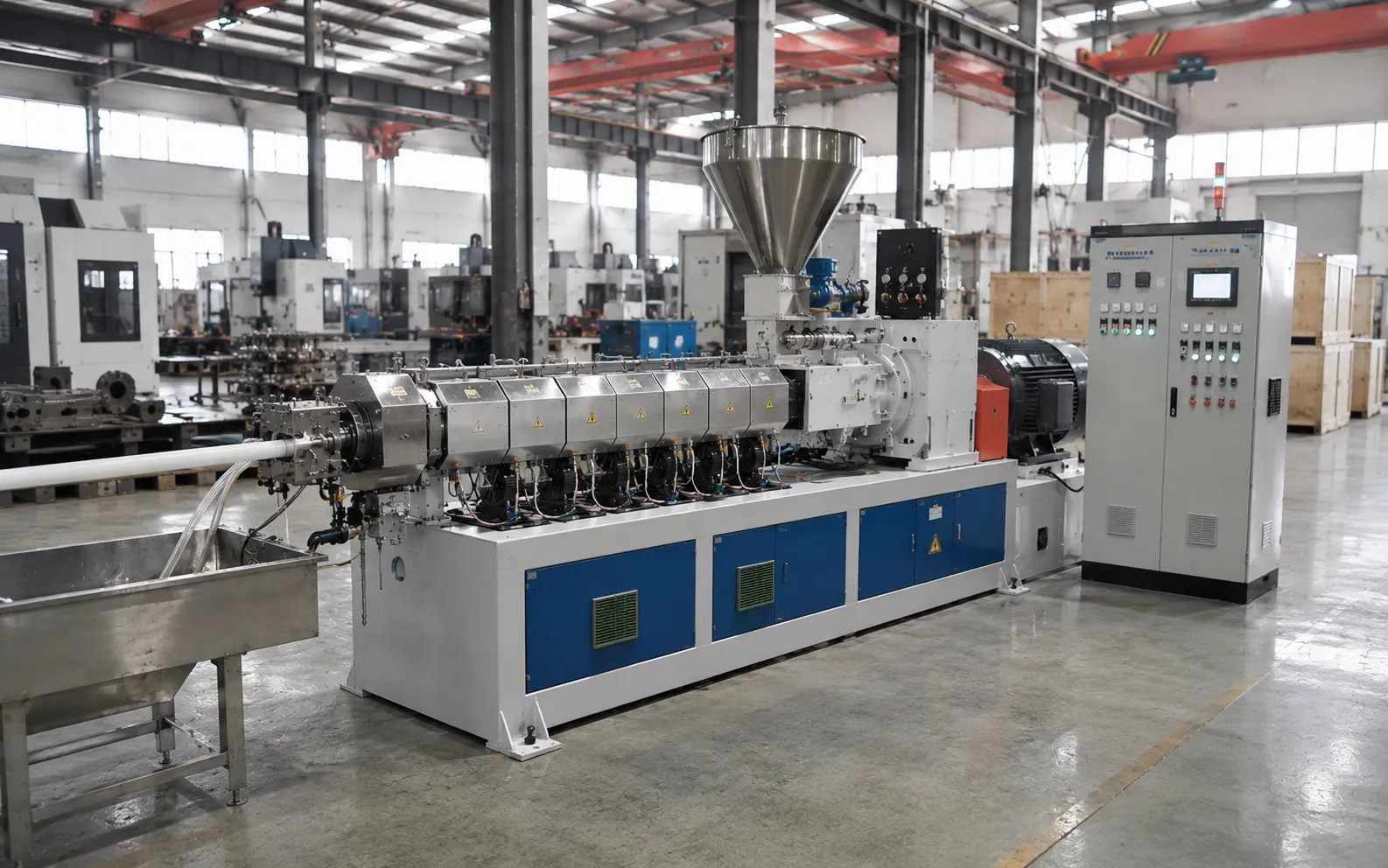
11,400㎡Manufacturing Base
350+Engineers & Staff
100%Test-Run Before Shipping
Factory Direct
We Don’t Ship Anything We Haven’t Run Ourselves
Every UET extruder is machined, assembled, and abused inside our own facility. You approve it before it gets bolted to a crate.
In-House Machining
Screws and barrels are nitrided to HRC 58–62 on our own CNC lines. We don’t outsource the core parts.
The 72-Hour Abuse Test
We run the machine at full load for 3 days straight to check for gearbox leaks and heater band failures.
Your Material Trial
We run your actual resin. Inspect it in person, by live video, or hire SGS / TÜV to come watch.
Export Packing
Seaworthy crating, full documentation, and a transparent, itemized final invoice.
CE CertifiedISO 900120+ Years85+ Countries
Real Emails & WhatsApps
What Plant Managers Actually Say About Us
Unedited feedback from the guys running UET lines on the night shift.
The extruder arrived in Hai Phong with a cracked hopper glass. Sent a photo to the UET engineer on WhatsApp at 11 PM, and a replacement was on a DHL flight by morning. Machine has been running 24/7 for 8 months.

RyanPipe Factory Manager · Vietnam
We switched from a German line to UET for our PE film. Honestly, the film gauge is identical, but the UET machine purges color changes in 15 minutes instead of two hours. That alone pays for the machine.

ChloeFilm Production Lead · Poland
Running EPDM rubber is notoriously hard on extruders. The UET barrel hasn’t shown any wear grooves after 4,000 hours. The torque rating on the gearbox is definitely over-engineered, which I appreciate.

DylanMaintenance Director · Ohio, USA
Running at full capacity every day for three months with zero issues. Maintenance is just changing the gearbox oil and checking the heater bands. Defect rate on the pipes dropped by half compared to our old extruder.

SophiaPlant Supervisor · Brazil
Complete the Line
Related Extrusion Equipment from UET
Downstream systems and specialized platforms that pair with your single screw extruder. Same factory, one point of responsibility.
Rigid & Flexible PVC
PVC Extruder Machine
Gentle plasticization to prevent PVC from burning. ±0.8°C melt stability, covers Ø20–630 mm pipes.
View Details
Insulation & Sheathing
Wire & Cable Extruder
XLPE / LSZH insulation with strict dielectric strength requirements at high line speeds.
View Details
Seals & Hoses
Rubber Extruder
Wear-resistant core with stable pressure for EPDM, TPE and silicone — built for 24/7 operation.
View Details
Recycling
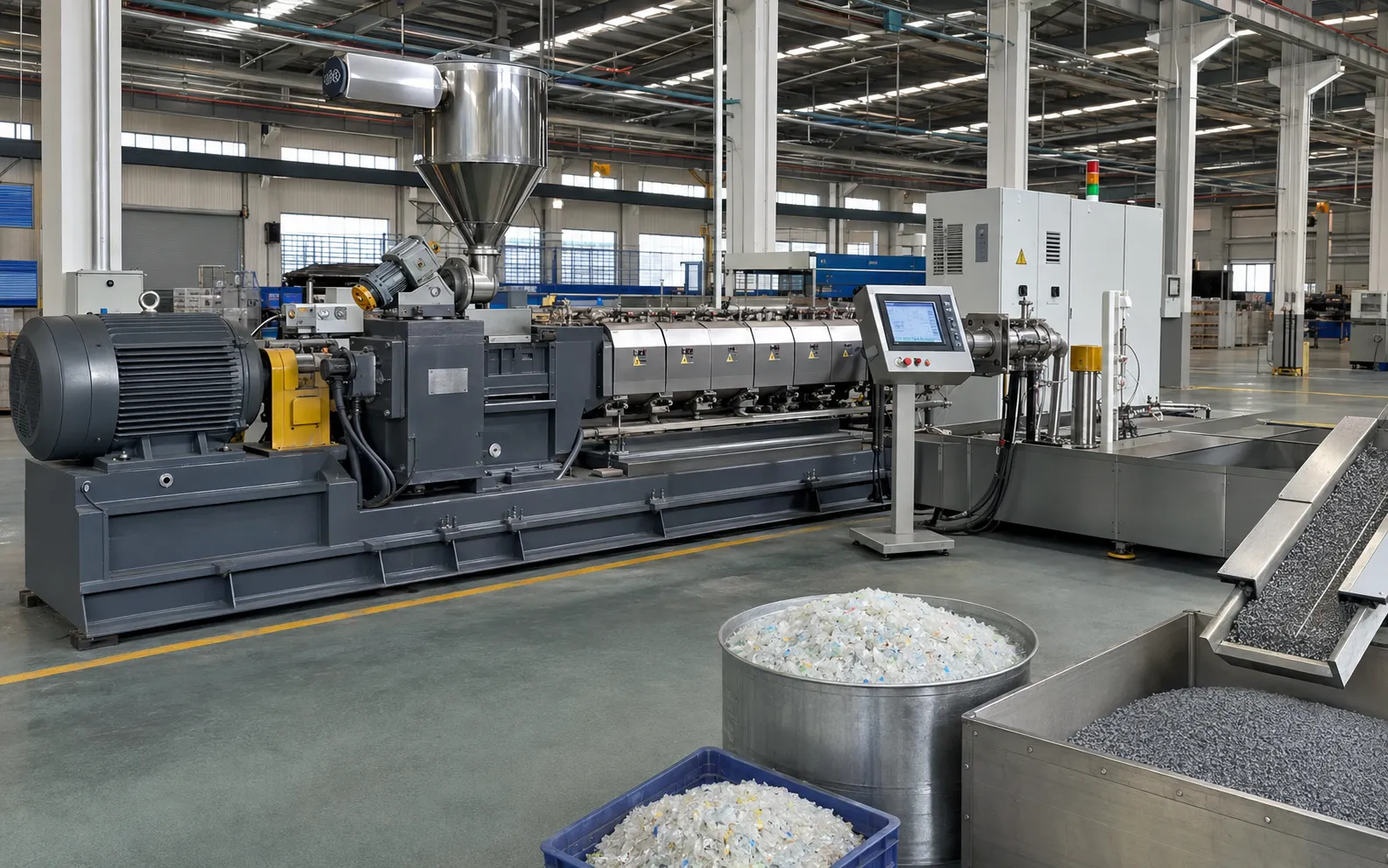
Recycled Plastic Extruder
Turns dirty post-consumer PE / PP / PET into clean pellets. Tolerates 35% impurities at 99%+ yield.
View Details
Pelletizing
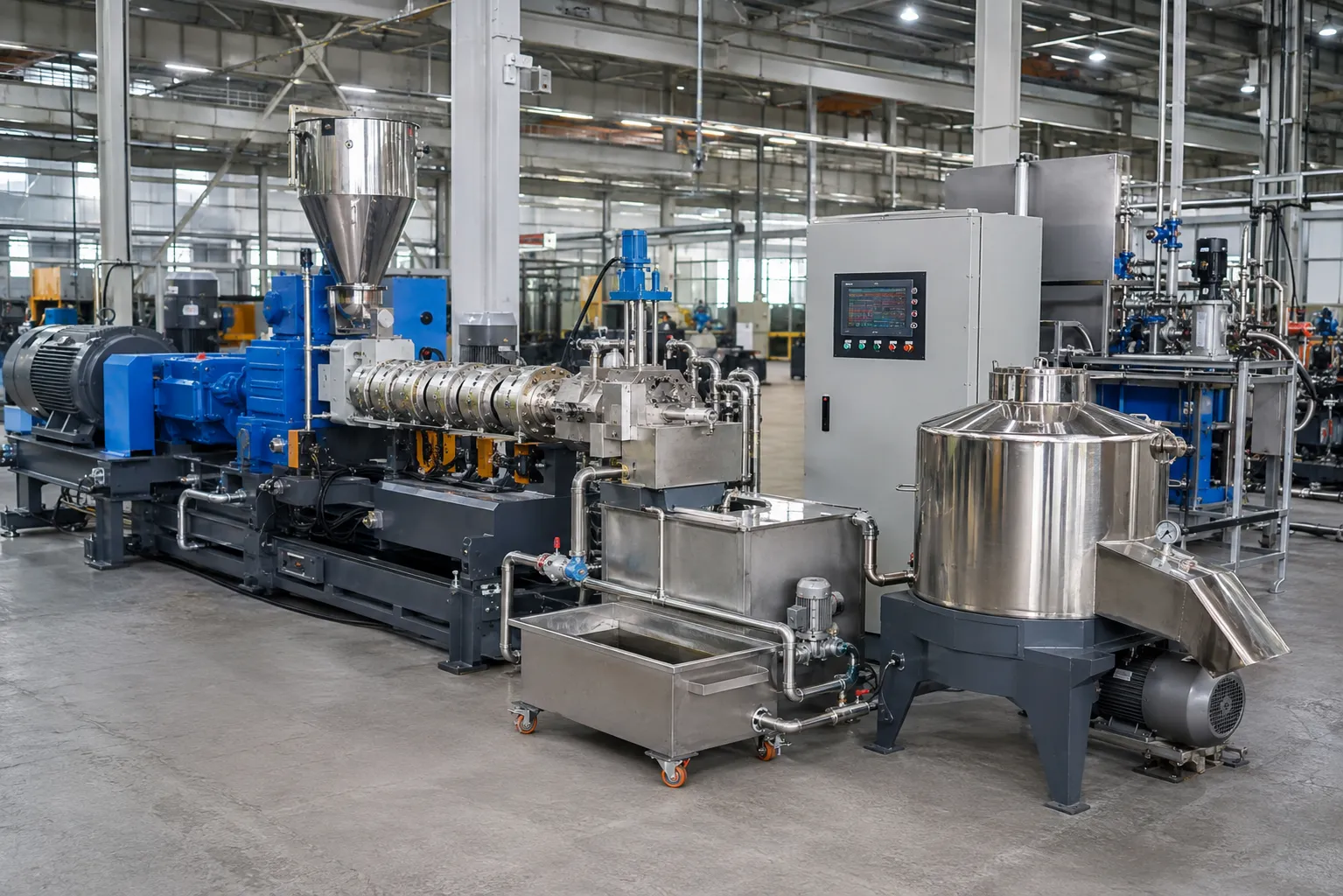
Underwater Pelletizing System
Spherical, dust-free pellets with integrated cutting and drying. Pairs with any UET extruder platform.
View Details
Straight Answers
Questions Engineers Actually Ask Us
No marketing fluff. Just the facts from our application engineering team.
What is the real difference between single screw and twin screw?
The golden rule in our industry: single screw for shaping (pipes, sheets, films), twin screw for mixing (masterbatch, compounding). If a supplier tries to sell you a twin screw for simple PE pipe extrusion, they are overcharging you and wasting your electricity.
How long will the screw and barrel actually last?
On clean virgin PE, a nitrided 42CrMo screw lasts 12,000 hours easily. If you are running recycled plastic with sand, or high glass fiber, it might only last 3,000 hours unless you pay for a tungsten-carbide coated screw. Always tell us exactly what you are running.
Can it process PVC without burning it?
Yes, but PVC is highly corrosive and burns easily if overheated. We use a low-shear screw profile and nitrided barrels to resist the HCl gas it releases. We also spec independent PID zones so if one heater fails, the whole barrel doesn’t degrade.
What happens if the power goes out while it’s running?
The plastic inside the barrel will solidify and lock the screw in place. When power returns, you cannot just turn it on — you will strip the gearbox. You have to heat the barrel up to melt the plastic first, then slowly jog the motor. Our PLC has a specific “cold start” sequence for this.
How do you prevent “sharkskin” on the pipe surface?
Sharkskin (melt fracture) happens when the plastic tears as it exits the die lip due to high shear stress. We fix this by polishing the die land to a mirror finish, optimizing the die temperature, and sometimes adding a small internal heater to the die lip.
Do I need a screen changer?
If you are running 100% virgin resin, no. If you are running recycled plastic, post-industrial regrind, or heavily filled materials, yes. A hydraulic continuous screen changer lets you swap the filter mesh without stopping the extruder, which saves you hours of downtime.
What is the actual lead time from order to my factory?
Standard models ship in 1–2 weeks. Customized lines (where we engineer a specific screw for your recipe) take 4–6 weeks to build and test. Add 7–15 days for ocean freight depending on your port. Air freight is available if you are in a rush.
Can I inspect the machine before it ships?
Absolutely. Every machine runs a 72-hour full-load test plus a trial run with your actual material. You can fly to Nanjing to watch it, do a live video call, or hire a third party like SGS or TÜV to come inspect it on your behalf.
What if a part breaks in year three?
We guarantee lifetime spare parts supply at cost price. Send us the serial number on the nameplate, and we will DHL the exact replacement screw, barrel, or heater band to your door within a week. We keep the drawings for every machine we’ve ever built.
What is the MOQ and payment terms?
MOQ is 1 unit. Standard payment terms are 30% T/T deposit to start production, 70% balance before shipment after you approve the test run video. For large orders over $50,000, we accept L/C at sight.