
Co-Rotating Twin-Screw Compounding Technology
Plastic Compounding Machine & Twin-Screw Compounding Extruder Lines
UET plastic compounding machines melt, mix and homogenize polymers with fillers, pigments and additives, then cut the melt into uniform pellets for masterbatch, modified engineering plastics and recycling.
- ≥98% dispersion uniformity at 50–80% filler loading
- Siemens motor · SKF bearings · Schneider PLC as standard
- ±1.5°C zoned melt temperature control, PID regulated
- 100% full-load material test-run before shipping
20+ Years Engineering5,600+ Machines Delivered80+ Export Countries24/7 Engineer Support
98%+Compounding Uniformity
20%↓Specific Energy (kWh/kg)
≤0.3%Batch Rejection Rate
1.5×Longer Screw Part Lifespan
Definition & Principle
What Is a Plastic Compounding Machine?
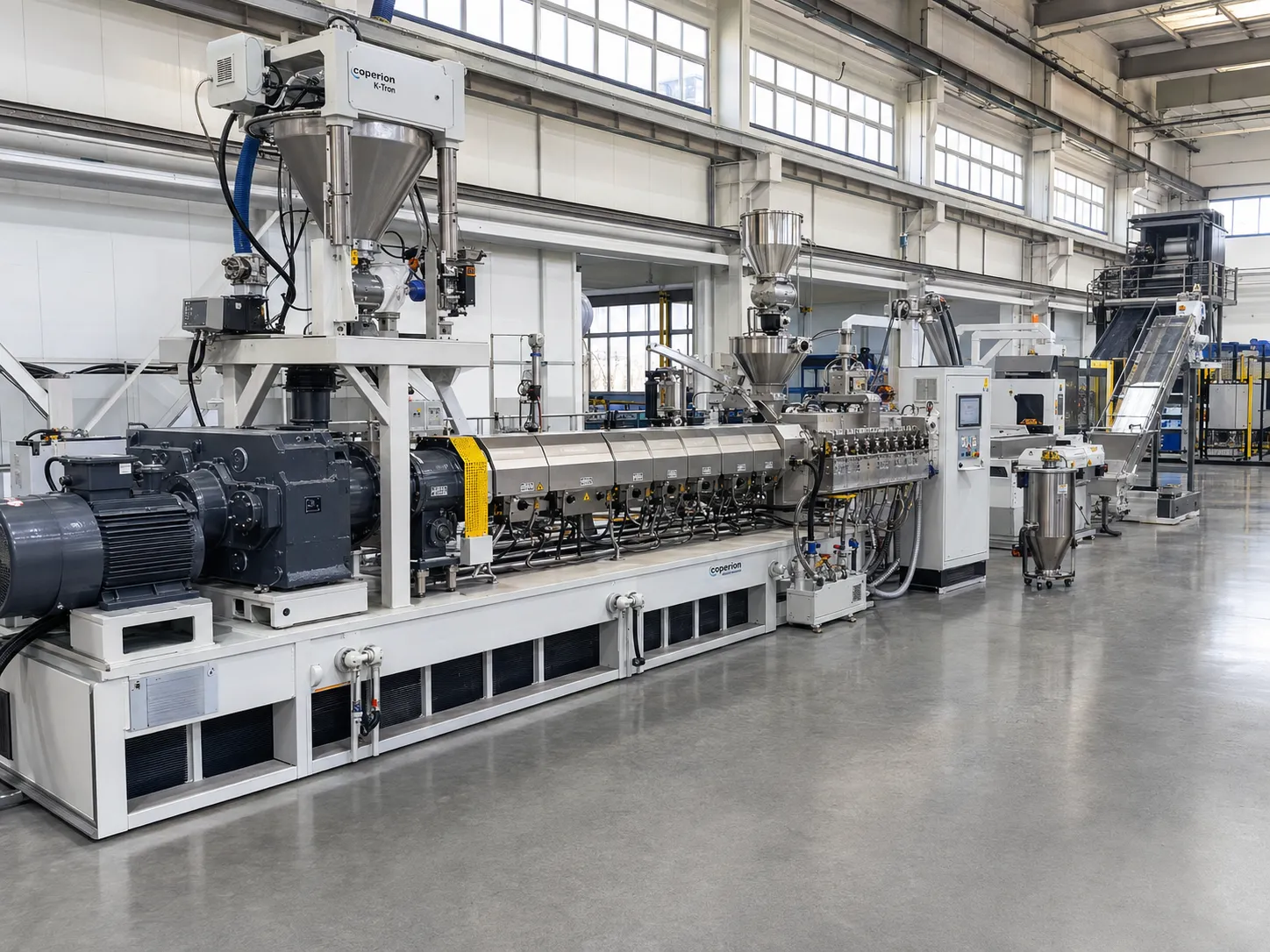
A plastic compounding machine is a co-rotating twin-screw extrusion line that melts a polymer base (PP, PE, PA, PC, ABS, PLA), mixes in fillers, pigments, fibers or additives, vents off volatiles and pelletizes the melt into uniform compound granules.
A single-screw machine melts and re-pelletizes one polymer. The twin-screw compounding machine adds what a single screw cannot: modular kneading blocks apply controlled shear for dispersive mixing, and side feeders dose fillers or glass fiber after the melt zone. That is why masterbatch, modification and biodegradable producers run twin-screw lines.
Core Components
- High-torque gearbox + modular bimetallic barrel & screws
- Loss-in-weight main feeder + side feeder for fillers/fibers
- Vent zones, die head and strand / water-ring / underwater pelletizer
 ≥98% dispersion uniformity
±1.5°C melt control
≥98% dispersion uniformity
±1.5°C melt control
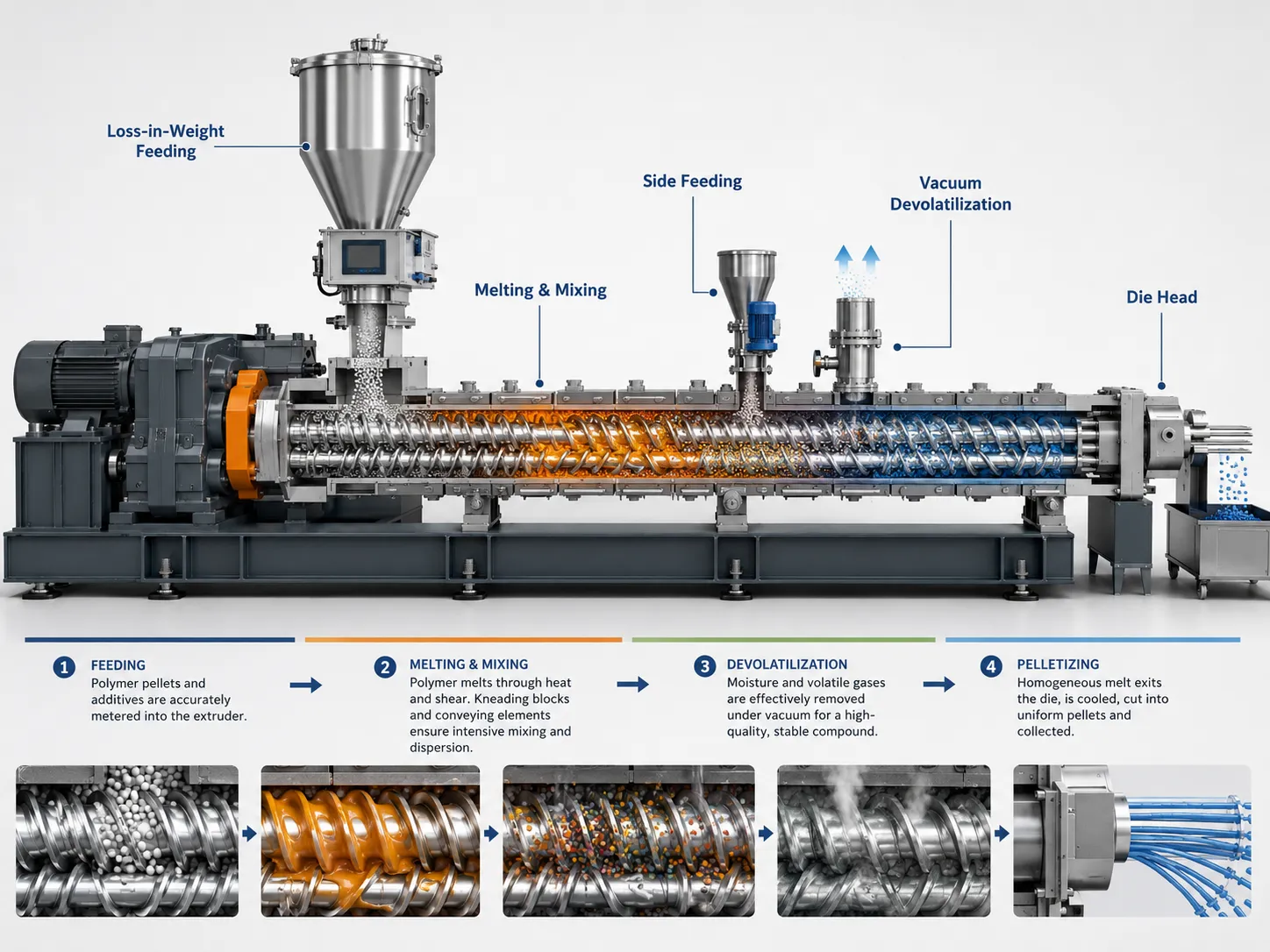
1
Precision Feeding
Loss-in-weight feeders dose resin, fillers and additives proportionally.
2
Melting & Mixing
Intermeshing screws melt and shear; kneading blocks disperse fillers.
3
Devolatilization
Vent zones strip moisture and low-molecular volatiles from the melt.
4
Pelletizing
Homogeneous melt is pumped through the die and cut into pellets.
Twin-Screw vs Single-Screw for Compounding
| Feature | Twin-Screw Compounding Machine | Single-Screw Machine |
|---|---|---|
| Mixing quality | Superior dispersive & distributive mixing | Limited mixing capability |
| Powder feeding | Positive displacement — handles powders easily | Friction-dependent — struggles with powders |
| Devolatilization | Efficient vent zones, short uniform residence | Variable residence, degradation risk |
| Recipe flexibility | Modular screws — change formulation freely | Fixed geometry, single-purpose |
| Best for | Masterbatch, modification, biodegradables, recycling | Simple melting & re-pelletizing |
Line Configurations
Plastic Compounding Line Options
Three proven line configurations, each set to your filler ratio, material sensitivity and output target.
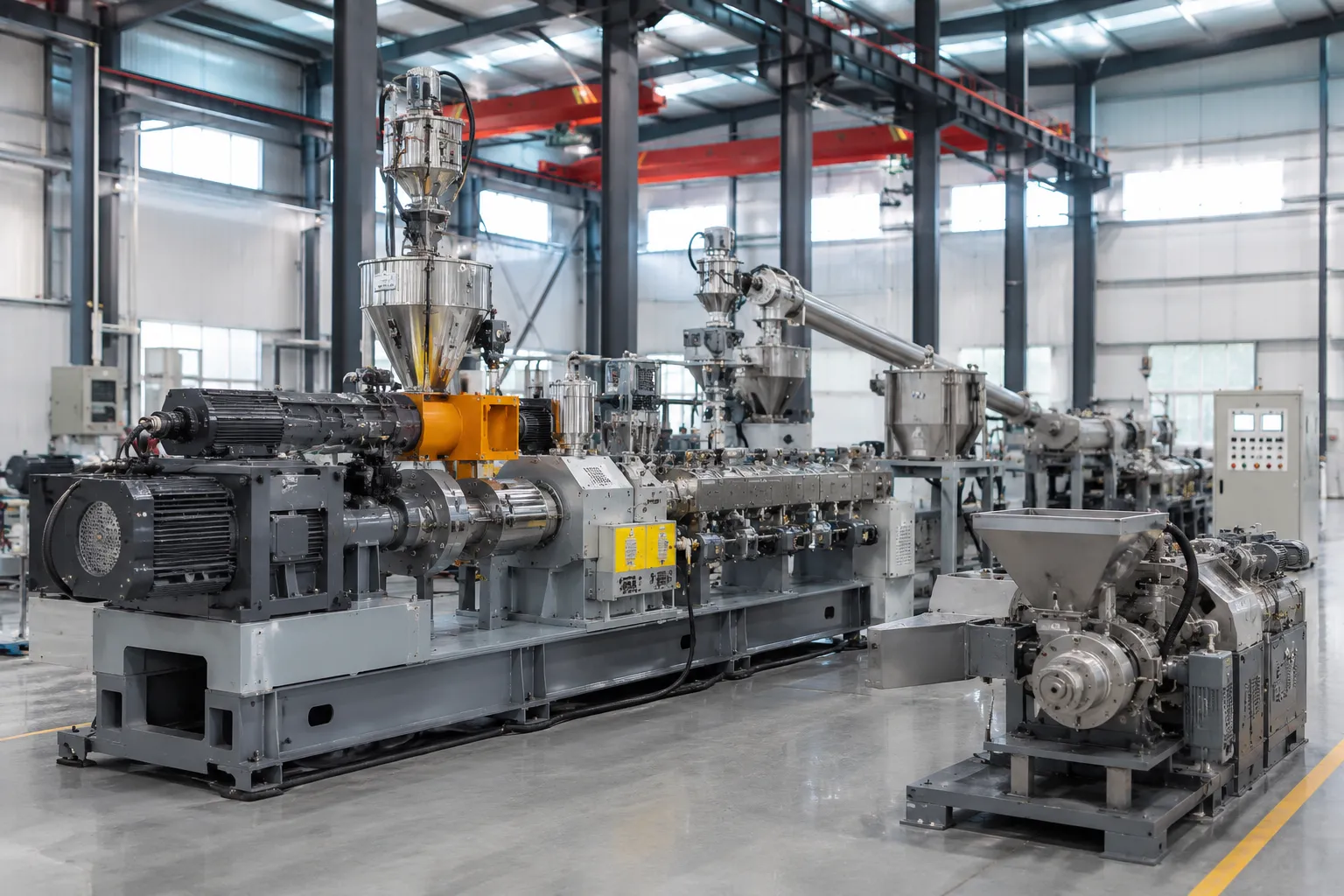
Heavy-Duty High-Fill Line
Reinforced mixing chamber and wear-resistant alloy screws for 50–80% CaCO₃ / glass fiber without agglomeration.
Filler 50–80%Uniformity ≥98%
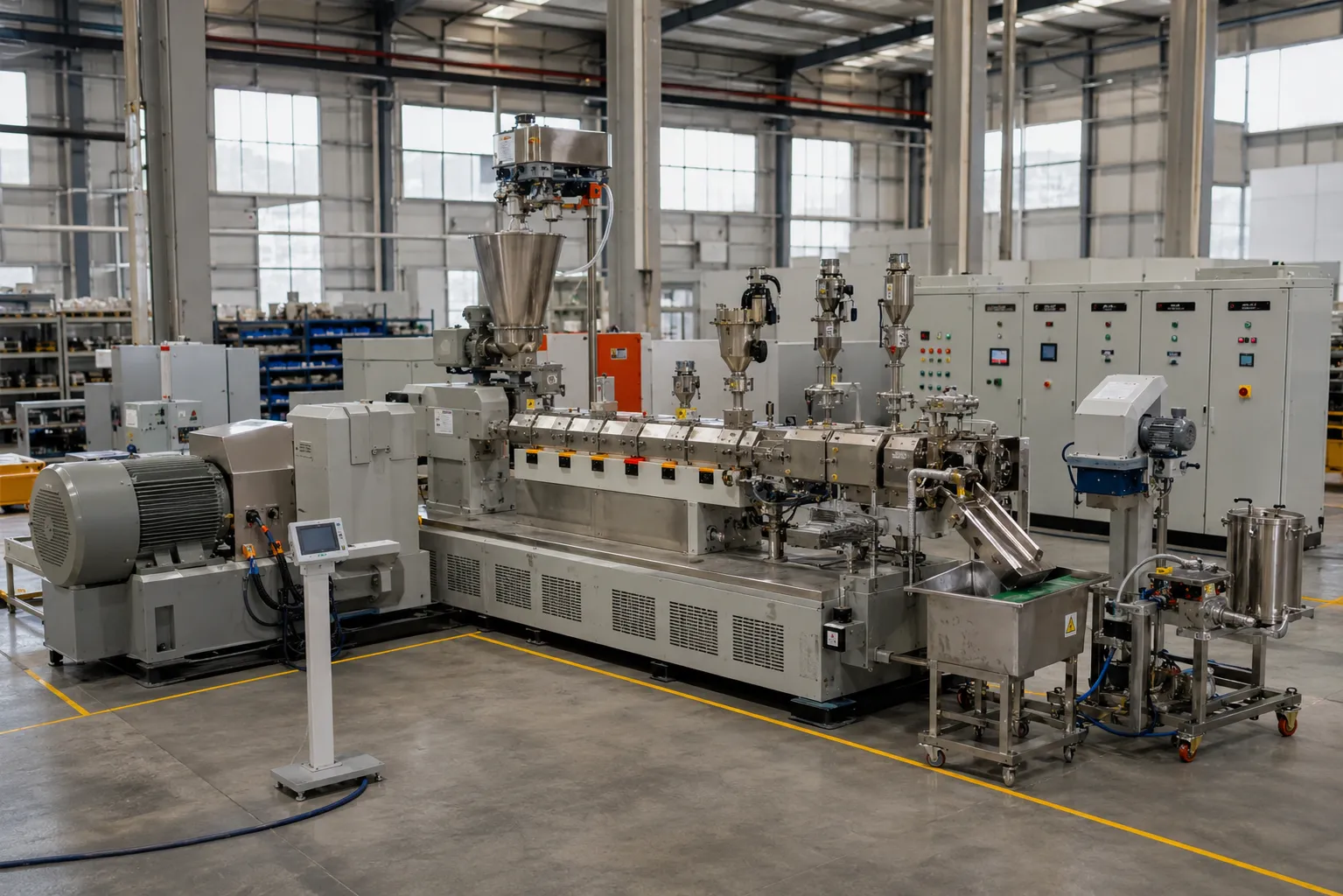
Multi-Function Twin-Screw Line
Plasticizing, mixing and exhaust in one line with ±1.5°C control — fast changeover for multi-material producers.
±1.5°C controlQuick changeover
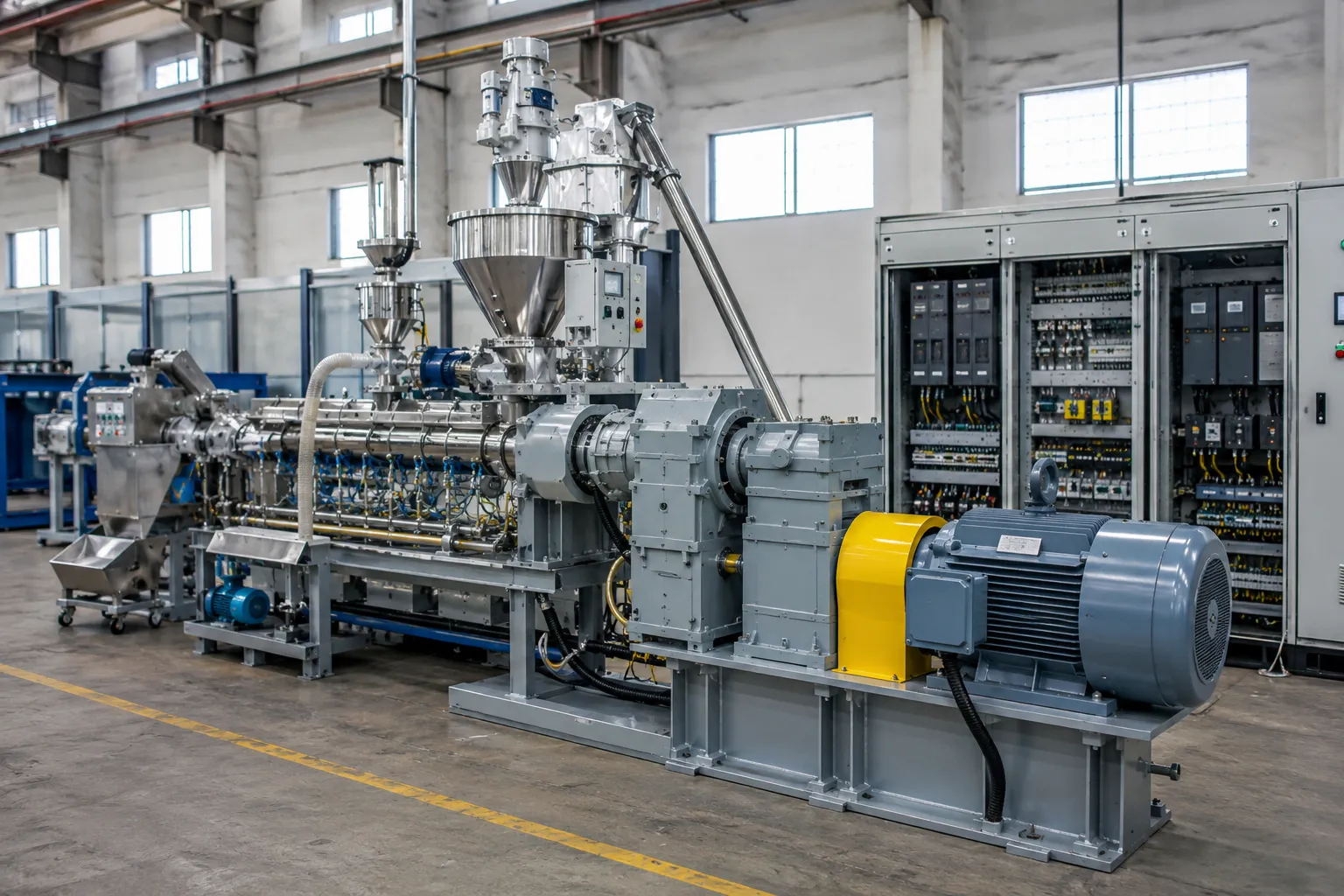
Energy-Saving Efficient Line
Optimized drive and frequency-conversion control cut energy 15–20% while raising output; ≤75 dB operation.
−20% energy+30% efficiency
Technical Data
Plastic Compounding Machine Specifications & Models
Three platforms (B / D / Max) cover 150 – 4,200 kg/h. Screw elements, L/D and downstream equipment are set per recipe.
| Model | Screw Ø (mm) | L/D | Speed (rpm) | Motor (kW) | Torque (N·m/cm³) | Output (kg/h) |
|---|---|---|---|---|---|---|
| UET50-B | 50 | 32–36 | 400–550 | 55–75 | 7.5 | 280–400 |
| UET65-B | 65 | 36–40 | 400–550 | 110–132 | 8.0 | 550–700 |
| UET35-D | 35 | 30–34 | 400–600 | 45–55 | 10.0 | 150–220 |
| UET75-D | 75 | 38–42 | 400–600 | 250–315 | 11.5 | 850–1,100 |
| UET95-D | 95 | 38–42 | 400–600 | 500–560 | 12.0 | 1,600–2,000 |
| UET125-Max | 128 | 42–46 | 400–600 | 1,120–1,250 | 17.5 | 3,500–4,200 |
Standard build: Siemens motor · SKF bearings · Schneider PLC · bimetallic barrel (HRC 58–62) · PID ±1.5°C zoned temperature control · loss-in-weight main + side feeding · strand / water-ring / hot-face / underwater pelletizing · CE & ISO 9001 · 24-month core-component warranty.
* Compounding lines typically run L/D 40–48 for mixing and venting. Output varies with recipe bulk density and filler ratio — send your formulation for exact sizing.
Engineering
Why UET Plastic Compounding Machines Outperform
Every design decision targets one goal: a more uniform compound at a lower cost per kilogram, with maximum uptime.
High Torque Density
Torque grade up to 17.5 N·m/cm³ pushes output up without raising screw speed or melt temperature — needed for high-fill recipes.
Modular Barrel & Screws
Screw elements and barrel sections swap to change recipes; quick-release clamps cut changeover time by up to 30%.
±1.5°C Melt Control
Independent zoned heating/cooling with PID control holds heat-sensitive materials such as PLA and PBAT below degradation temperature.
Wear-Resistant Core
Bimetallic barrel (HRC 58–62) and powder-metallurgy screw elements last longer in abrasive, high-fill applications.
−15–20% Specific Energy
Efficient gearbox and optimized screw profiles lower kWh/kg versus conventional designs — a direct cut in your electricity bill.
Corrosion-Resistant Options
Corrosion-resistant barrel liners for flame retardants and acid additives extend core-part life in aggressive formulations.
Applications
Materials a Plastic Compounding Machine Processes
Screw configuration, L/D and feeding layout are set around your exact recipe.
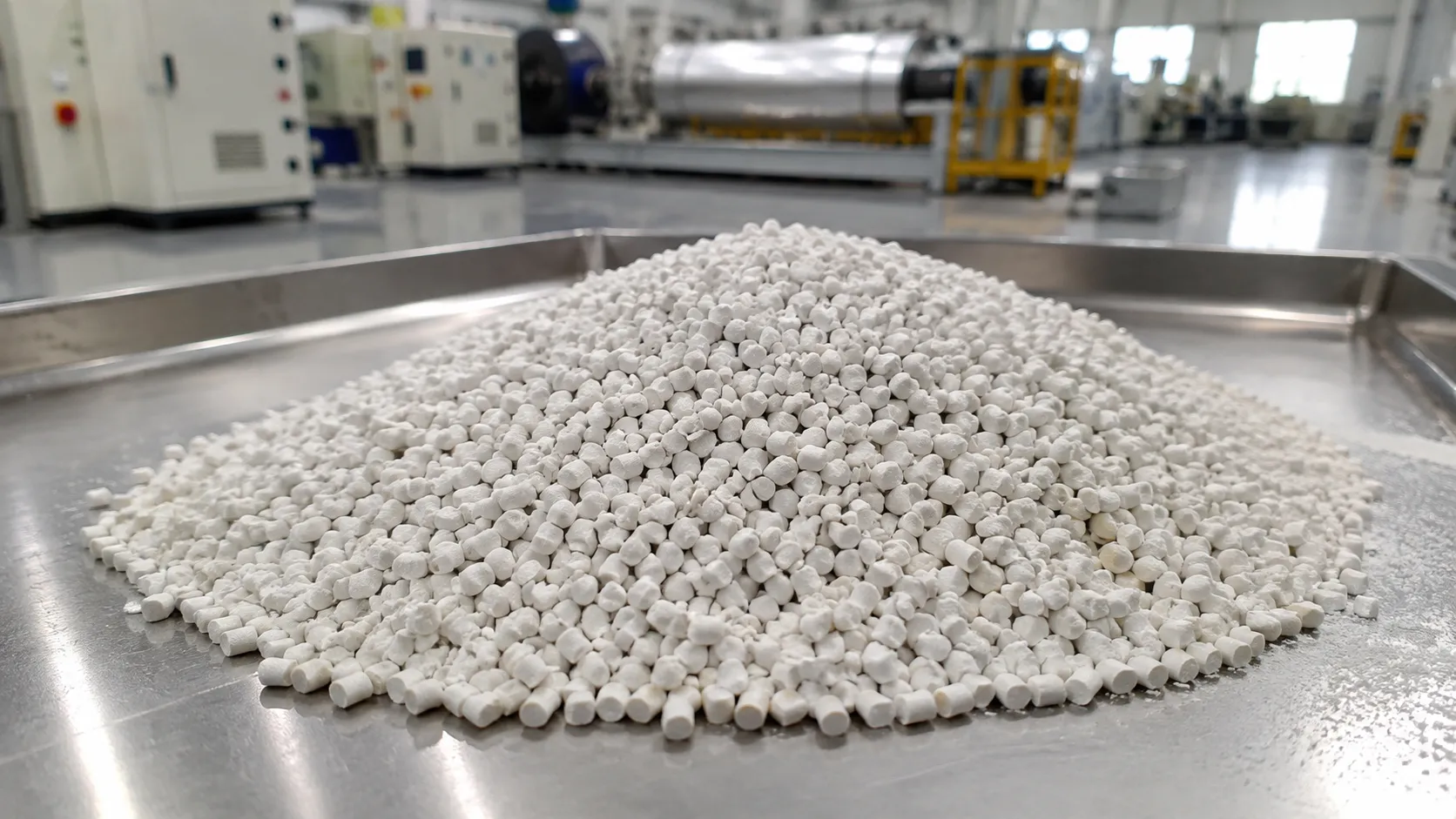
Filler Masterbatch
High-load CaCO₃, talc and BaSO₄ with uniform dispersion and no over-shearing.
CaCO₃ ≤85%TalcBaSO₄
End products: pipes, films, injection parts
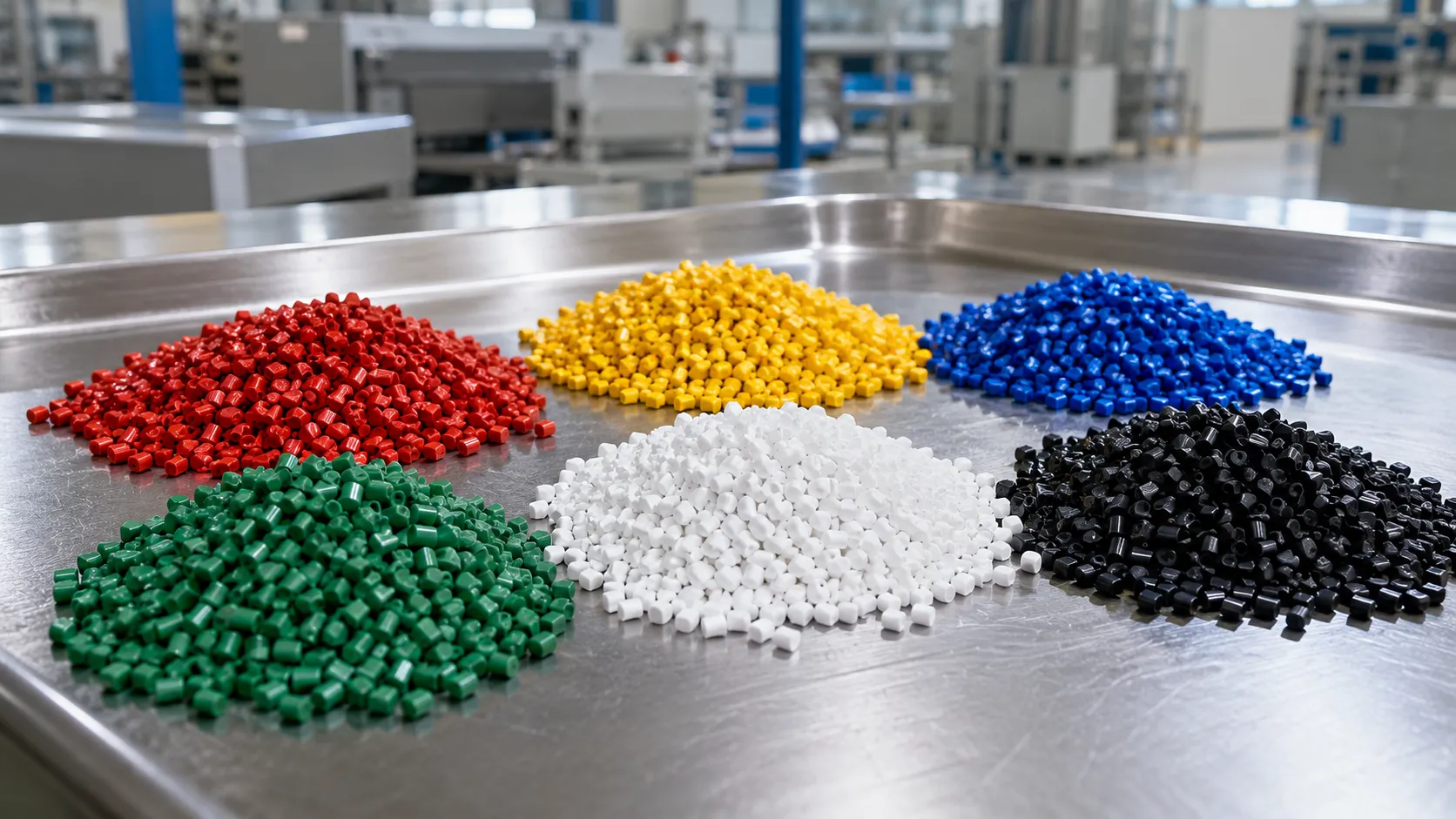
Color Masterbatch
Precise pigment dispersion with consistent color strength (ΔE < 1.0) and easy changeover.
TiO₂Carbon blackOrganic pigments
End products: fibers, packaging, consumer goods
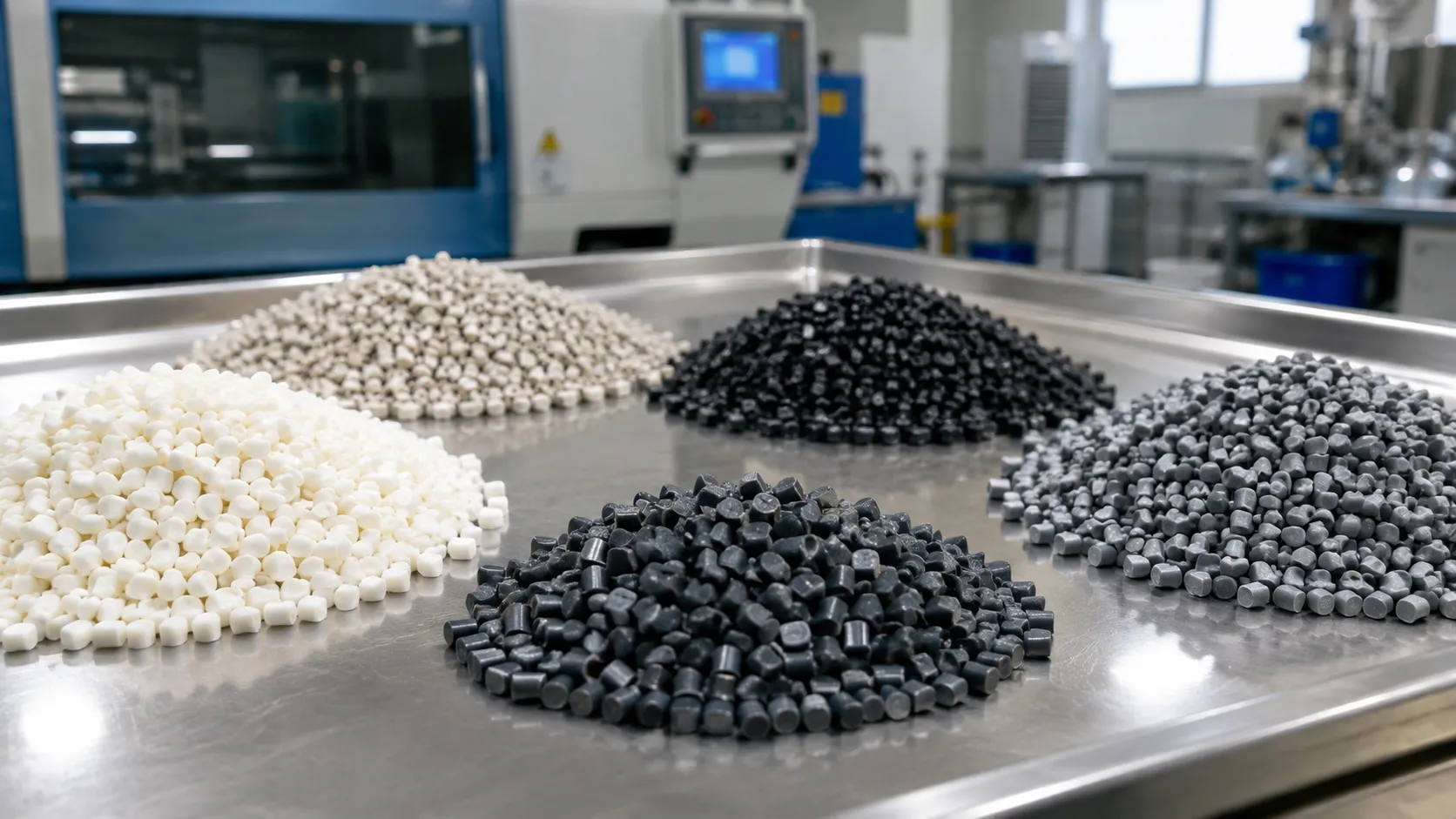
Engineering Plastics
Glass-fiber reinforced and flame-retardant compounds with stable mechanical strength.
PA6/PA66-GFPC/ABSPBT
End products: automotive, e-housings, connectors
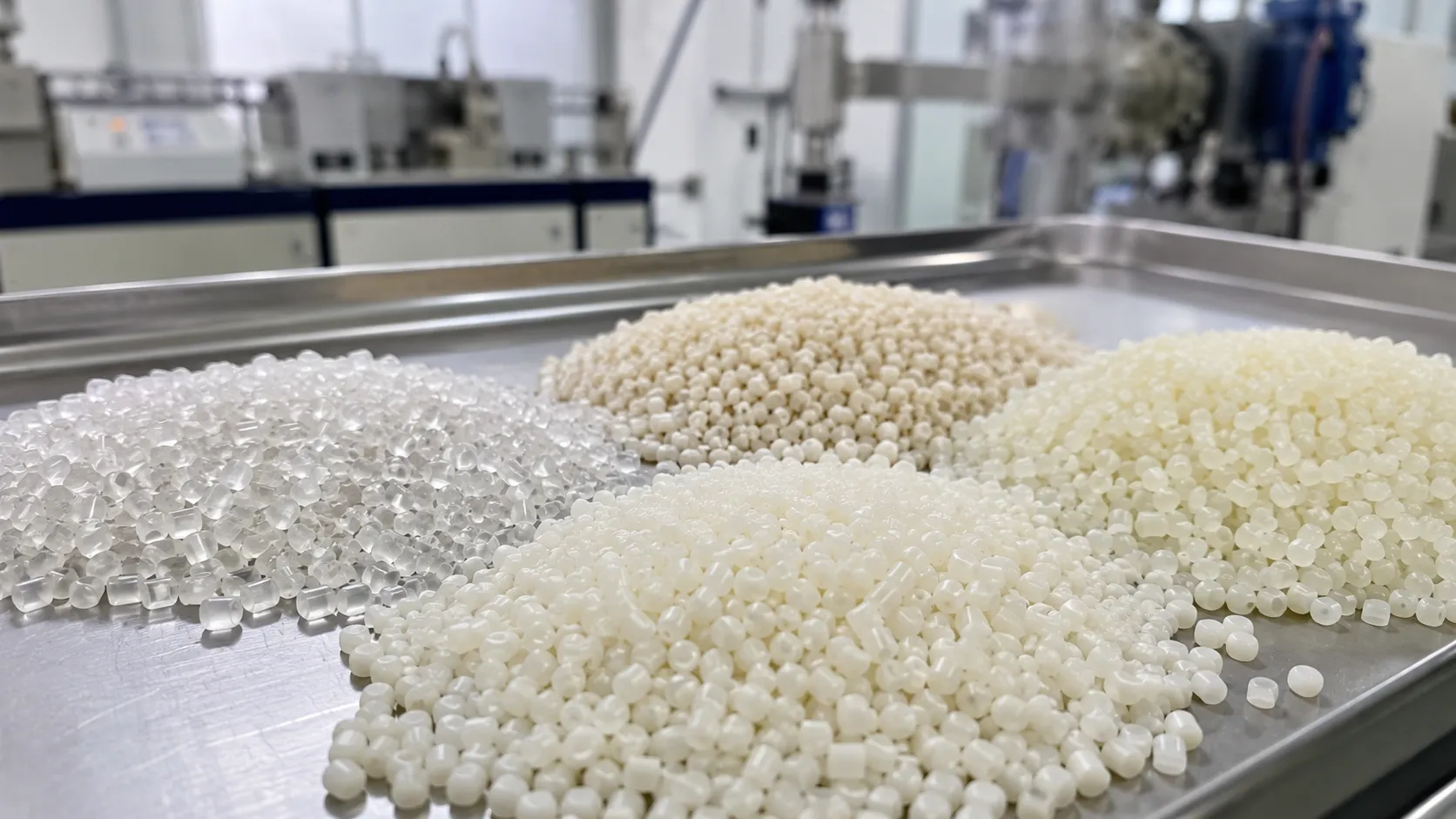
Biodegradable Plastics
Low-shear compounding of heat-sensitive biopolymers with precise melt temperature.
PLAPBATStarch blends
End products: compostable bags, film, tableware
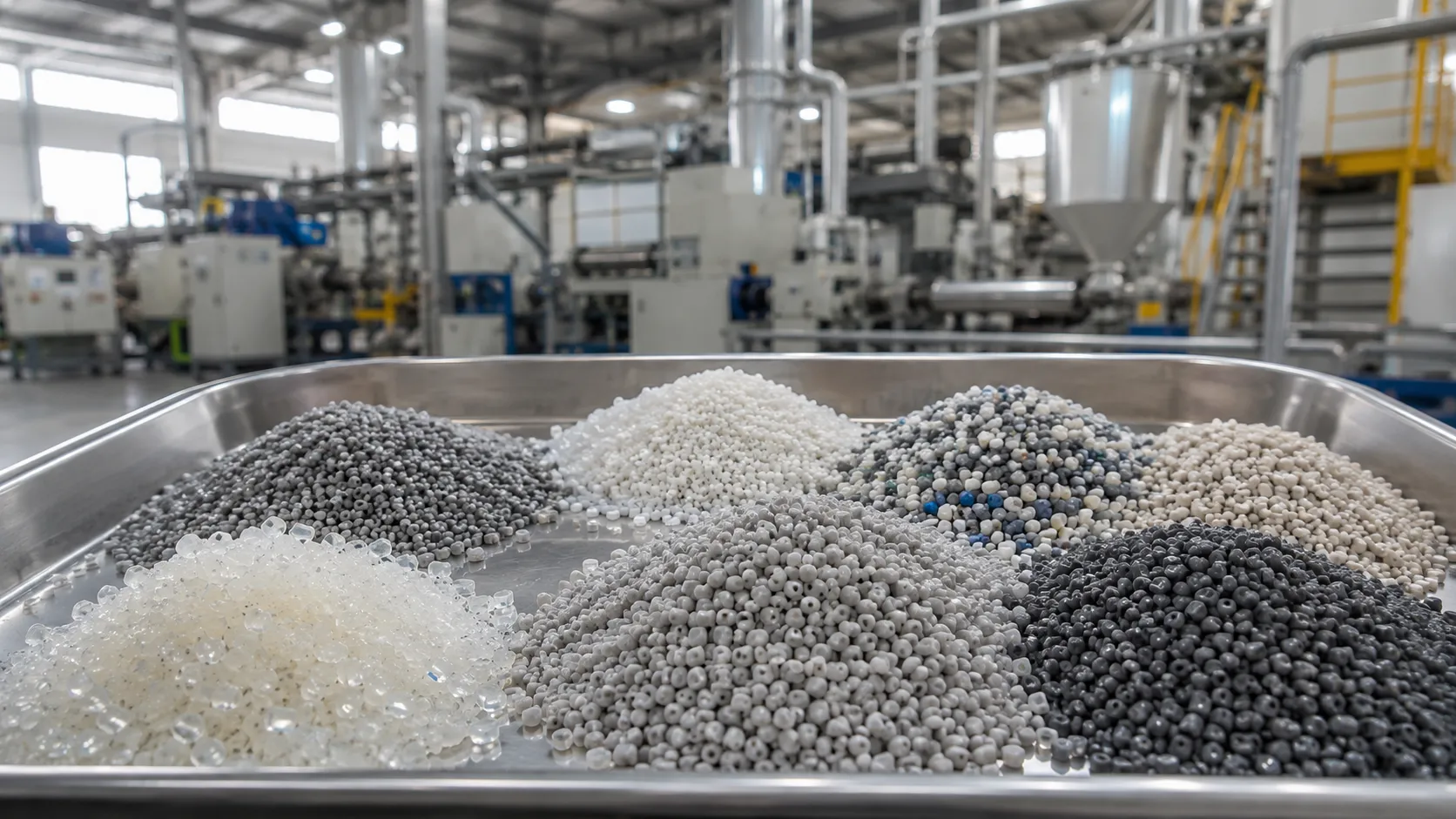
Recycled Plastics
Post-consumer and industrial regrind upgraded into reusable, specification-grade pellets.
rPErPPrPET
End products: strapping, sheets, molded parts
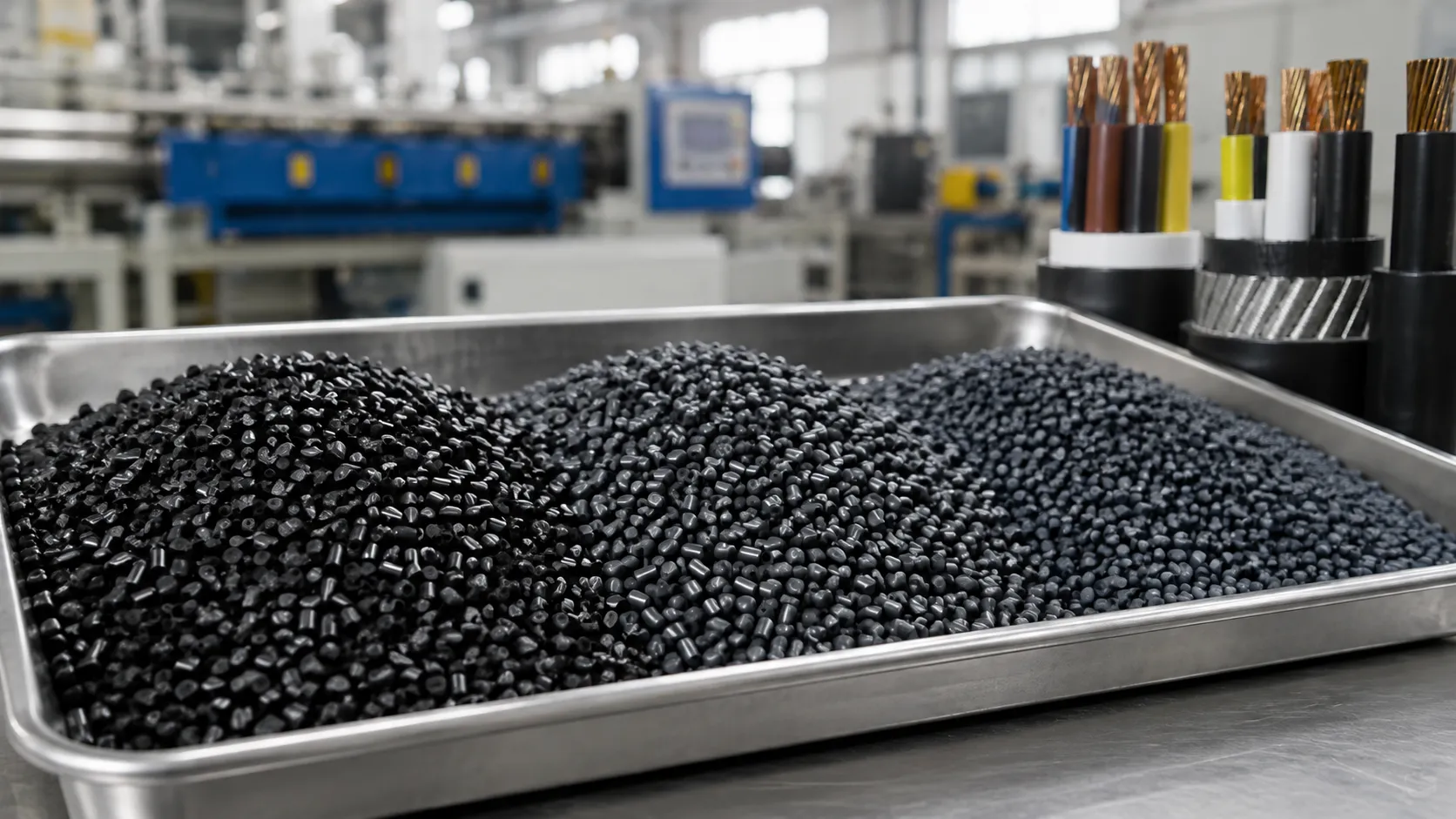
Cable & Special Compounds
Insulation and sheathing compounds with reliable dielectric and mechanical properties.
XLPELSZHTPE/TPU
End products: wire & cable, seals, hoses
Line Layout
Complete Plastic Compounding Line Layout
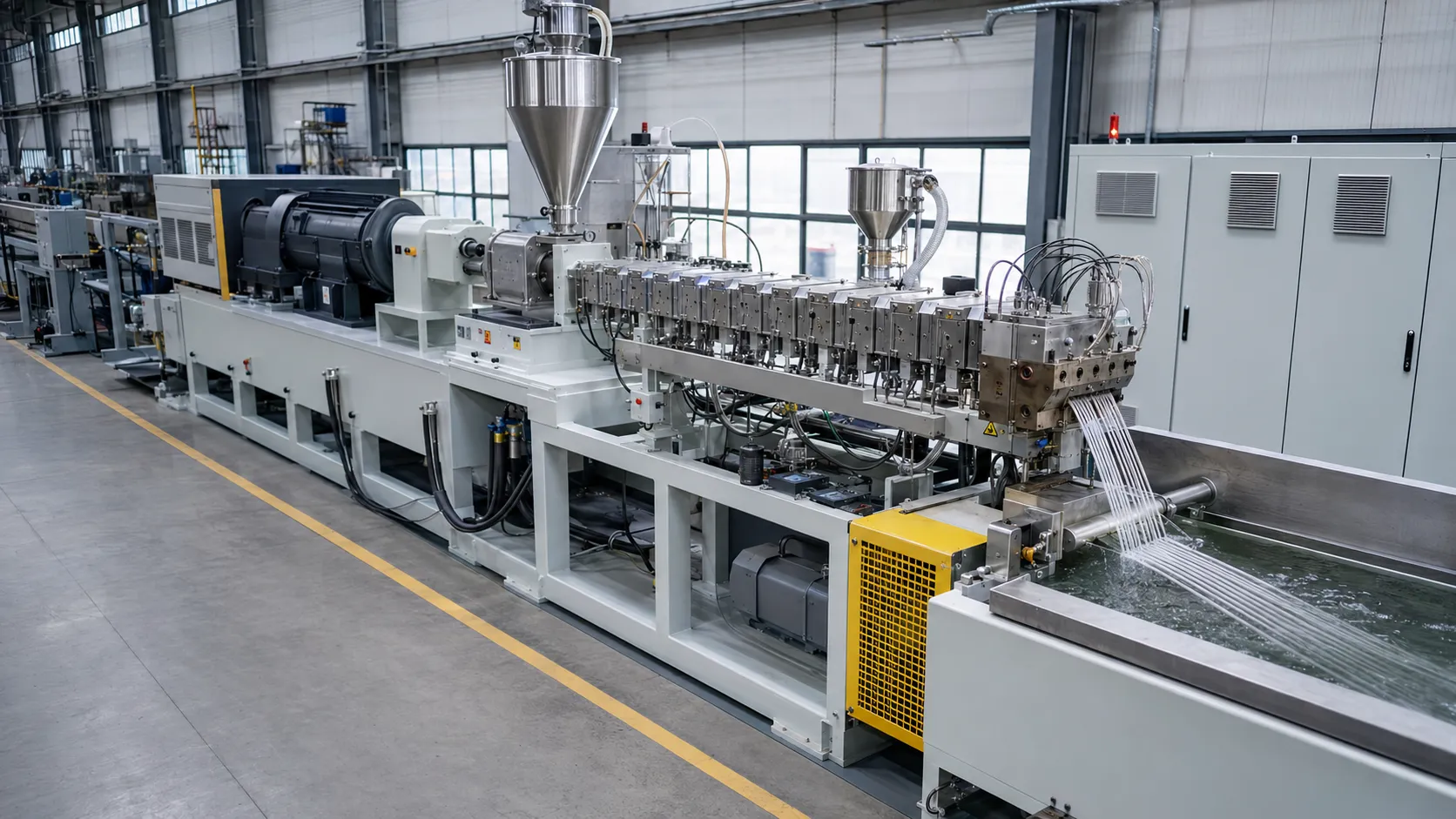
Feeding, extrusion, venting, pelletizing, cooling and packing — the whole line is built and test-run under one roof.
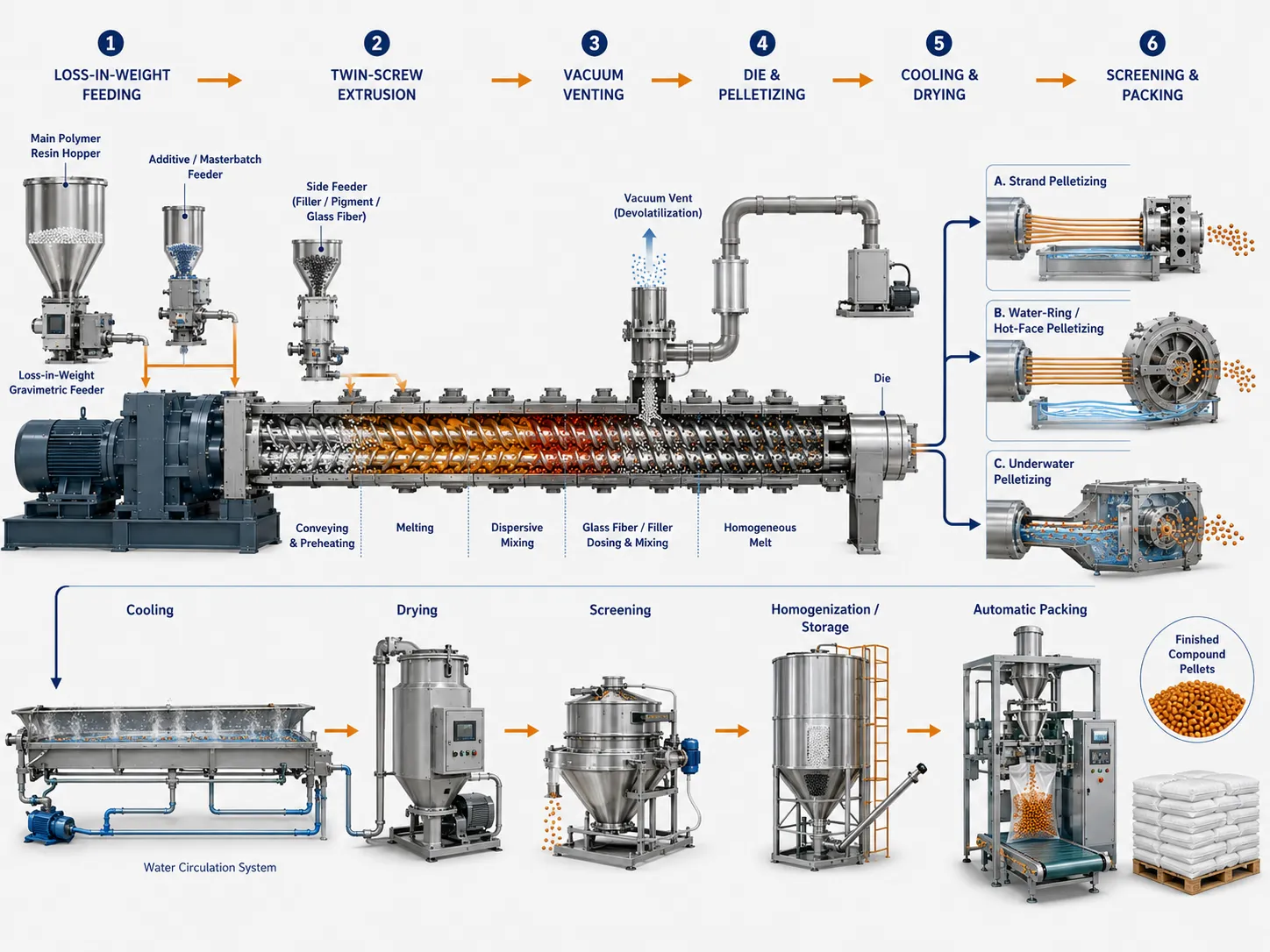
Equipment Flow
1
Loss-in-Weight Feeding
Gravimetric feeders for resin, additives and side-dosed fillers.
2
Twin-Screw Extrusion
Melting, dispersive mixing and downstream glass-fiber dosing.
3
Vacuum Venting
Moisture and volatiles removed before the die.
4
Die & Pelletizing
Strand, water-ring, hot-face or underwater cutting head.
5
Cooling & Drying
Water trough or centrifugal dryer for clean, dry pellets.
6
Screening & Packing
Vibrating sieve, homogenization silo and auto bagging.
Factory-Direct
Built, Test-Run and Supported by UET
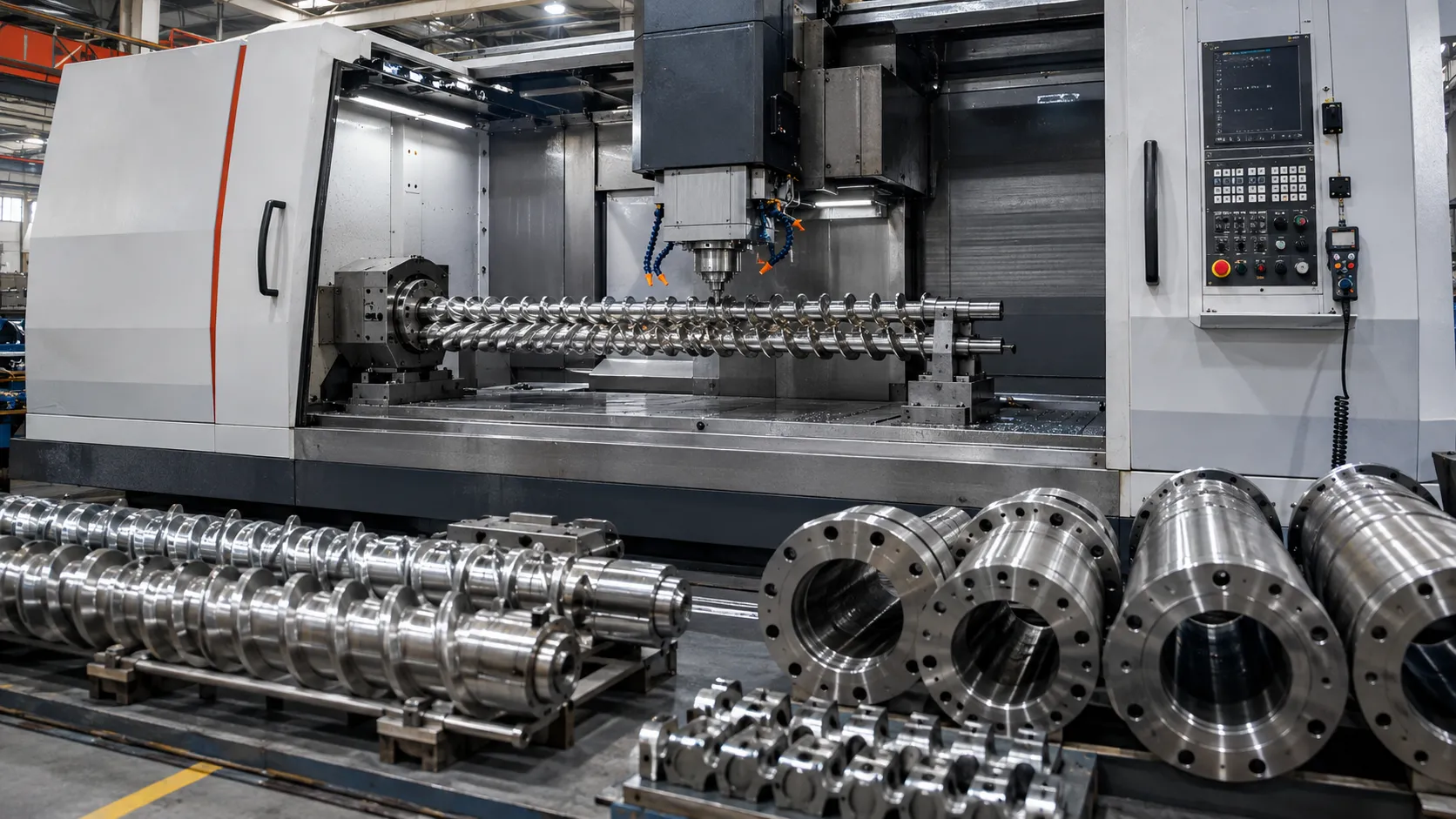
Every plastic compounding machine is machined, assembled and full-load tested in our own factory — no trading company in between.
11,400㎡Manufacturing base
350+Engineers & staff
100%Test-run before shipping
CECertified builds
- 1Consult & quoteItemized quotation within 2 hours
- 2Engineering & approvalScrew layout, L/D and line drawing — 2–5 working days
- 3Manufacturing & material test-run1–2 weeks standard · 4–6 weeks customized
- 4Shipping & commissioning7–15 days international shipping, 24/7 engineer support
Verified Results
Trusted by Compounders in 80+ Countries
“On high calcium-carbonate filled material the dispersion is uniform batch after batch. Monthly output matches schedule, and delivery was twice as fast as the competitors we evaluated.”

Liam CarterPlastic Modification Processor · North America
“Color deviation on automotive instrument-panel compound stays within 0.5 ΔE. The line has run continuously at full load for three months without a single failure.”

Noah BennettAutomotive Interior Plastics · Production
“Best cost-performance we found after evaluating three manufacturers. The interface is intuitive — new operators were productive after half a day of online training.”

Olivia ReedPackaging Material Manufacturer
“PLA compounding parameters are precise and the degradation rate meets standard. After-sales engineers guided us by video within 72 hours and lifted efficiency 15%.”

Ethan MooreBiodegradable Plastics Processor
Explore UET
Related Compounding Equipment
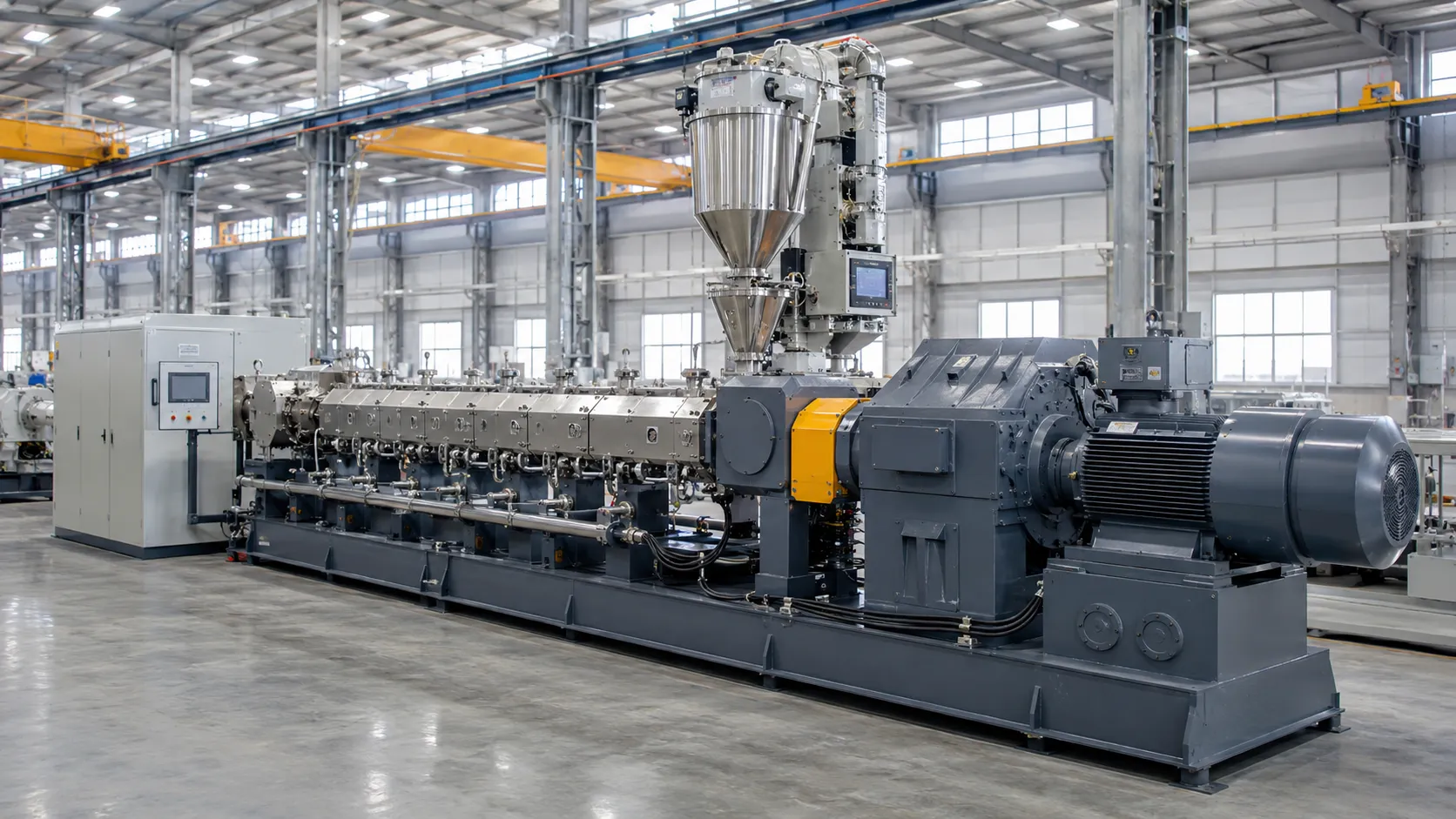
Twin Screw Extruder
The co-rotating platform behind UET compounding lines, 80–2,500 kg/h.
View Details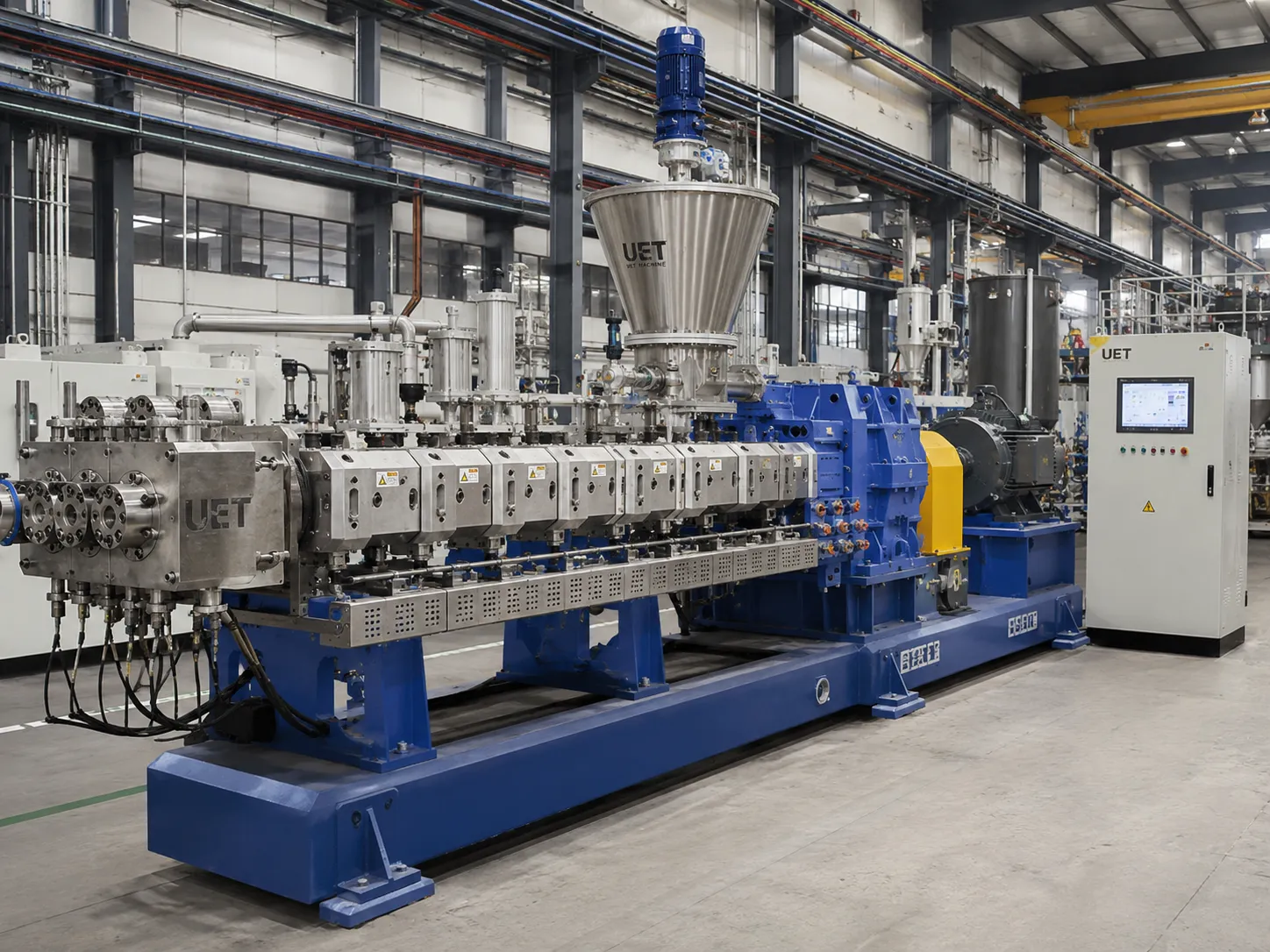
Triple Screw Extruder
Three intermeshing screws for nano-level dispersion in high-fill and medical-grade compounds.
View Details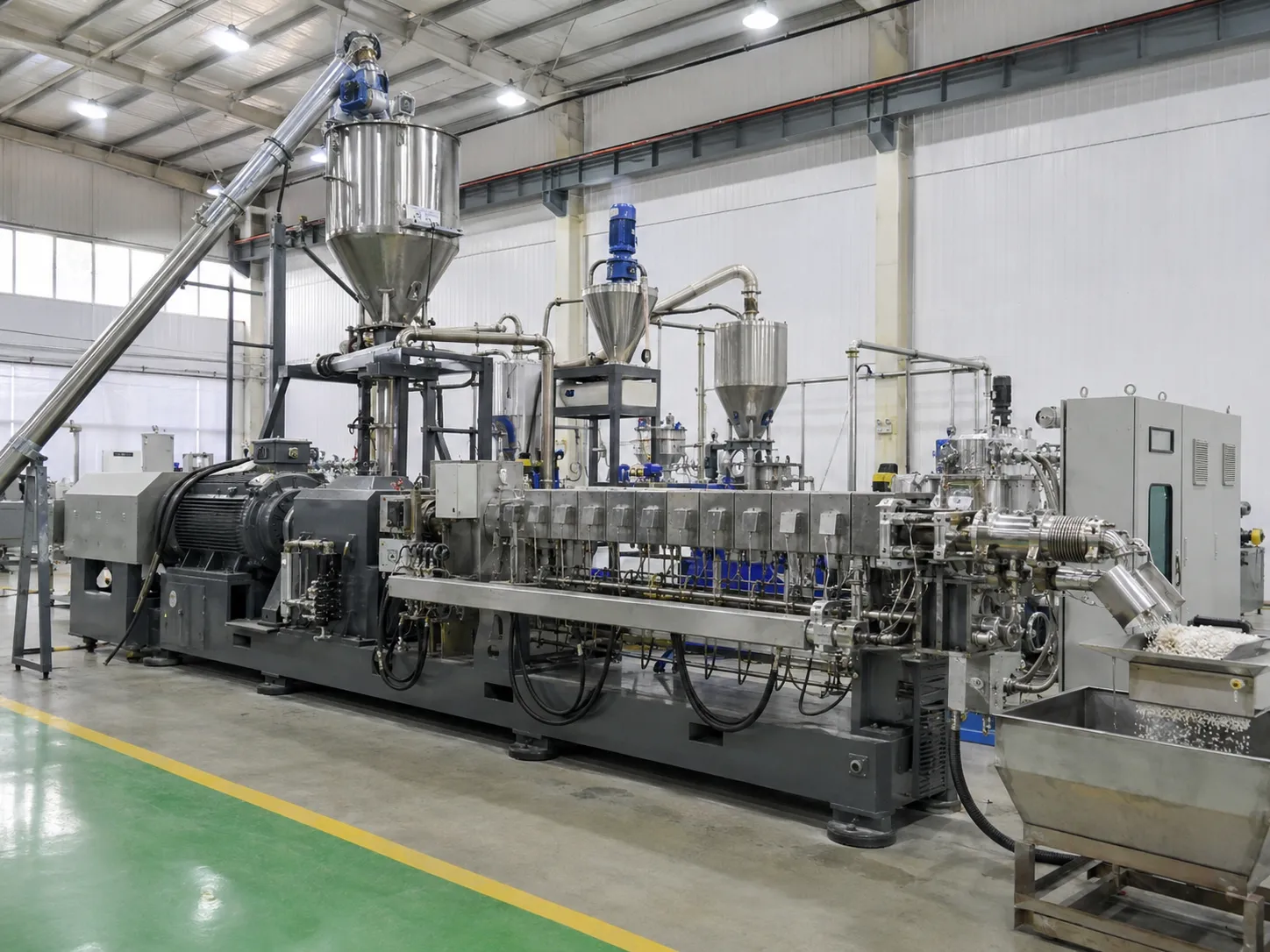
Filler Masterbatch Compounding Extruder
Turnkey lines for 50–85% CaCO₃ / talc masterbatch.
View Details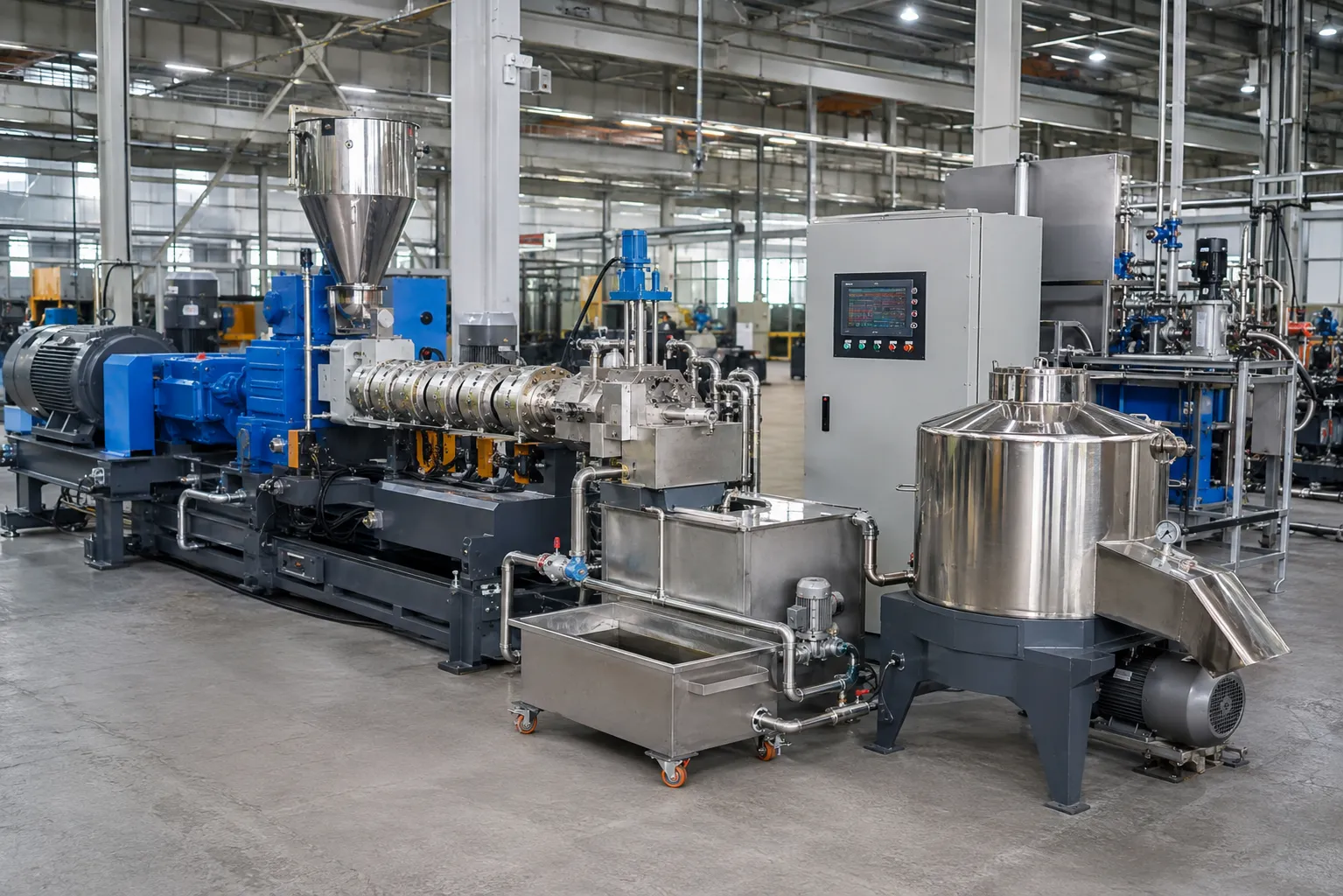
Underwater Pelletizing System
Spherical, low-dust pellets for engineering and biodegradable compounds.
View Details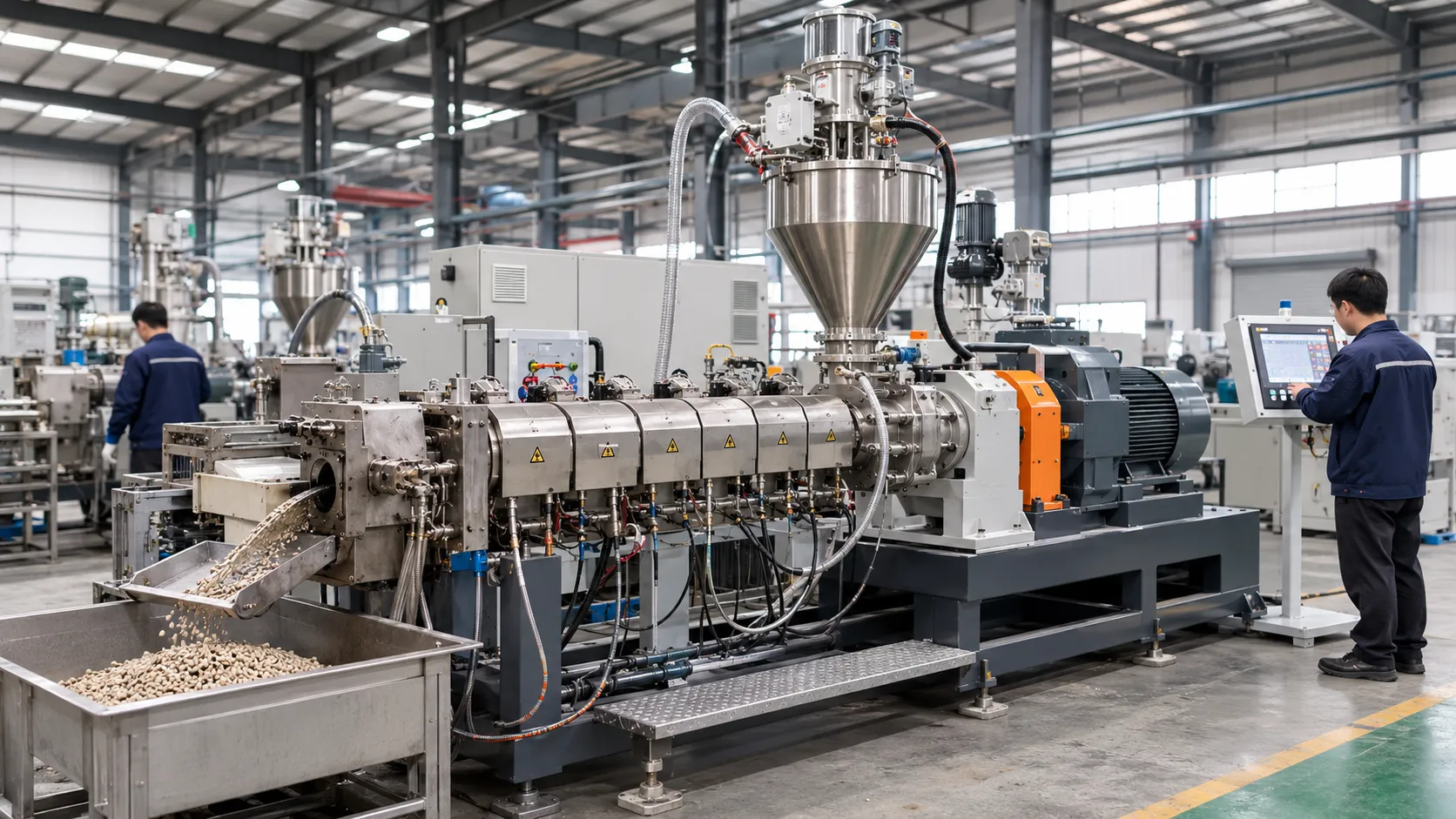
Bio Extruder (PLA / PBAT)
Low-shear compounding of PLA, PBAT and starch blends.
View Details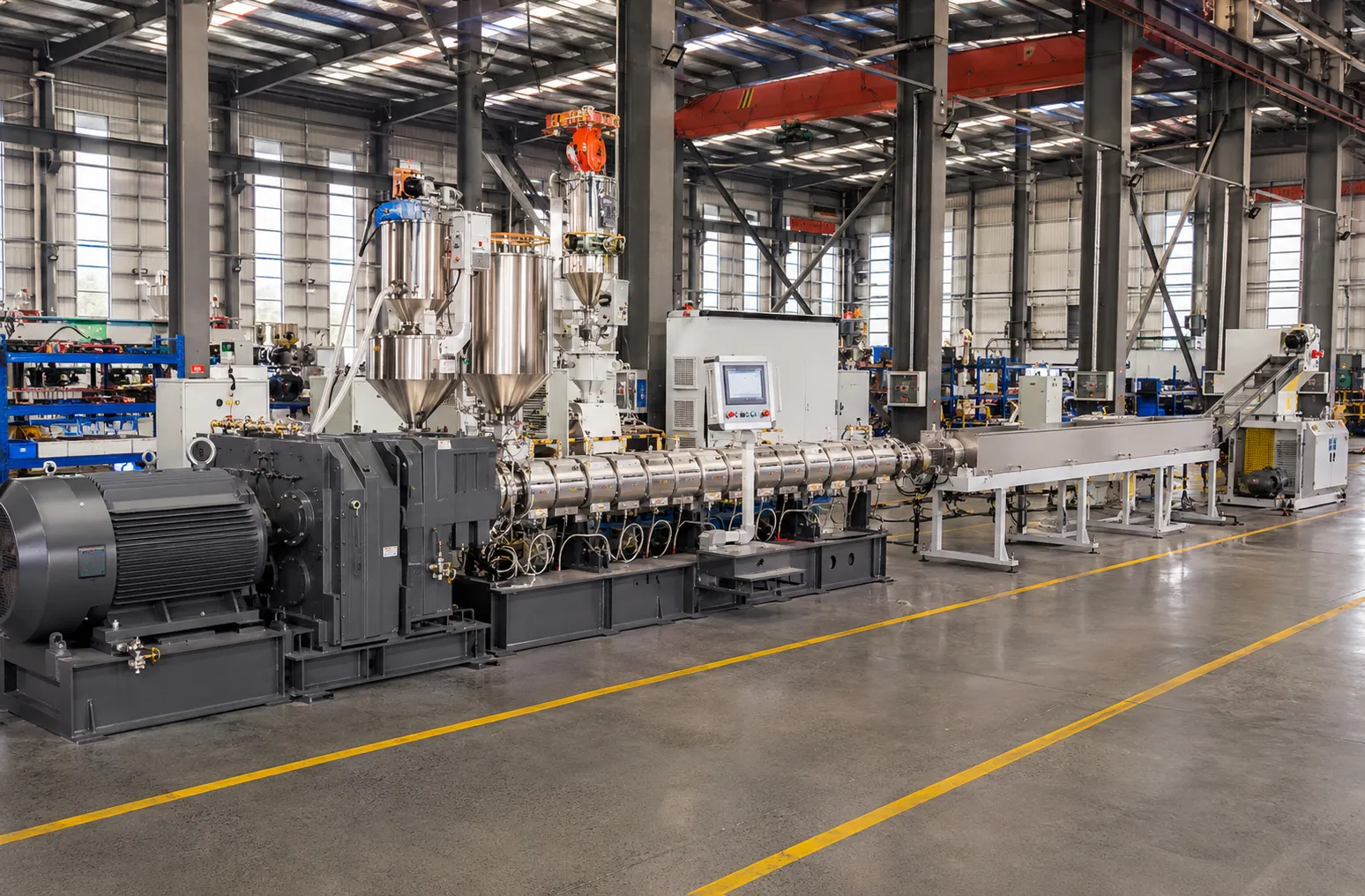
Engineering Plastic Extrusion Line
PA, PC, ABS and glass-fiber reinforcement lines with ±0.03 mm tolerance.
View Details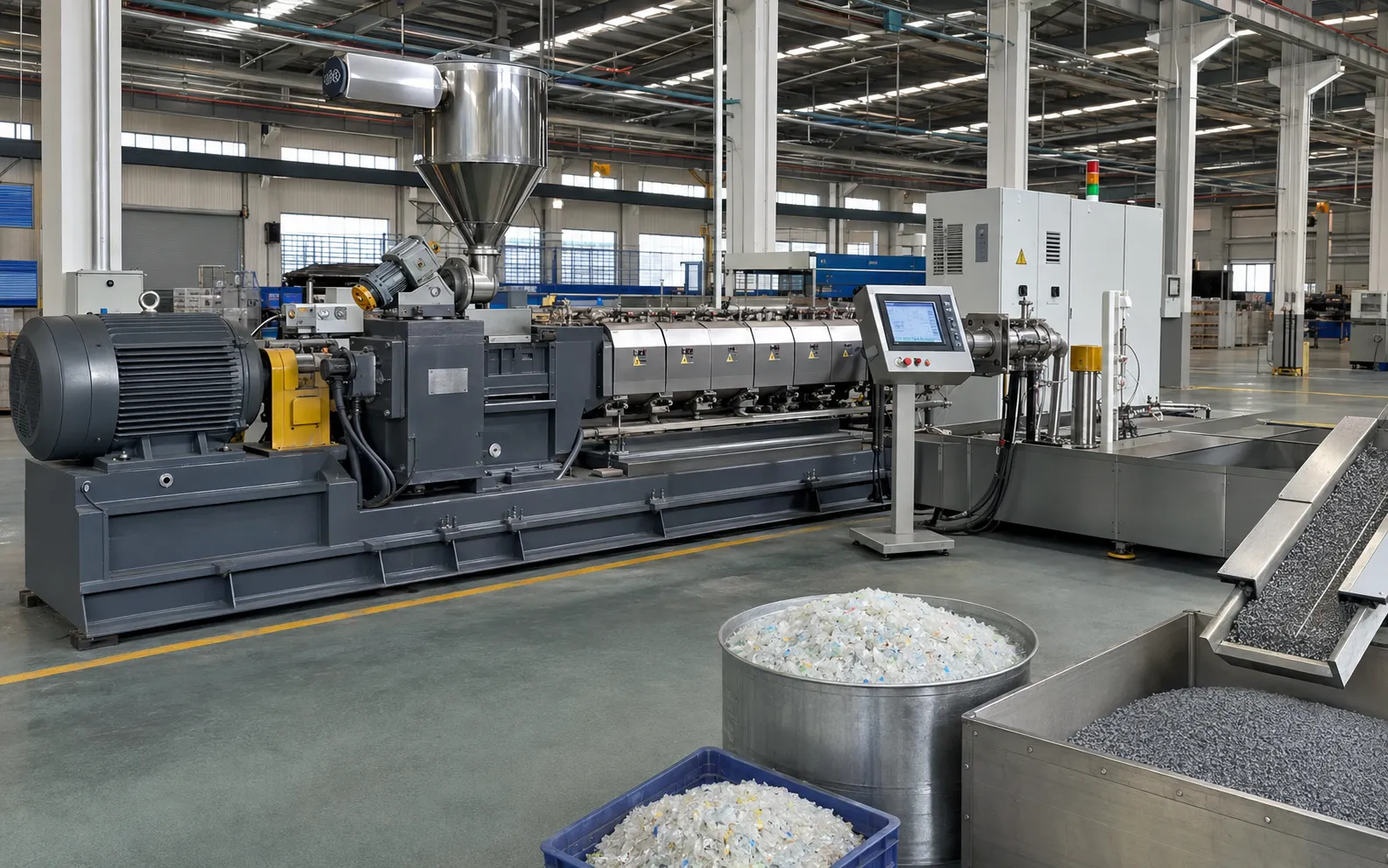
Recycled Plastic Extruder
Twin-screw pelletizing of post-consumer regrind, up to 35% impurity tolerance.
View Details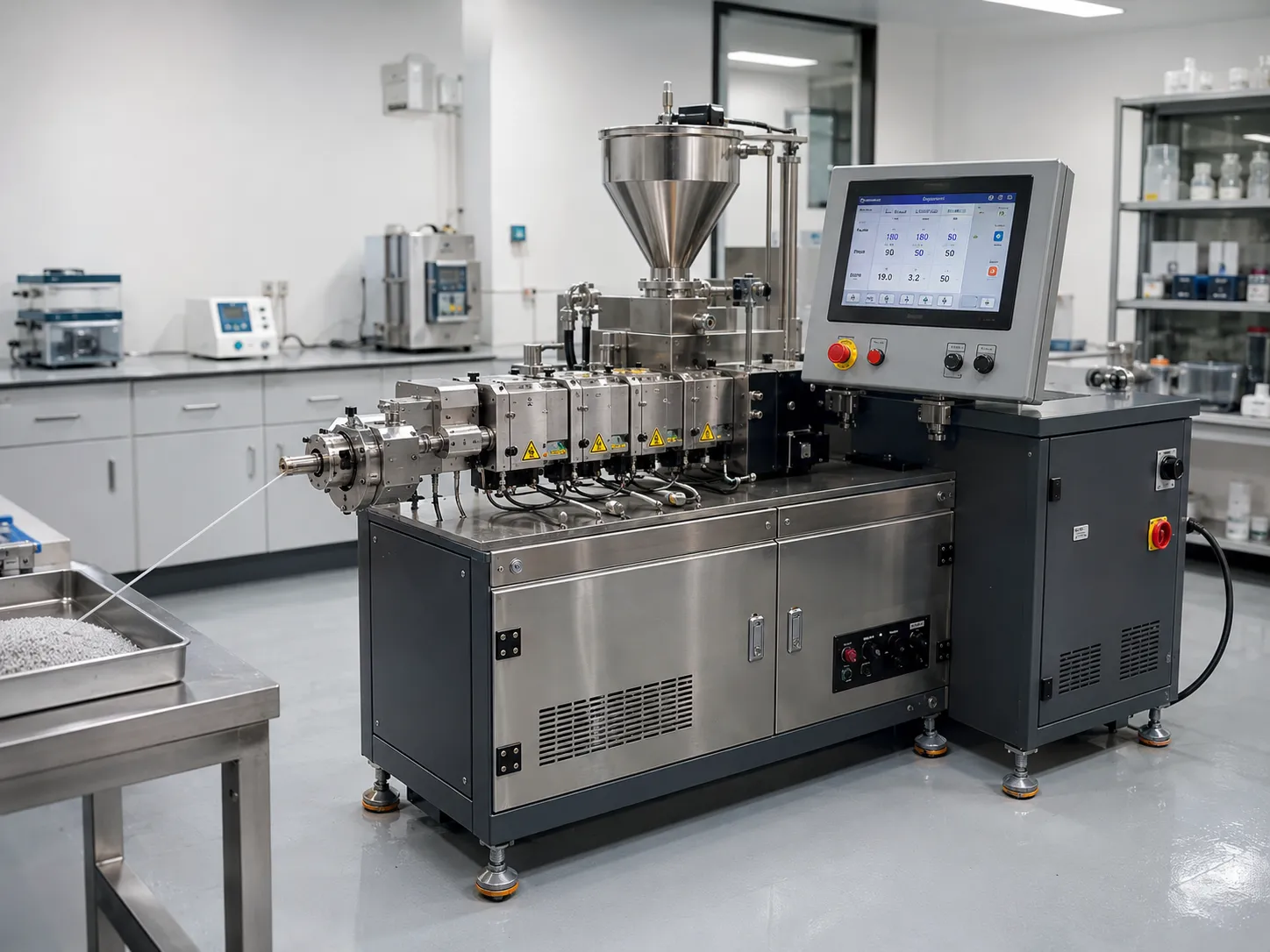
Laboratory Extruder
Bench-scale compounding for recipe development; scales straight to production.
View Details
Knowledge Base
Learn the Technology Before You Buy
Guide
Twin Screw Compounding Extruder: Everything You Need to Know
Torque, L/D ratio and screw configuration — what actually decides compounding quality.
GuideSingle vs Twin Screw Extruder: The Practical Difference
When a single screw is enough, and when compounding demands intermeshing twin screws.
GuideWhat Are the Types of Twin Screw Extruder?
Co-rotating vs counter-rotating, parallel vs conical — selection criteria explained.
Technical FAQ
Plastic Compounding Machine FAQ
What is a plastic compounding machine?
A plastic compounding machine is a co-rotating twin-screw extrusion system that continuously melts, mixes and homogenizes polymer resins with fillers, pigments and additives, then pelletizes the homogeneous melt into uniform compound pellets. It is the core equipment for producing masterbatch, glass-fiber reinforced engineering plastics, biodegradable compounds and recycled pellets.
How does a plastic compounding machine work?
The working principle of a plastic compounding machine: raw materials are dosed by loss-in-weight feeders into the barrel, where intermeshing co-rotating screws convey, melt and shear the formulation; kneading blocks provide dispersive mixing, vent zones remove volatiles, and the homogeneous melt is pushed through the die and cut into pellets by a strand, water-ring or underwater pelletizer.
What are the main components of a plastic compounding machine?
The main components of a plastic compounding machine are the high-torque gearbox and main motor, modular barrel sections, segmented screws with kneading blocks, loss-in-weight main and side feeders, heating/cooling temperature control units, die head, pelletizing system and PLC control cabinet. UET lines use Siemens motors, SKF bearings and Schneider PLC as standard.
What is the difference between a twin-screw and a single-screw plastic compounding machine?
A twin-screw plastic compounding machine provides intensive dispersive mixing, positive feeding of powders and efficient devolatilization — the reason masterbatch, high-fill and modified compound producers choose it. A single-screw machine mainly melts and re-pelletizes single polymers at lower cost, with limited mixing capability.
What materials can a plastic compounding machine process?
A plastic compounding machine processes PP, PE, ABS, PC, PA and PBT blends, high-load CaCO₃/talc fillers, color pigments, glass fiber reinforcement, flame retardants, biodegradable PLA/PBAT/starch and recycled PE/PP/PET. The screw configuration and L/D ratio are adapted to each specific recipe.
How does a plastic compounding machine achieve uniform dispersion of high-fill materials?
A plastic compounding machine combines kneading blocks and reverse-conveying elements to generate controlled shear and longer residence time, while a side feeder doses filler downstream after the polymer has fully melted. Dispersion uniformity stays above 98% even at 50–80% filler loading, without agglomeration.
What does the L/D ratio mean for a plastic compounding machine?
L/D is the ratio of the screw’s effective length to its diameter in a plastic compounding machine. A higher L/D gives longer residence time and more mixing and venting zones: 32–40 suits general compounding, 40–48 suits high-fill or devolatilization-heavy recipes. UET lines are configured with modular L/D combinations per recipe.
Which pelletizing systems can be integrated with a plastic compounding machine?
Common pelletizing options for a plastic compounding machine include strand (cold-cut) pelletizing for general compounds, water-ring / hot-face pelletizing for high-output polyolefins, and underwater pelletizing for engineering plastics, TPU and biodegradable materials that need spherical, low-dust pellets. UET integrates all four into complete lines.