
Bio Extruder Machines for Biopolymers & Biomass Processing
Twin-screw lines for PLA, PBAT, starch blends and biomass fills, built around one rule: the melt never runs hotter than your recipe allows. Four platforms cover 10 to 1,800 kg/hr, and every machine is trial-run with material before it leaves our works.
35-90mmScrew Diameter
10-1800kg/hr Output
±1°CTemp Control
98%Quality Rate
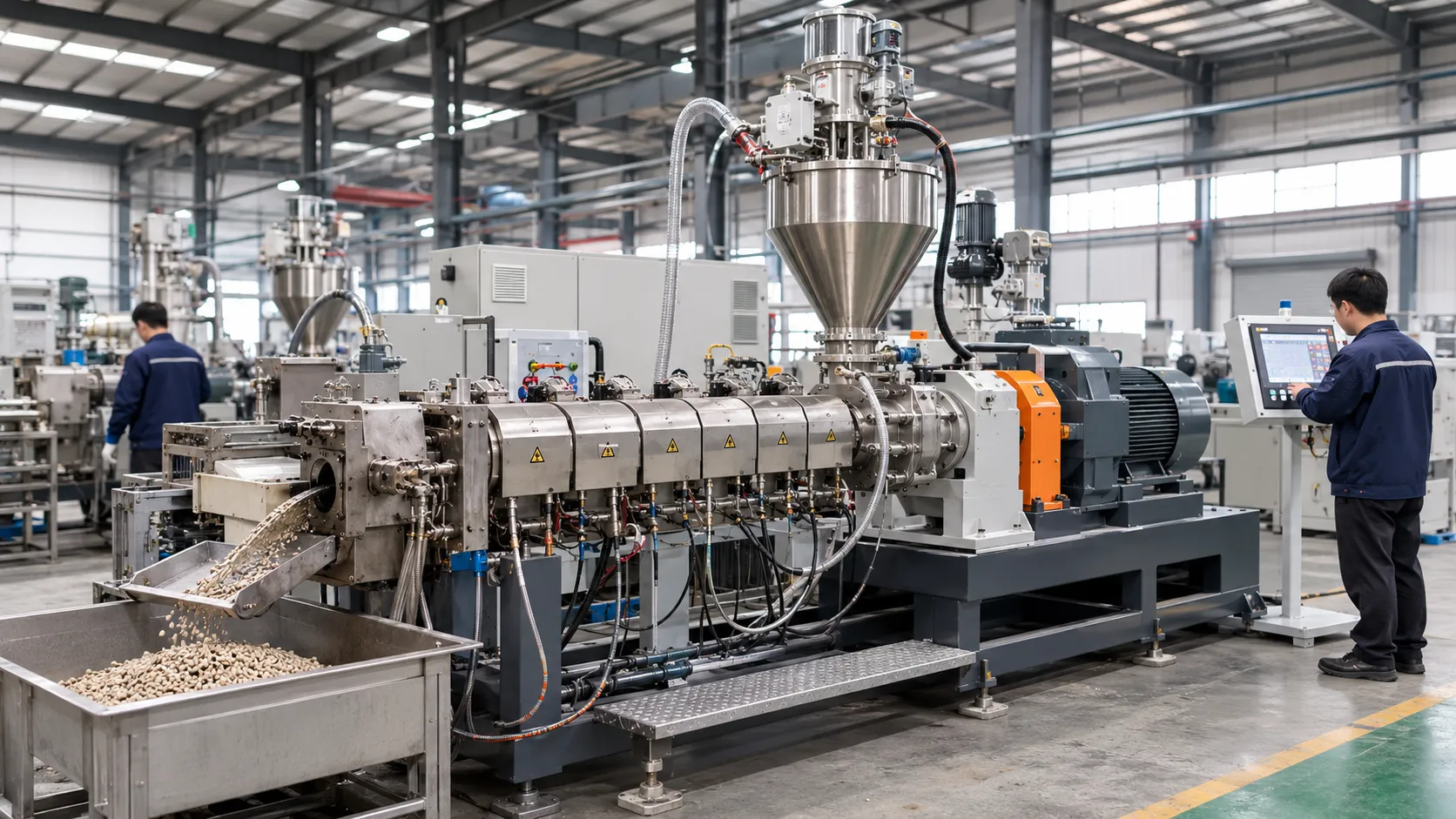
What Is a Bio Extruder?
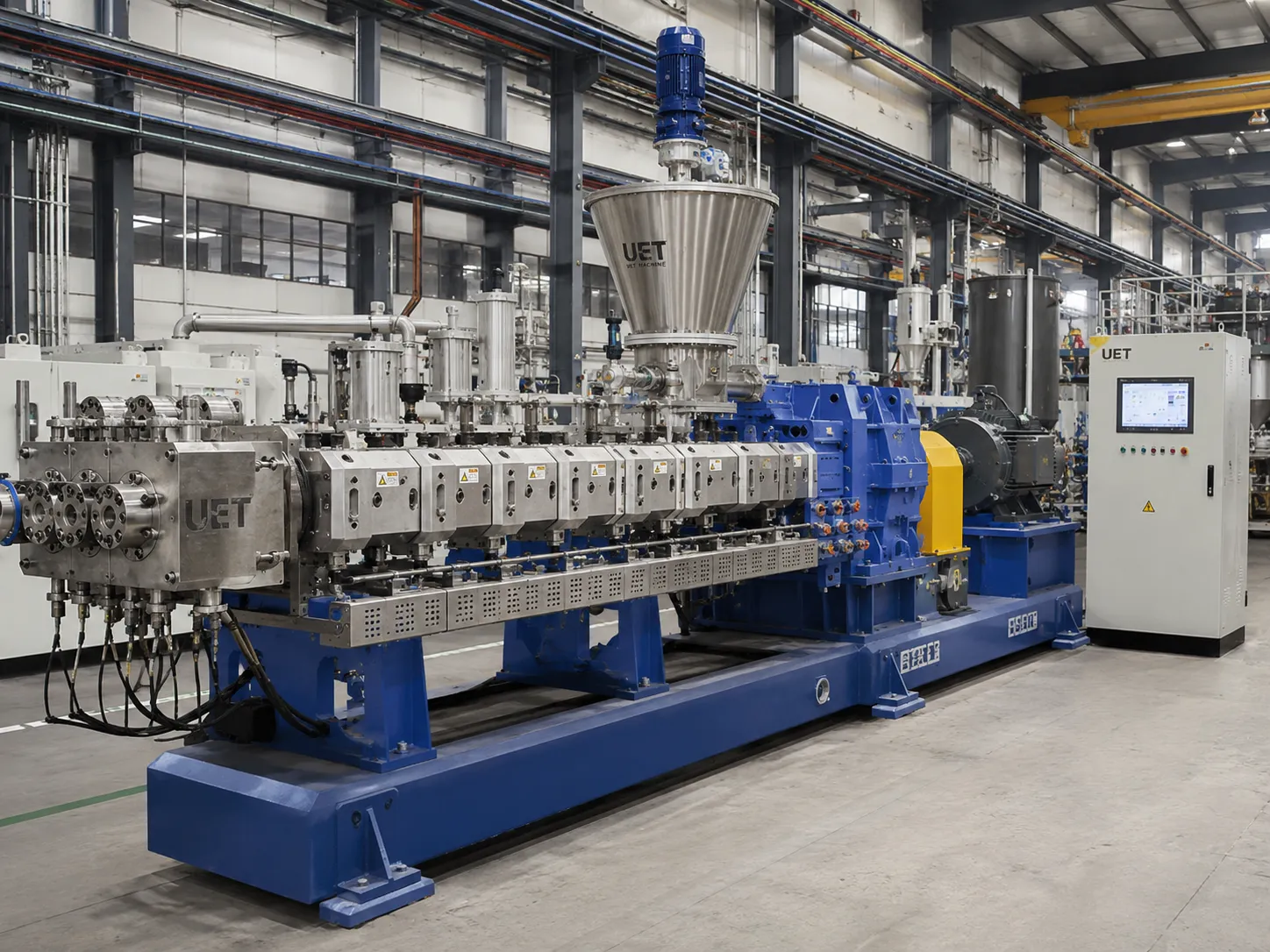
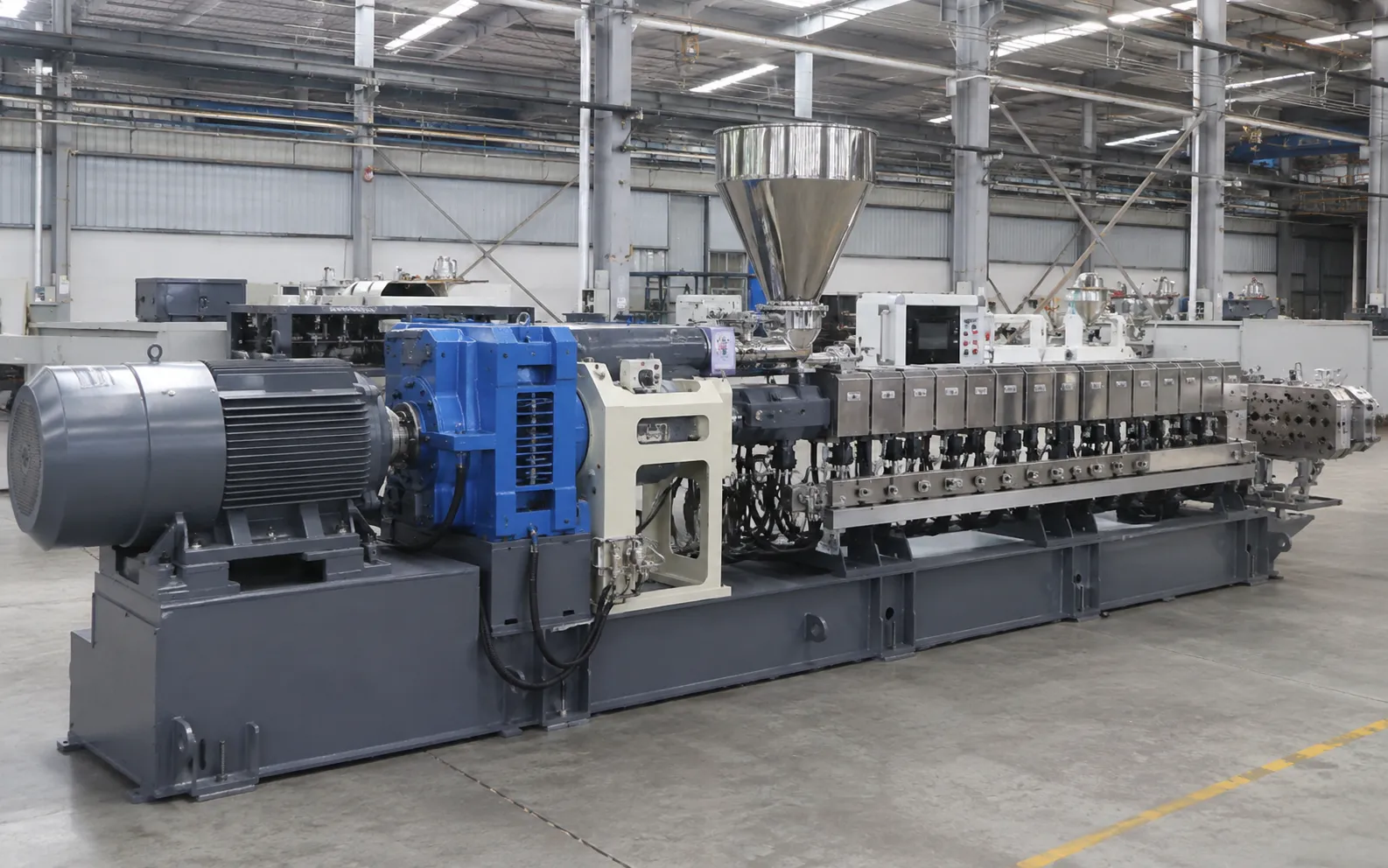
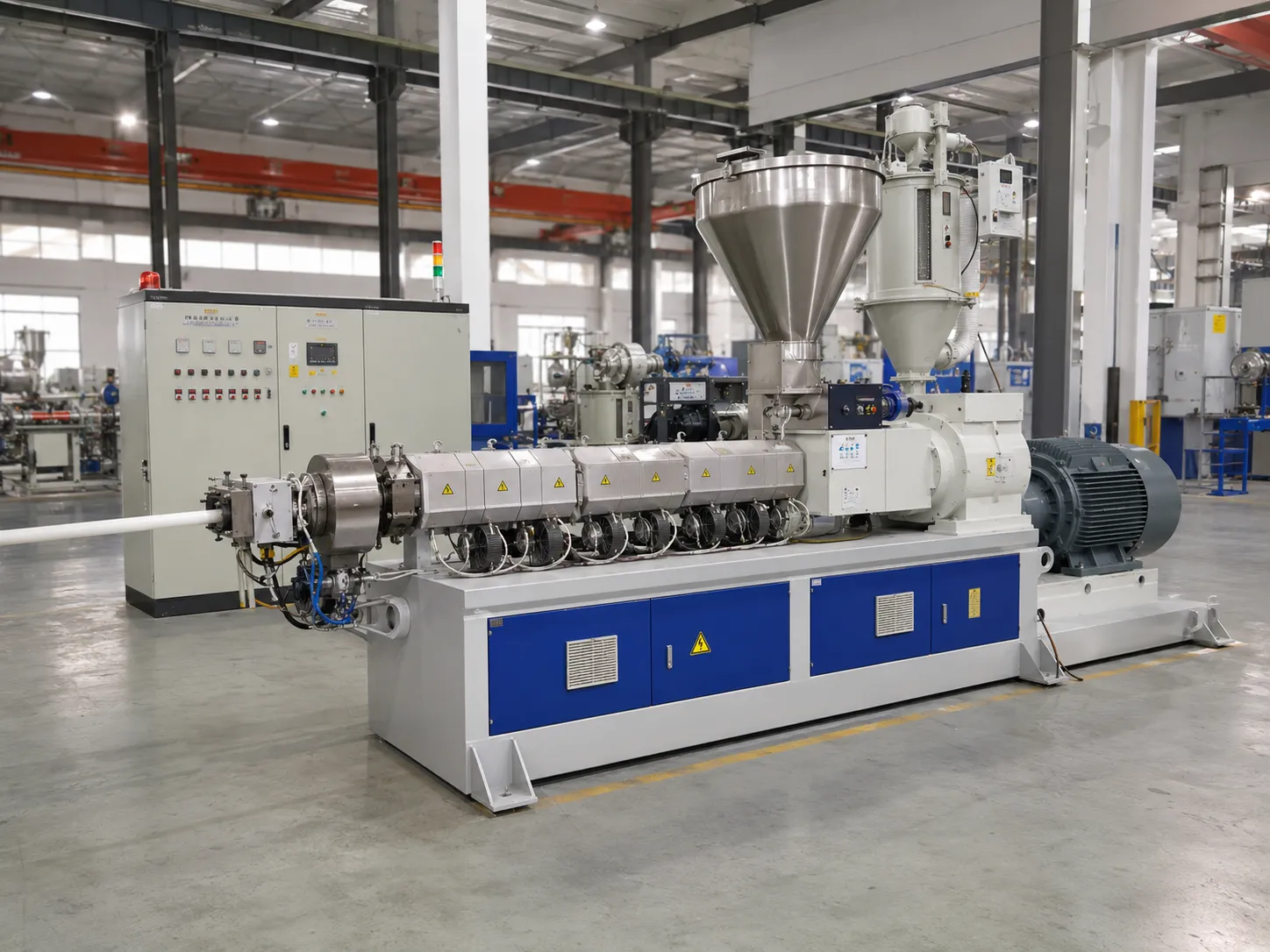
A bio extruder is a twin-screw machine that melts, blends and shapes bio-based polymers — PLA, PBAT, PBS, starch blends, wood-flour fills — into pellets, film, sheet or profiles. It looks like a standard extruder from the outside. Inside, it is a different discipline, because biopolymers start to degrade the moment they overheat.
Why a Biodegradable Plastic Extruder Is Built Differently
Commodity extruders push melt temperature as high as the process needs. A biodegradable plastic extruder does the opposite: it keeps the melt as cool as the recipe allows. PLA, for example, loses viscosity quickly above its window, so we run shorter hot zones, larger vents for moisture, and screw elements that mix at low shear.
That is also why an extruder for biodegradable materials is usually specified with a wider L/D range, wear-resistant barrels for filled recipes, and tighter temperature tolerance — ±1°C per zone on the UET bio line.
What Our Bio Extruders Do Differently
Six engineering decisions we make on every bio line, based on 20+ years of compounding experience.
±1°C Melt Control
Biopolymers degrade within seconds of overheating. Independent zone control holds the melt inside your recipe window, batch after batch.
Screw Sets That Change With Your Recipe
Conveying, kneading and mixing elements are modular. Switching from PLA to a starch fill is a screw rearrangement, not a new machine — most changes are done in one shift.
Paperwork Auditors Accept
CE and ISO 9001 build files, FDA contact-surface documentation and GMP validation protocols ship with the machine, not as paid extras.
Feeds Sticky Biomass Without Bridging
Progressive-pitch feed sections and optional forced feeders keep high-viscosity, high-moisture biomass moving. We have run fills above 50,000 Pa·s without a cleaning shutdown.
One Line, Many Recipes
PLA, PHA, PBS, starch blends, WPC fills — the same barrel line processes them all once the screw combination is matched to the material.
Factory-Direct, Not Trader-Direct
You buy from the works that built the machine: 20–30% under European list prices, and one phone number for spares and service.
Bio Extruder Models & Specifications
Four platforms covering laboratory research to industrial-scale manufacturing. Every model is fully customizable.
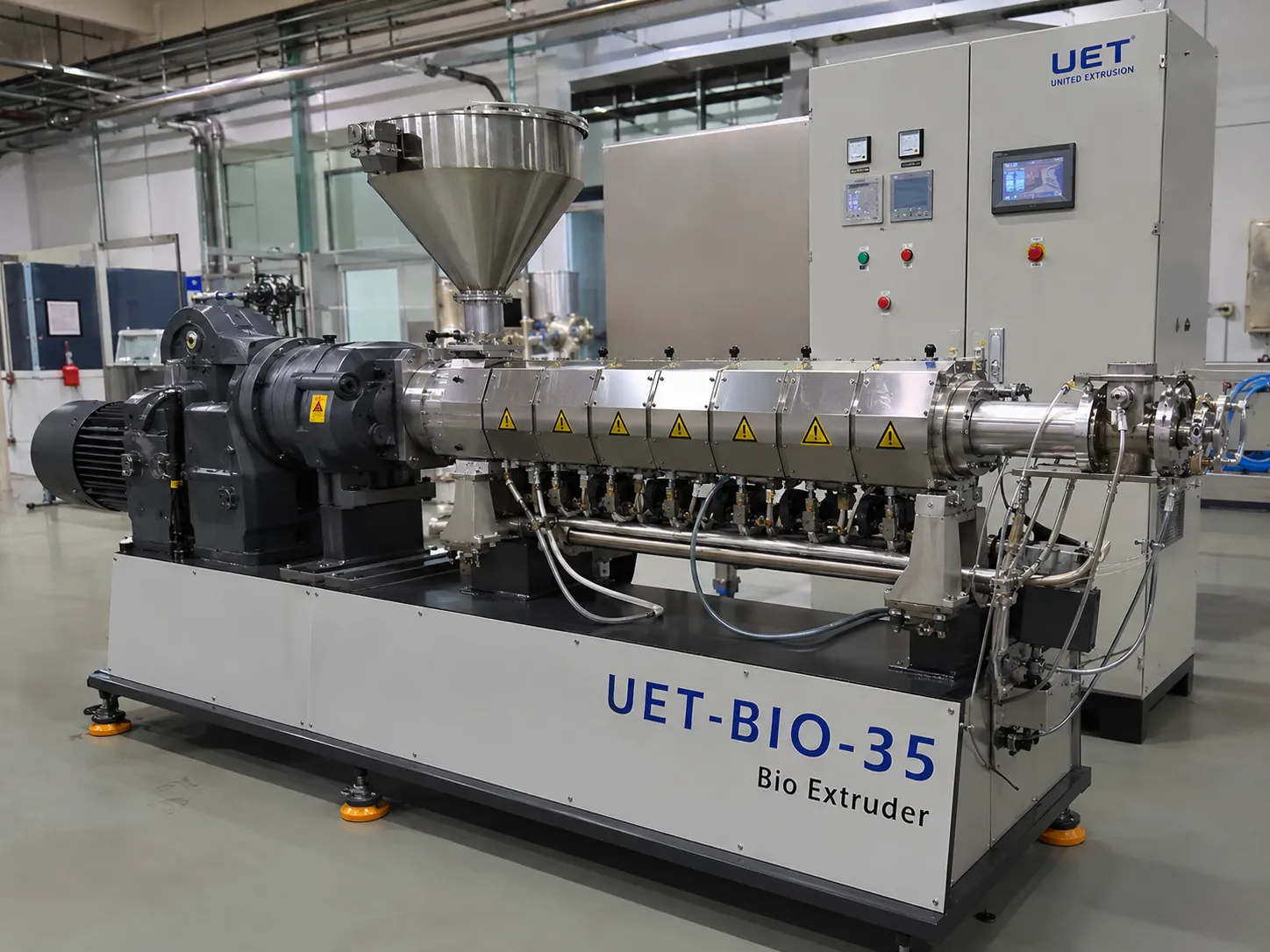 R&D
R&D
Laboratory Platform
UET-BIO-35
Screw Diameter35mm
Output10-50 kg/hr
Motor Power11-15 kW
L/D Ratio32-40
The lab workhorse. Small batches, fast recipe screening, ±1°C zones — the machine most customers start with.
Request Quote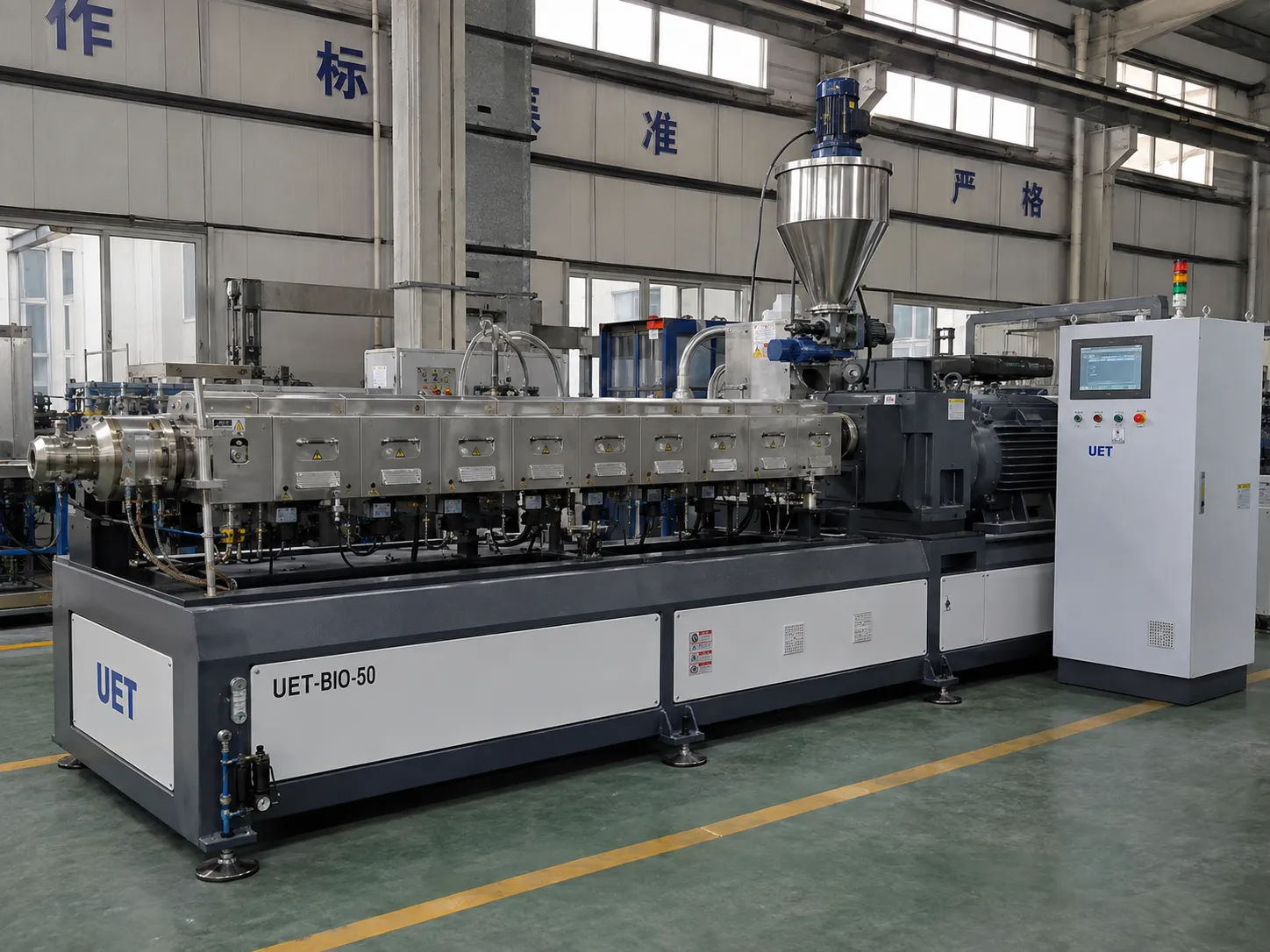 Popular
Pilot Platform
UET-BIO-50
Screw Diameter50mm
Output150-350 kg/hr
Motor Power45-55 kW
L/D Ratio36-44
Pilot scale that pays for itself: big enough for validation runs and small commercial batches, small enough to move between labs.
Request Quote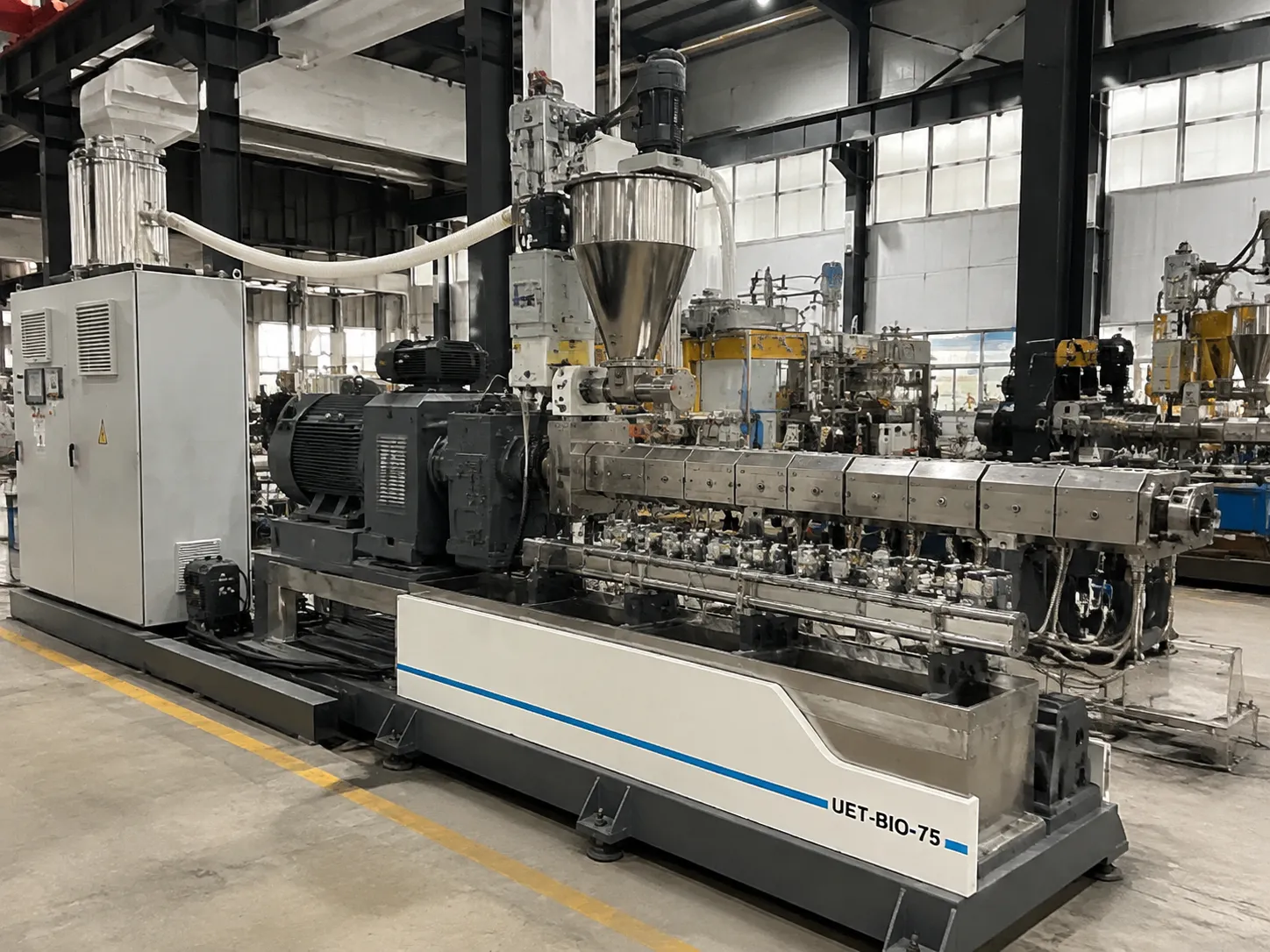 Heavy Duty
Industrial Platform
UET-BIO-75
Screw Diameter75mm
Output500-900 kg/hr
Motor Power110-132 kW
L/D Ratio40-48
The production standard. Runs filled biopolymers and biomass continuously, shift after shift.
Request Quote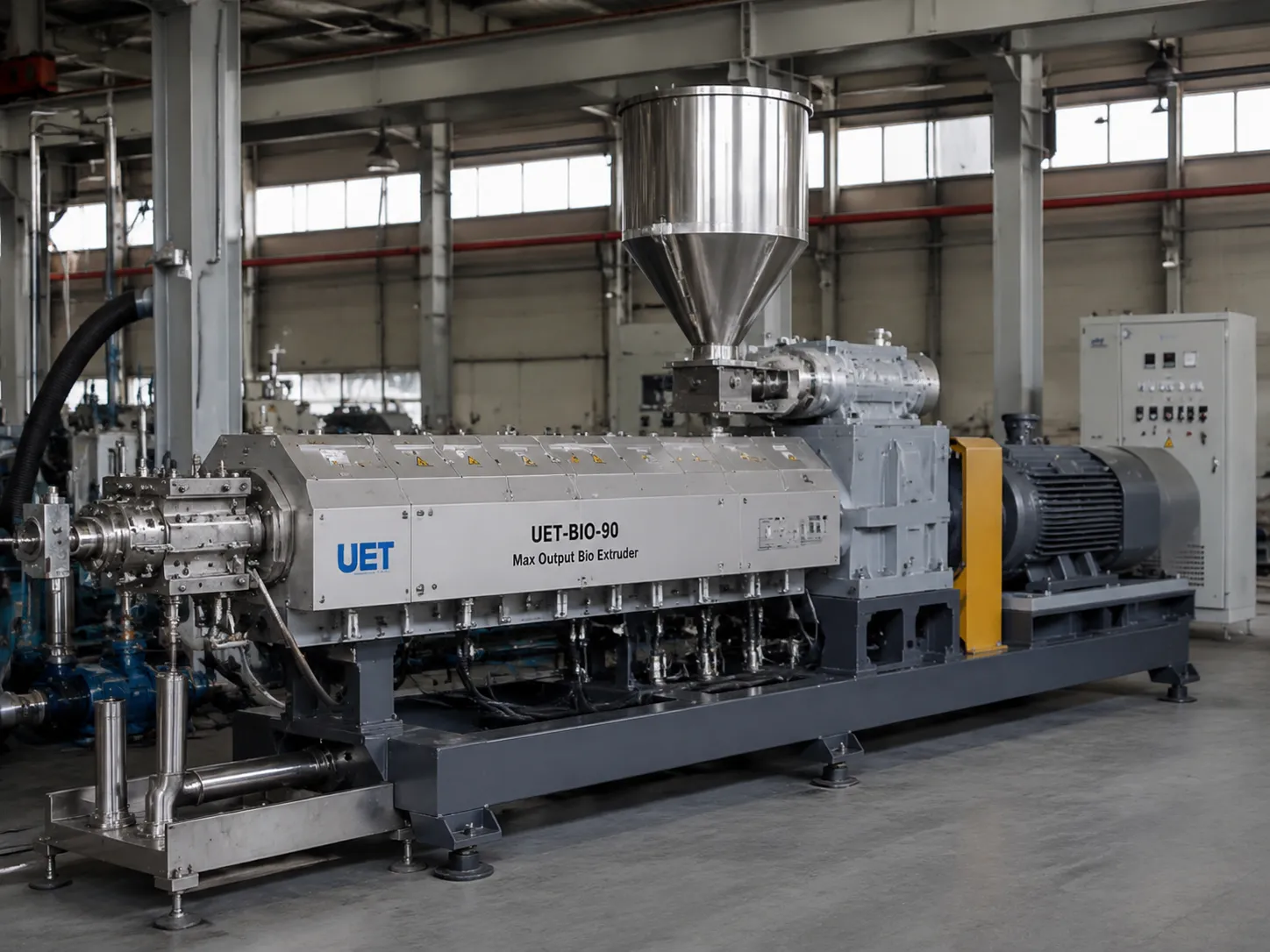 Max Output
High-Capacity Platform
UET-BIO-90
Screw Diameter90mm
Output1000-1800 kg/hr
Motor Power200-250 kW
L/D Ratio44-52
For plants that sell by the tonne. Maximum throughput with the same temperature discipline as the lab models.
Request Quote| Specification | UET-BIO-35 | UET-BIO-50 | UET-BIO-75 | UET-BIO-90 |
|---|---|---|---|---|
| Screw Diameter | 35mm | 50mm | 75mm | 90mm |
| L/D Ratio Range | 32:1 – 40:1 | 36:1 – 44:1 | 40:1 – 48:1 | 44:1 – 52:1 |
| Motor Power | 11-15 kW | 45-55 kW | 110-132 kW | 200-250 kW |
| Output Capacity | 10-50 kg/hr | 150-350 kg/hr | 500-900 kg/hr | 1000-1800 kg/hr |
| Screw Speed | 0-650 rpm | 0-600 rpm | 0-550 rpm | 0-500 rpm |
| Temp. Control | ±1°C | ±1°C | ±1.5°C | ±1.5°C |
| Heating Zones | 8-10 zones | 10-12 zones | 12-14 zones | 12-16 zones |
| Screw Material | 38CrMoAlA nitrided steel or customized bimetallic alloy for extreme wear resistance | |||
| Control System | PLC (Siemens/Schneider) with touchscreen HMI, recipe storage, data logging, remote diagnostics | |||
| Certifications | CE, ISO 9001, FDA compliance documentation, GMP validation protocols | |||
How to Choose the Right Bio Extruder Model
The same four questions our application engineers ask before recommending a configuration.
1
Start From Your Hourly Output
Plan around real running hours, not nameplate capacity. Under 50 kg/hr points to the BIO-35; 150–350 to the BIO-50; 500 and up to the BIO-75 or BIO-90. Leave 10–15% headroom.
2
Know Your Material’s Behaviour
Viscosity, filler load and moisture decide the screw layout, barrel alloy and L/D. Sticky or abrasive recipes need forced feeding and wear-resistant screws — send the recipe and we check feasibility for free.
3
Fix the End Product First
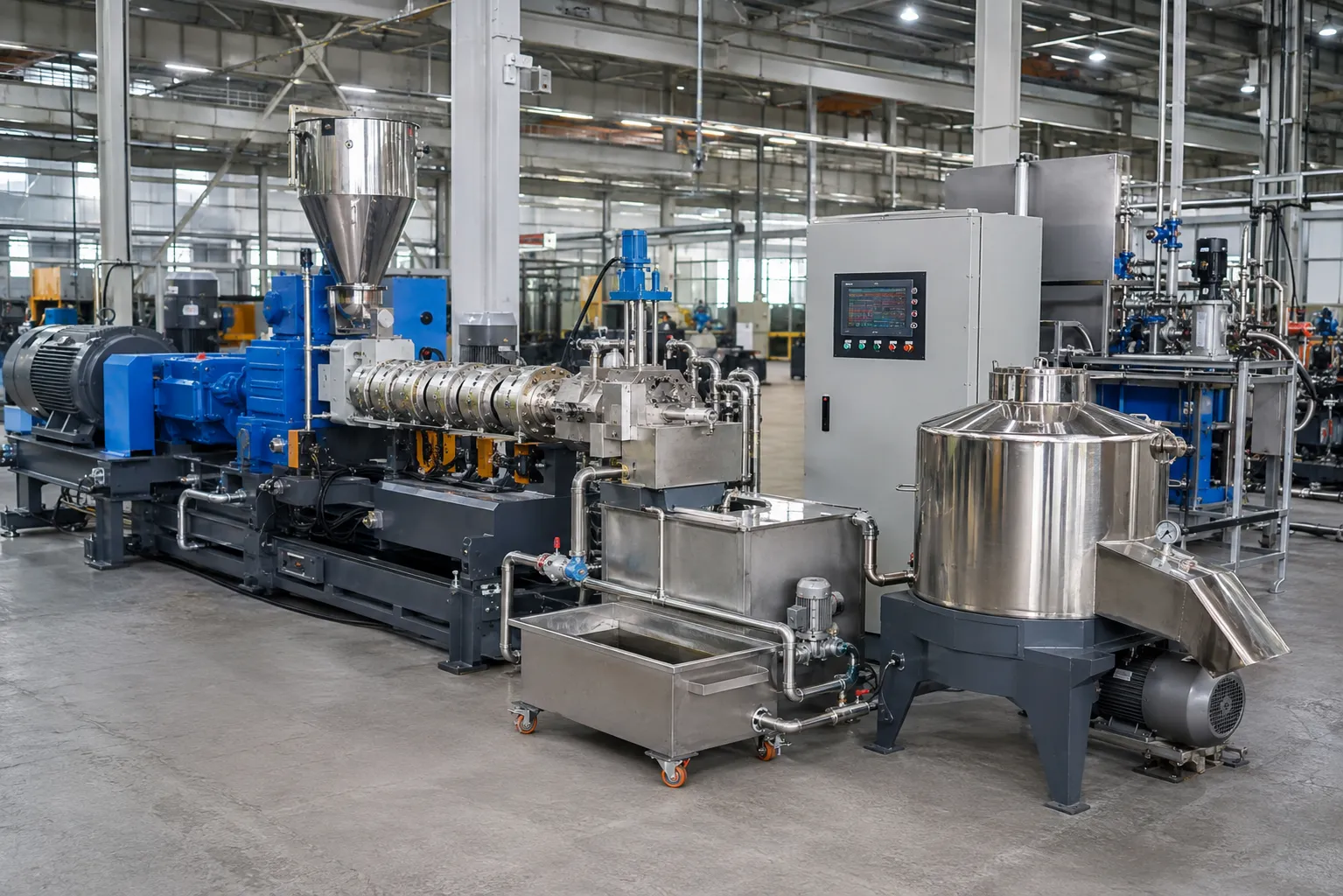
Pellets, film, sheet or profile each need a different die and downstream — underwater pelletizer, calender or take-off. We quote the complete line so nothing is mismatched.
4
Check Site & Certification Early
Voltage (380/440/480 V, 50/60 Hz), CE or ATEX needs and GMP documentation level should be fixed before ordering — changes afterwards cost real money.
Compatible Bio-Based Materials
One platform, wide material coverage — screw configurations are tuned to each material’s viscosity, filler load and thermal sensitivity.
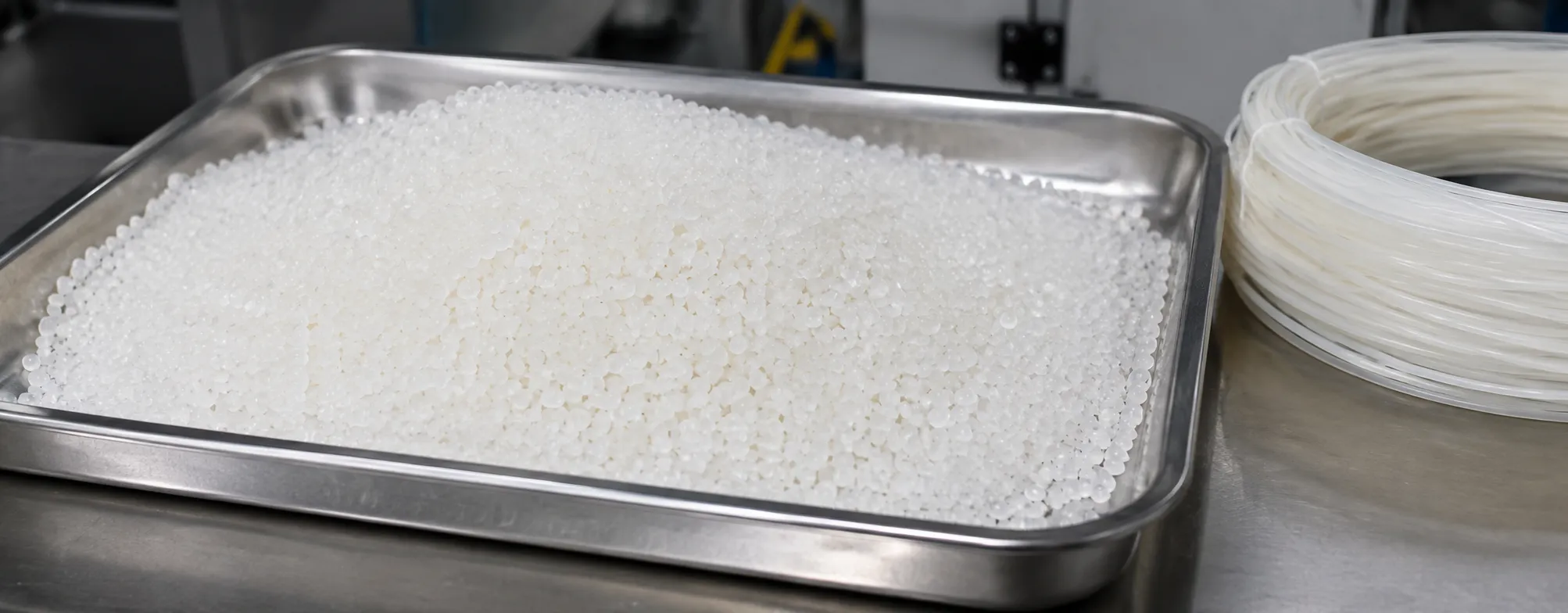
PLA (Polylactic Acid)
Rigid biopolymer for packaging, films and 3D-printing filament.
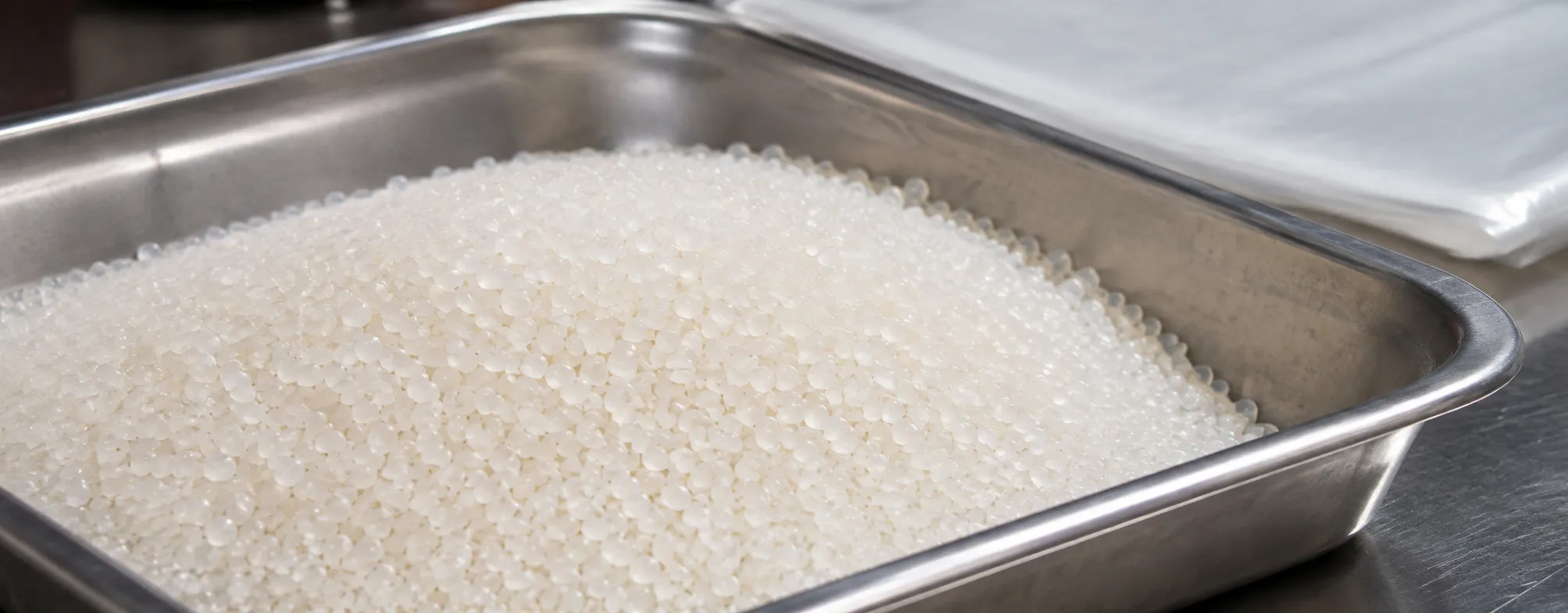
PBAT
Flexible compostable polyester for bags and mulch films.
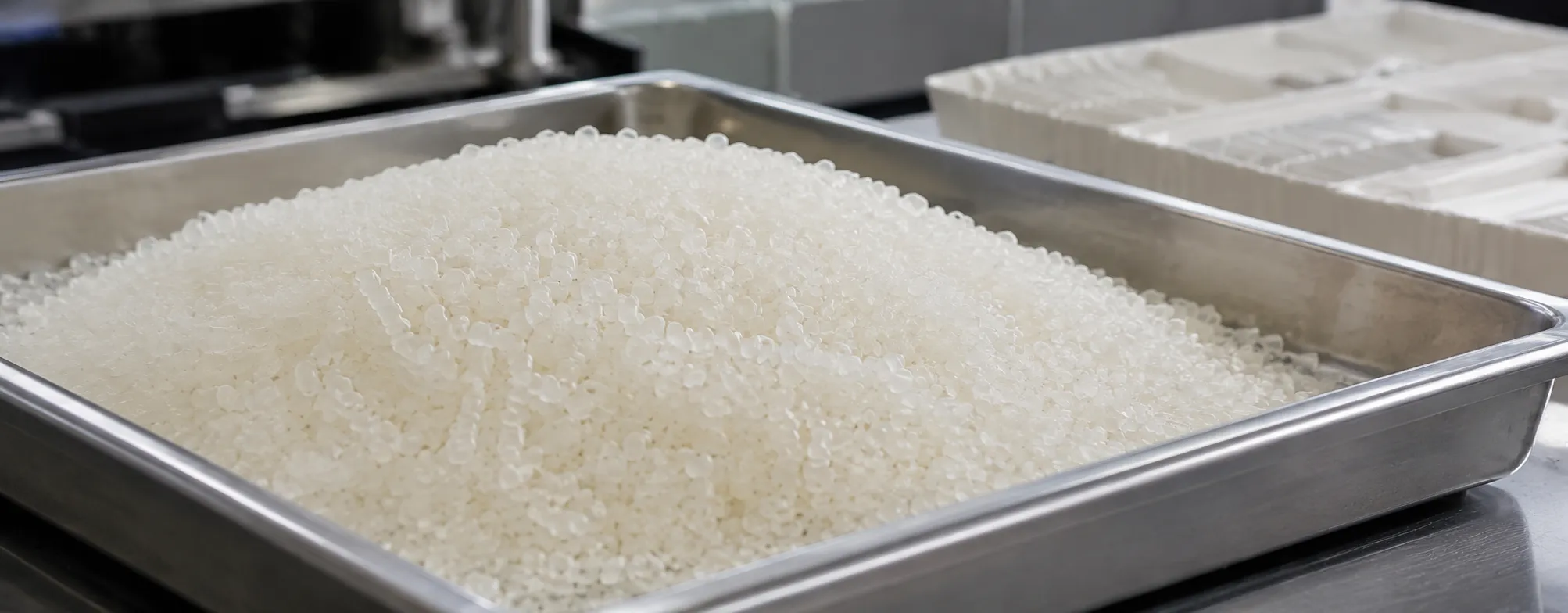
PBS
Heat-resistant biopolymer for cutlery and straws.
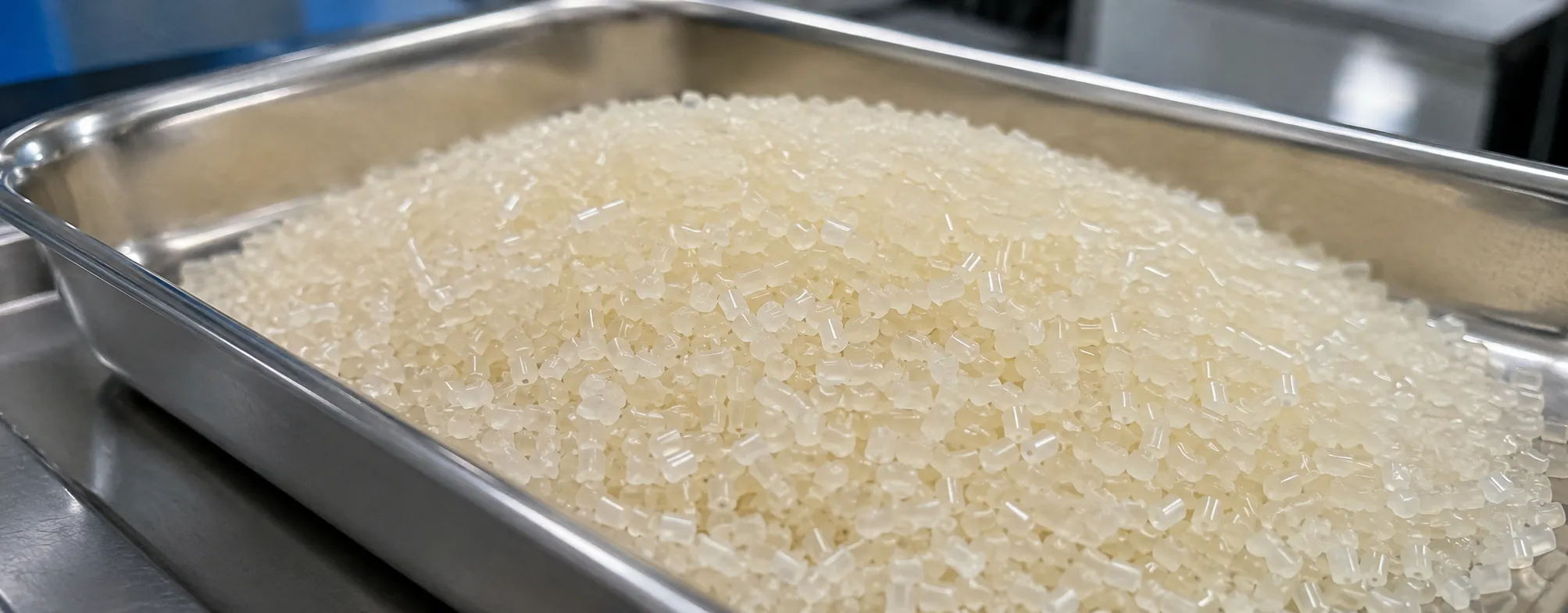
PHA
Marine-biodegradable polymer for premium eco-products.
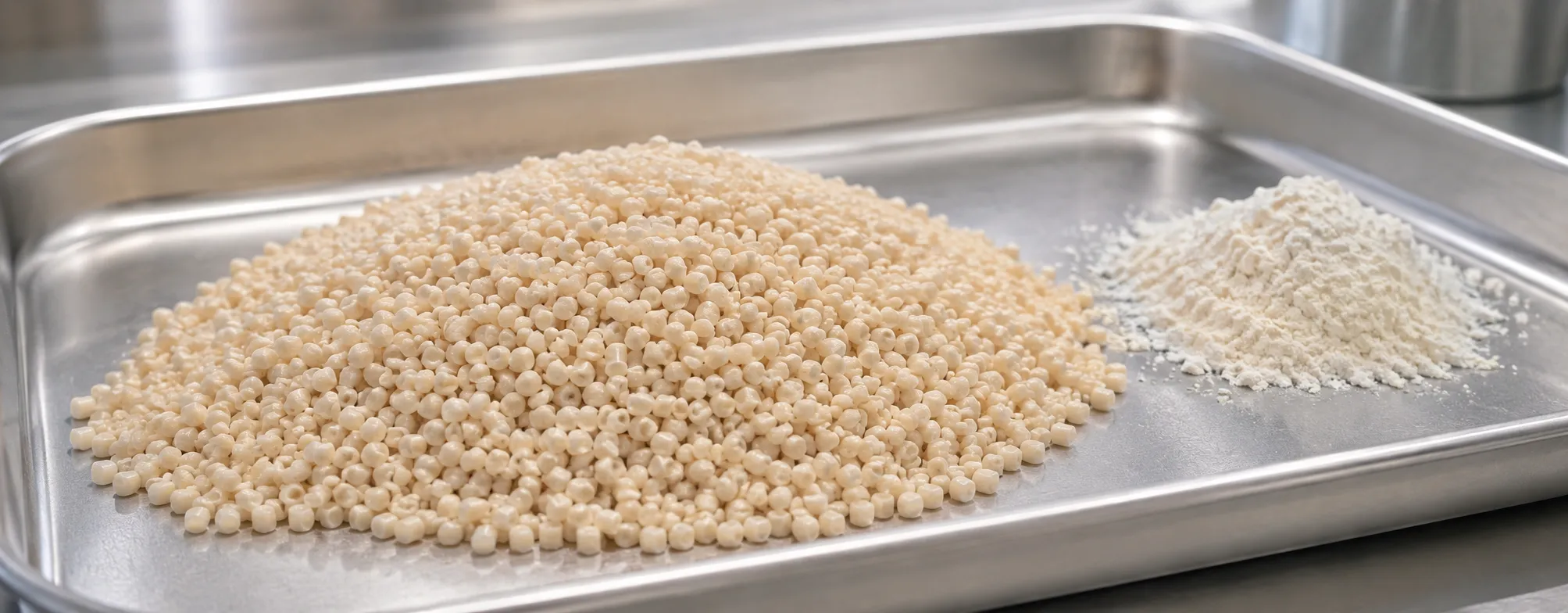
Starch-Based Blends
Thermoplastic starch compounds for low-cost compostables.
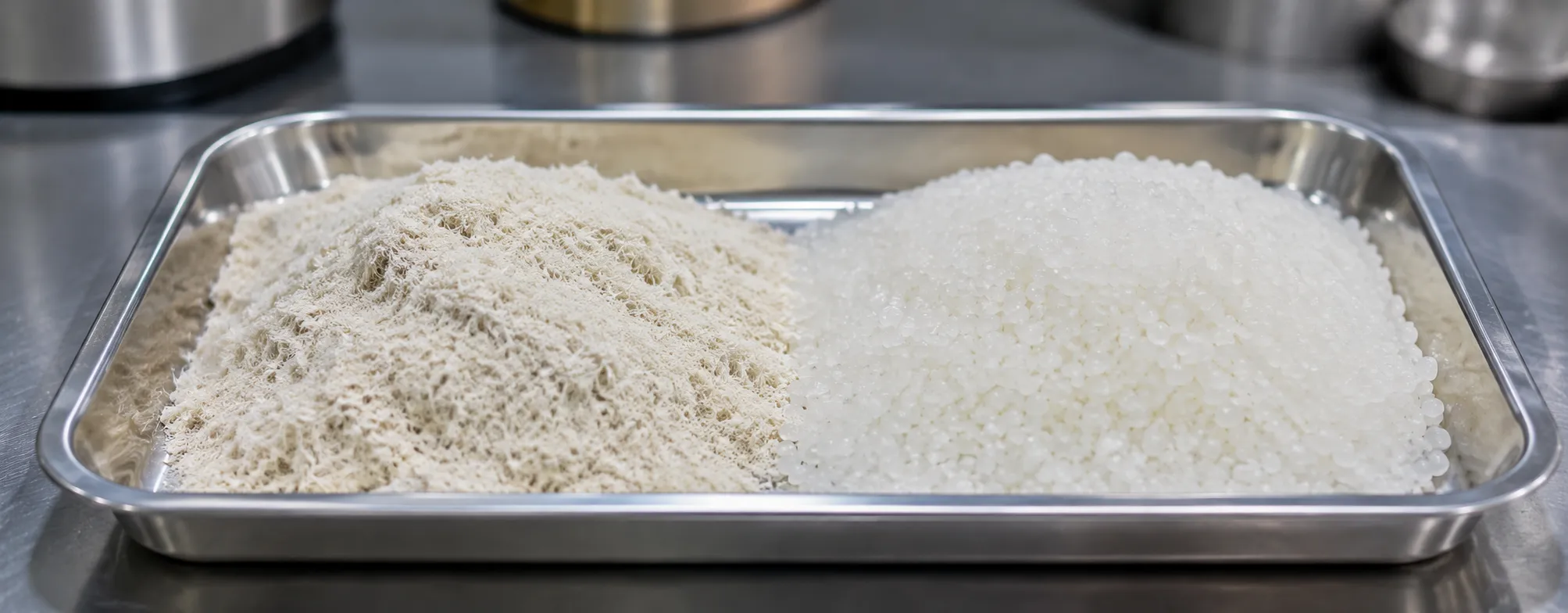
Cellulose & PCL
Specialty biopolymers for coating and medical applications.
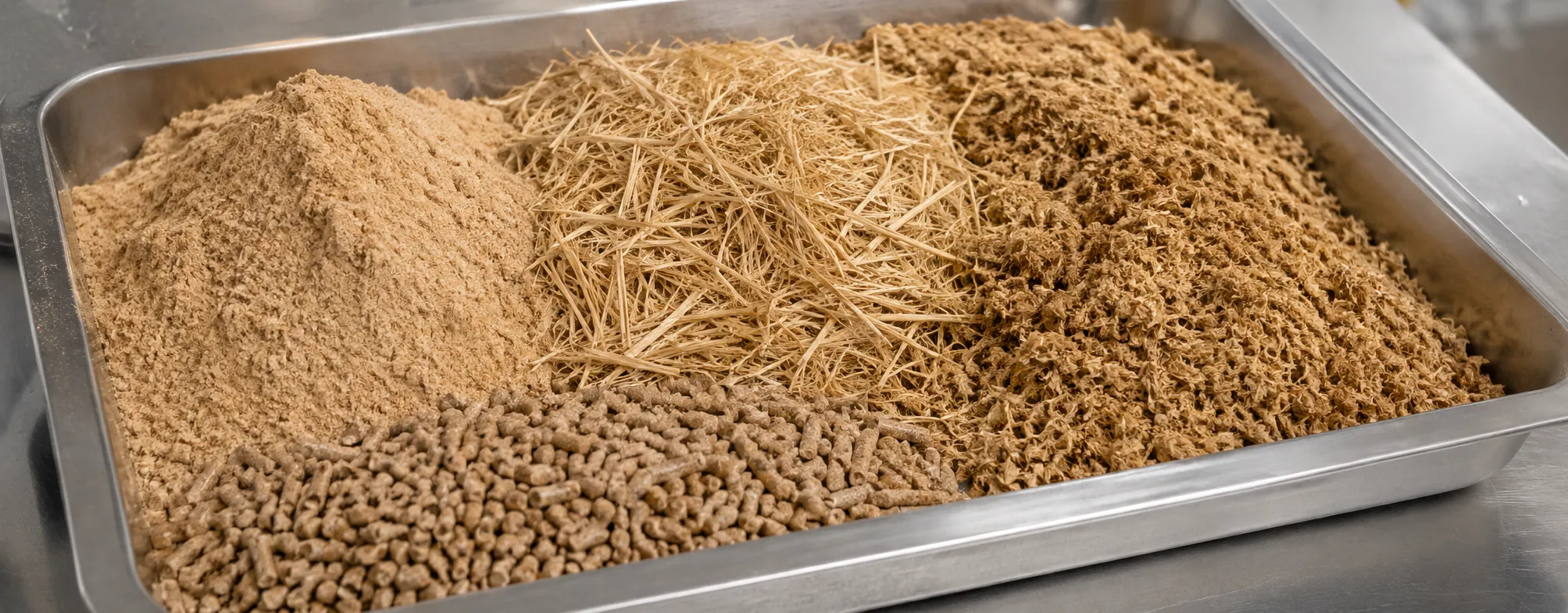
Biomass / WPC Fillers
Straw, wood flour and husk-filled composites for pellets and profiles.
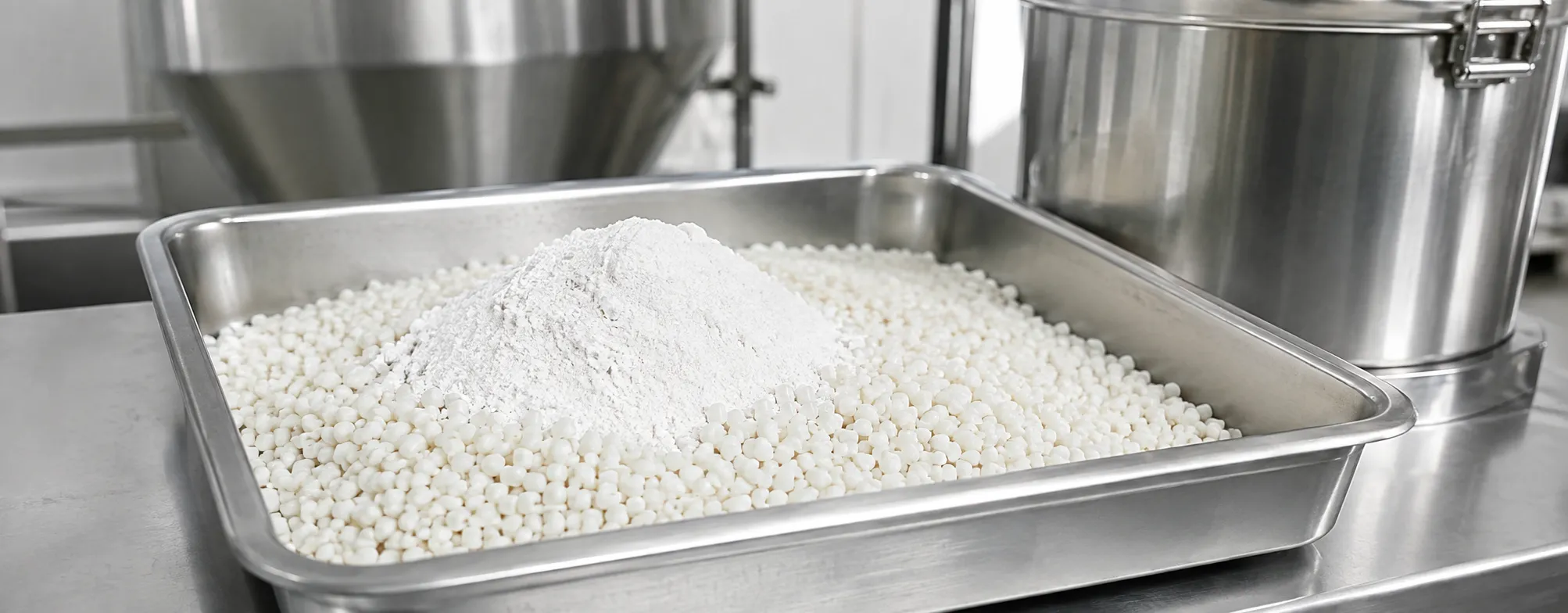
Food & Pharma Grades
Protein concentrates and HME formulations under GMP conditions.
Bio Extruder Applications
Where our customers put these machines to work, from compostable packaging to pharma-grade extrusion.
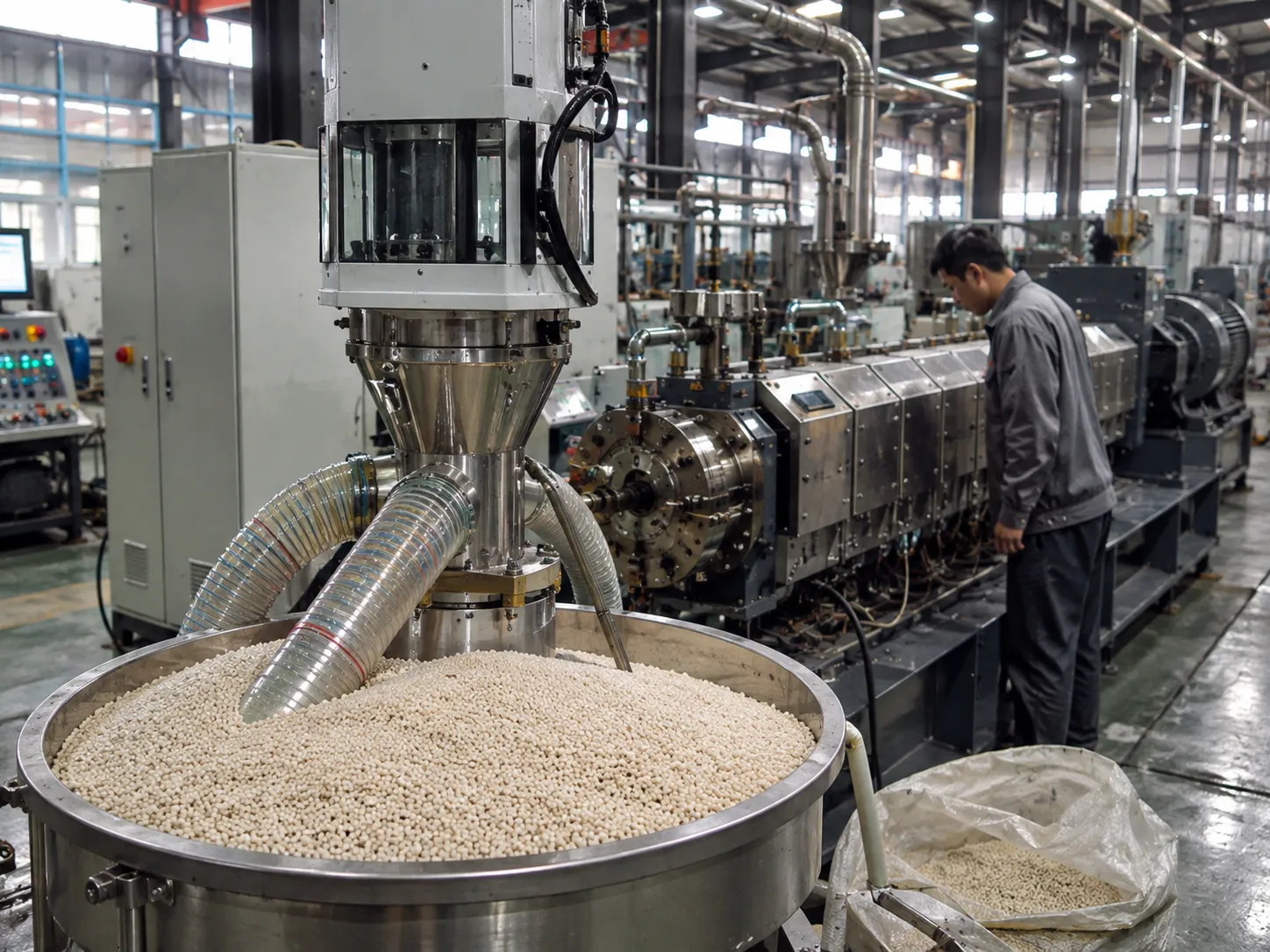
Biopolymer Compounding
PLA, PHA, PBS blending with precision temperature profiling for biodegradable packaging meeting EN 13432 standards.
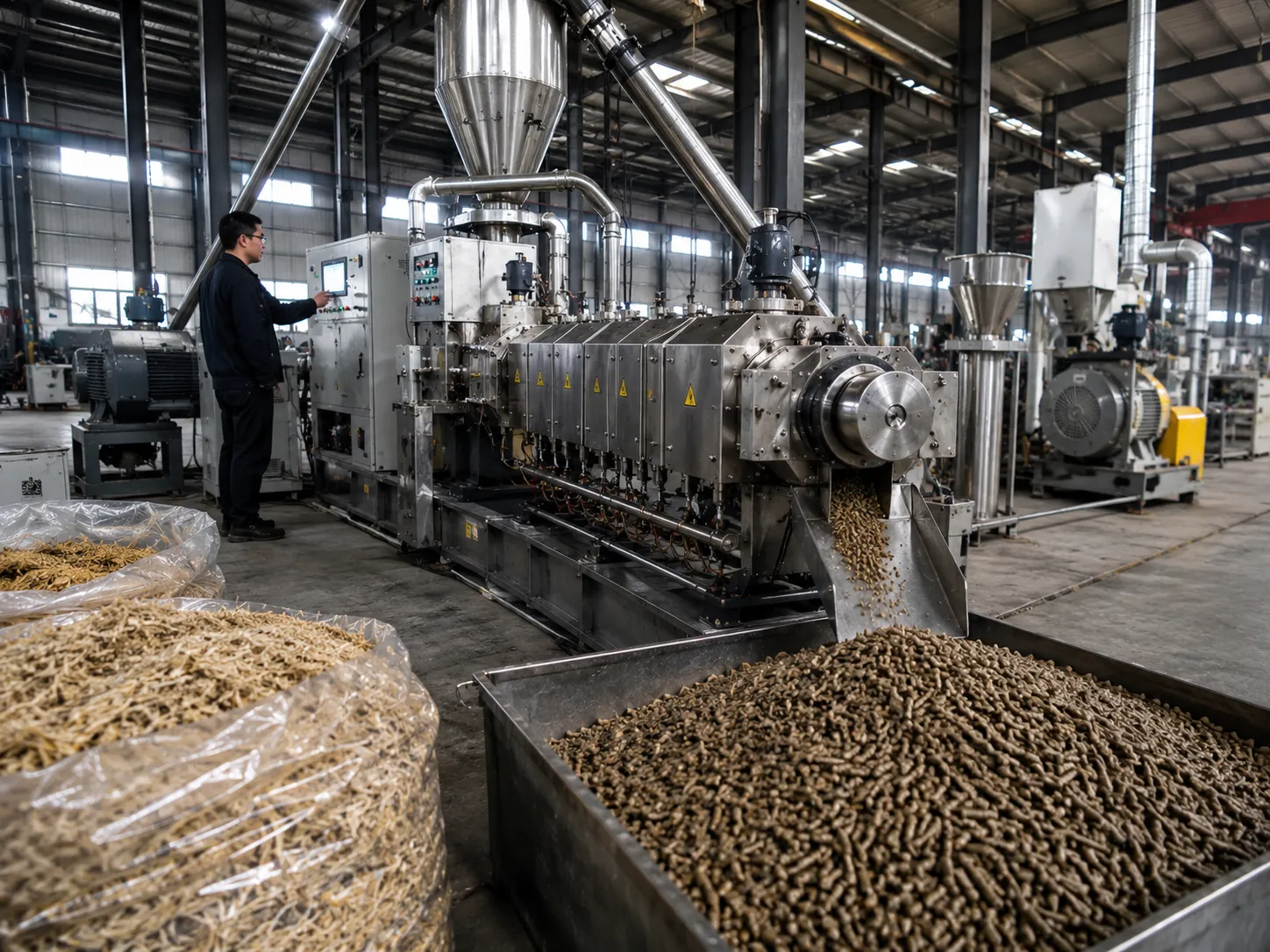
Biomass Pelletizing
Convert agricultural residues and organic waste into uniform, high-density pellets for renewable energy and nutrition.
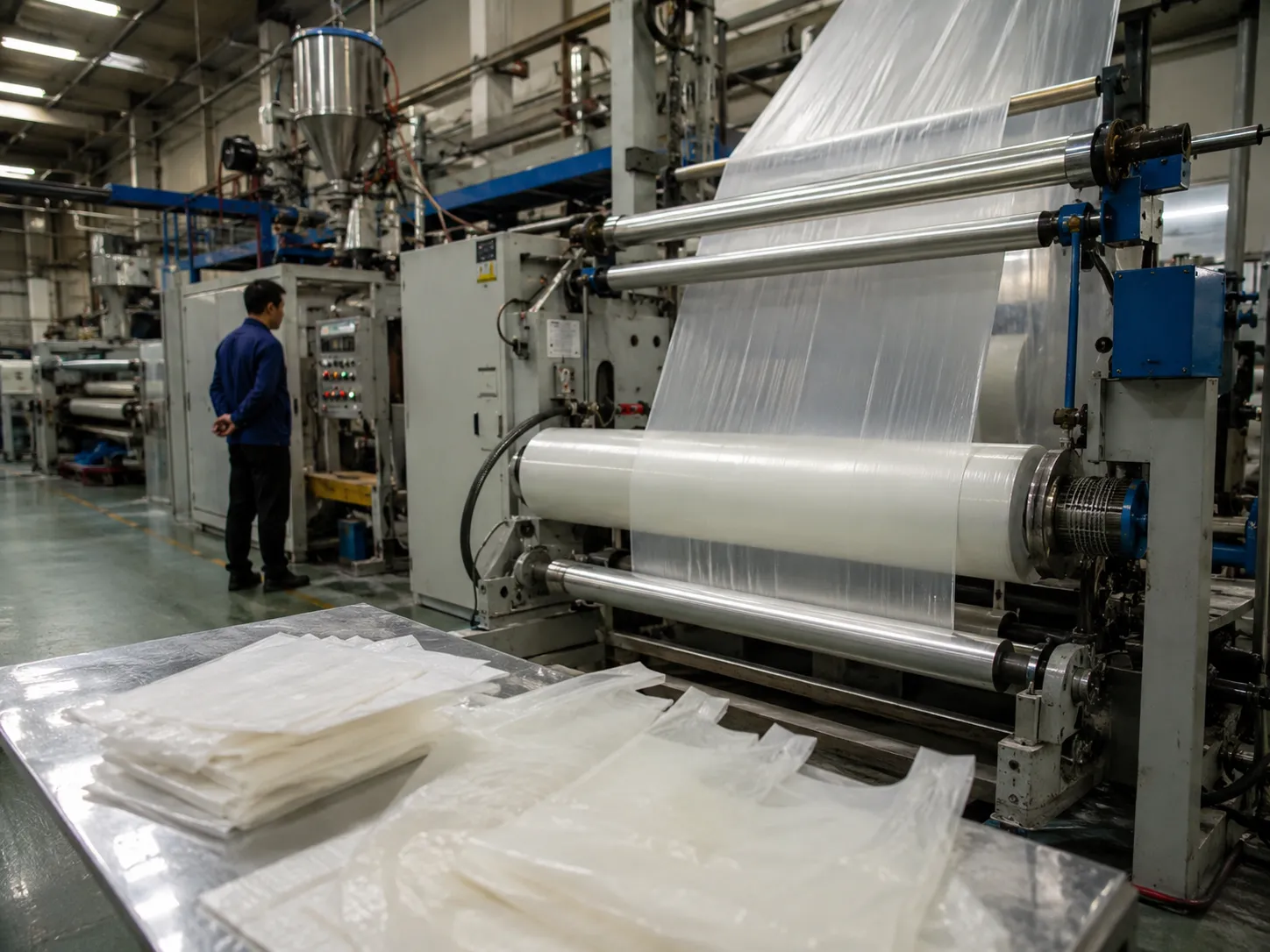
Biodegradable Packaging
Produce compostable films, bags and containers meeting the EU single-use plastics directive with consistent gauge control.
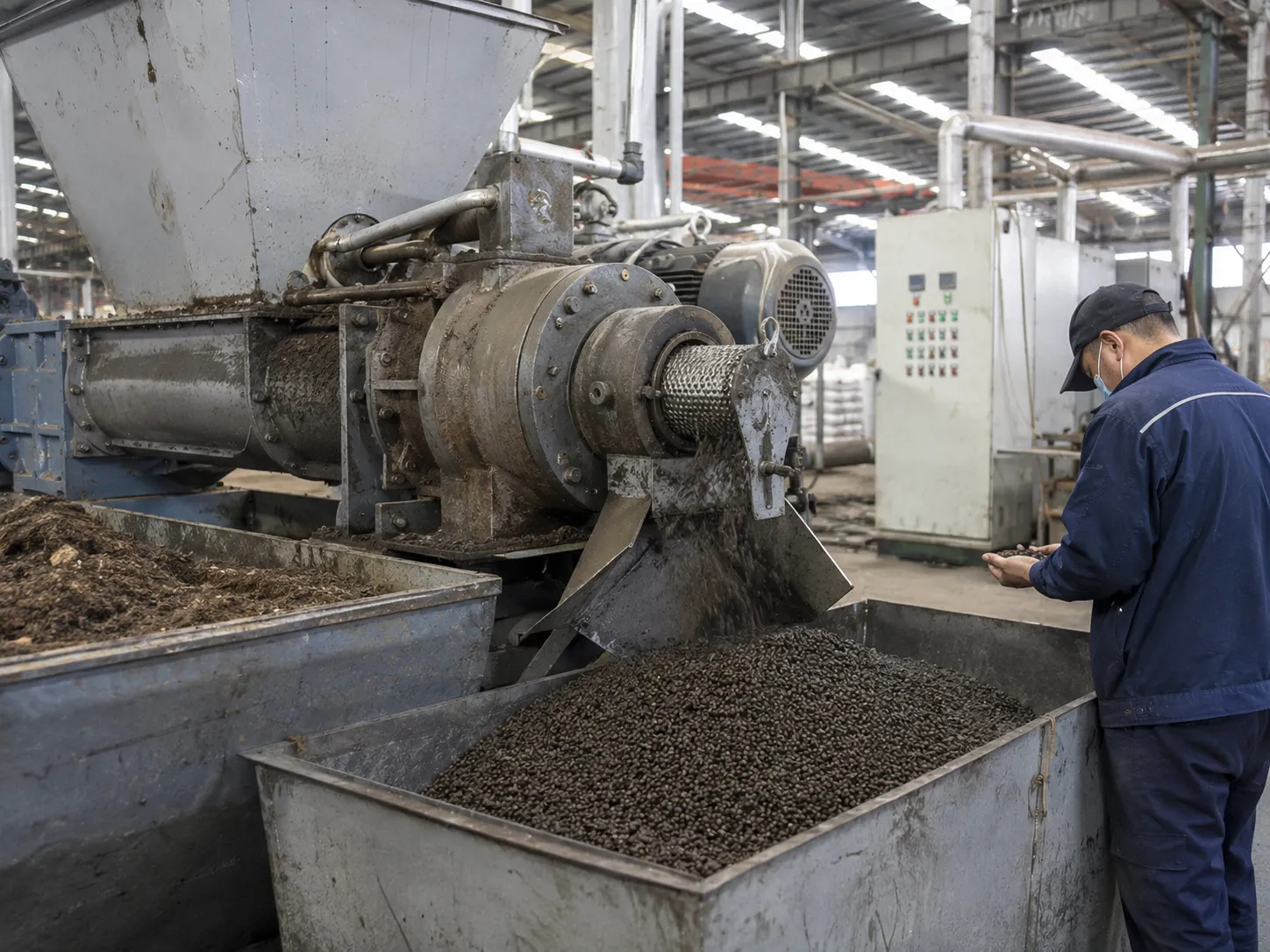
Organic Fertilizer
Process composted organic matter into granulated fertilizers with controlled nutrient release and commercial-grade size.
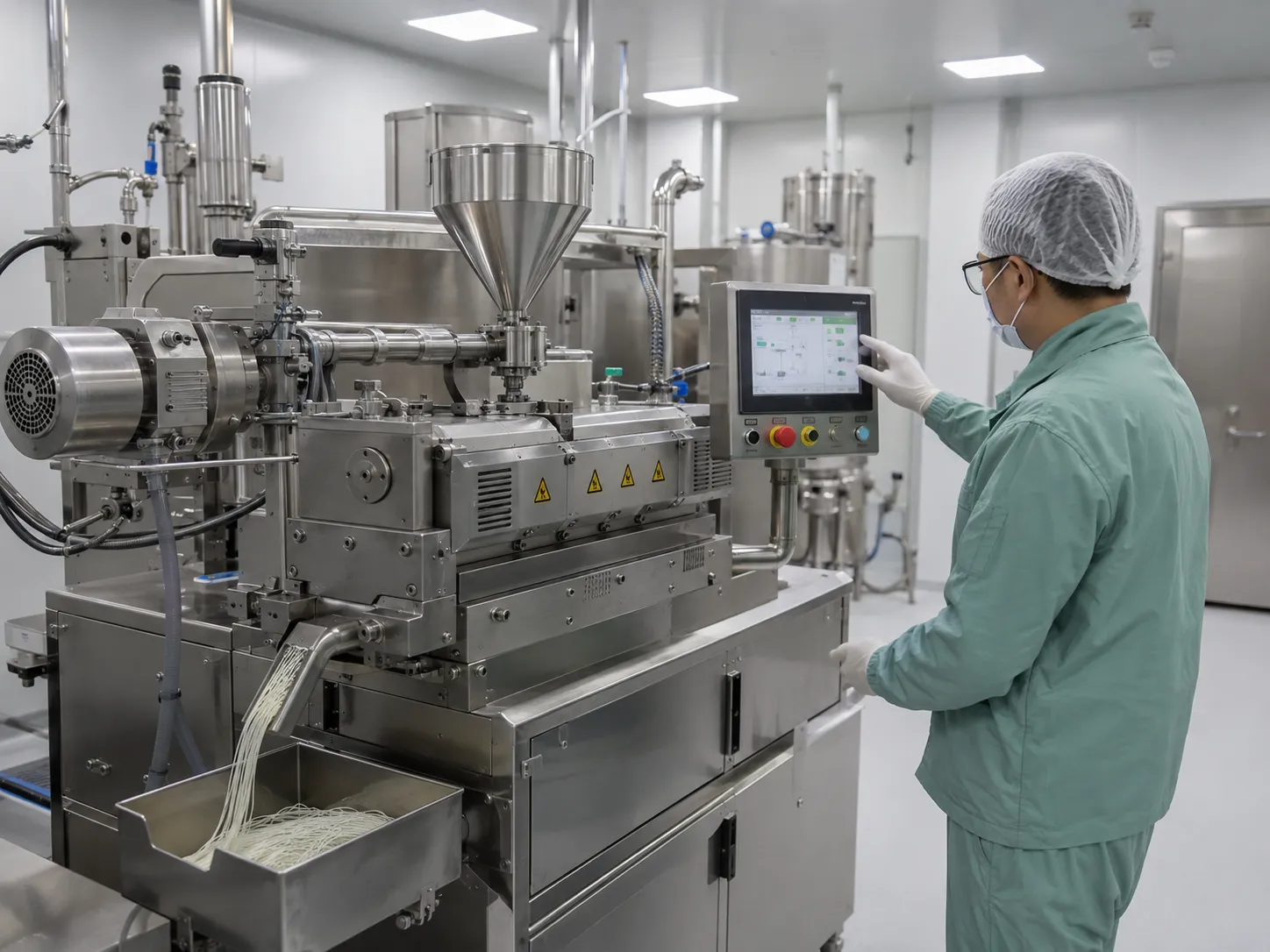
Pharmaceutical HME
Hot-melt extrusion for amorphous solid dispersions and controlled-release matrices with full cGMP validation.
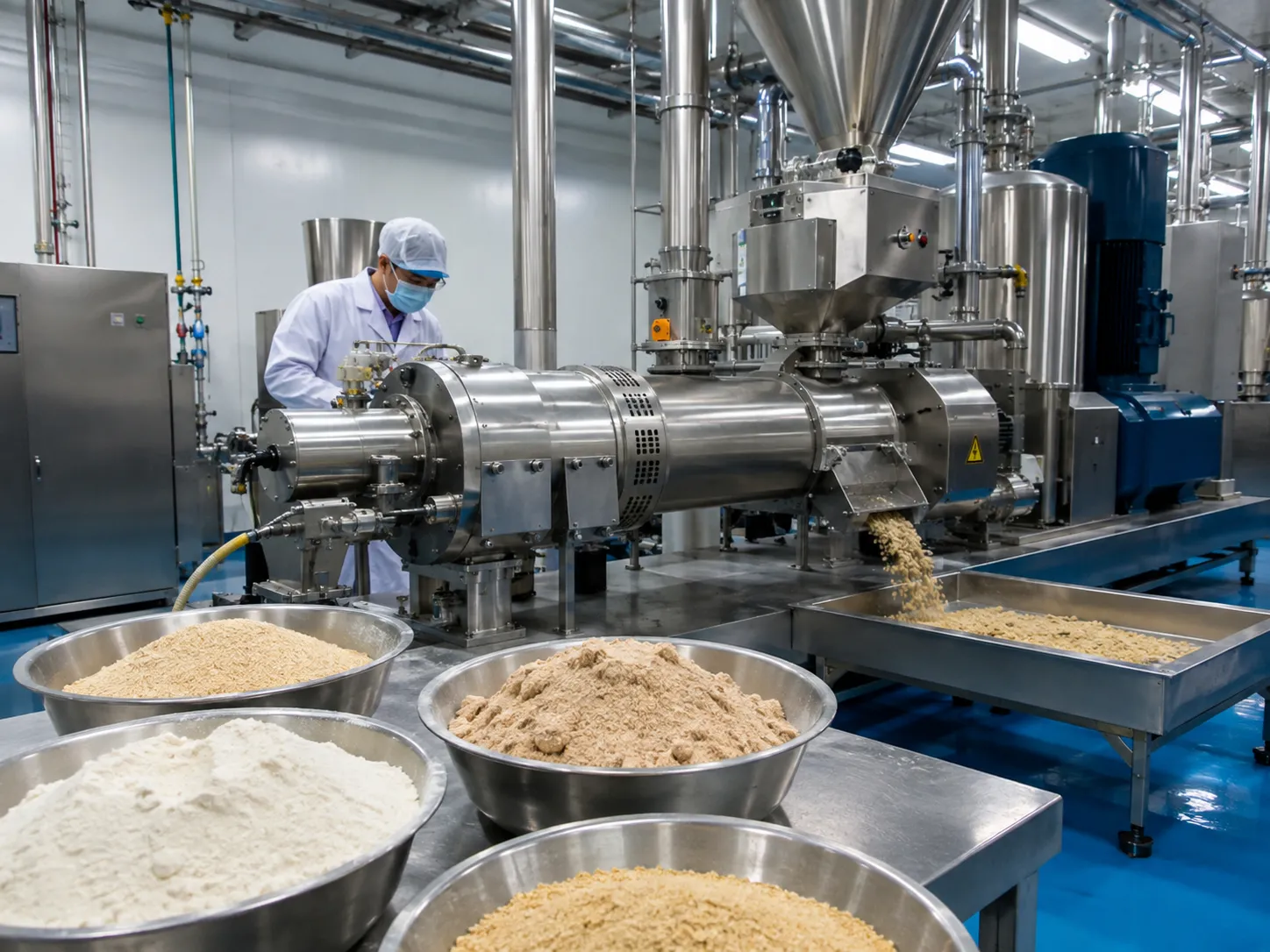
Functional Foods
Process protein concentrates, dietary fibers and functional ingredients with minimal thermal degradation.
Bio Extrusion Process Flow
A closed-loop line designed for hygiene, low melt temperature and consistent pellet quality.
1
Precision Feeding
Closed-loop gravimetric dosing prevents contamination and keeps throughput steady.
2
Controlled Extrusion
Co-rotating twin screws with zoned ±1°C control mix without overheating the melt.
3
Die Forming
Quick-change dies for pellets, strands, sheets or profiles to match your product.
4
Cooling & Pelletizing
Underwater or strand pelletizing with centrifugal drying for uniform, dust-free pellets.
UET Machine — Bio Extruder Manufacturer & Supplier
We have built extruders since 2005, and bio-material lines have been part of our test lab for most of that time. When you buy from UET you buy from the works floor, not a trading desk: one factory, one price list, one point of responsibility from feasibility check to commissioning.
- Factory-direct pricing — no trading company in between, itemized quotations
- Screws, barrels and dies machined in-house on our own CNC lines
- CE, ISO 9001, FDA and GMP documentation with every shipment
- 24/7 engineer response and 24-month core-component warranty
Talk to an Application Engineer
Send material, target output and product form. You get a feasibility check, line layout and itemized quote — within 2 hours on working days.
Start My EnquiryManufacturing Excellence & Quality Control
Every bio extruder is machined, assembled and test-run under one roof before shipping.
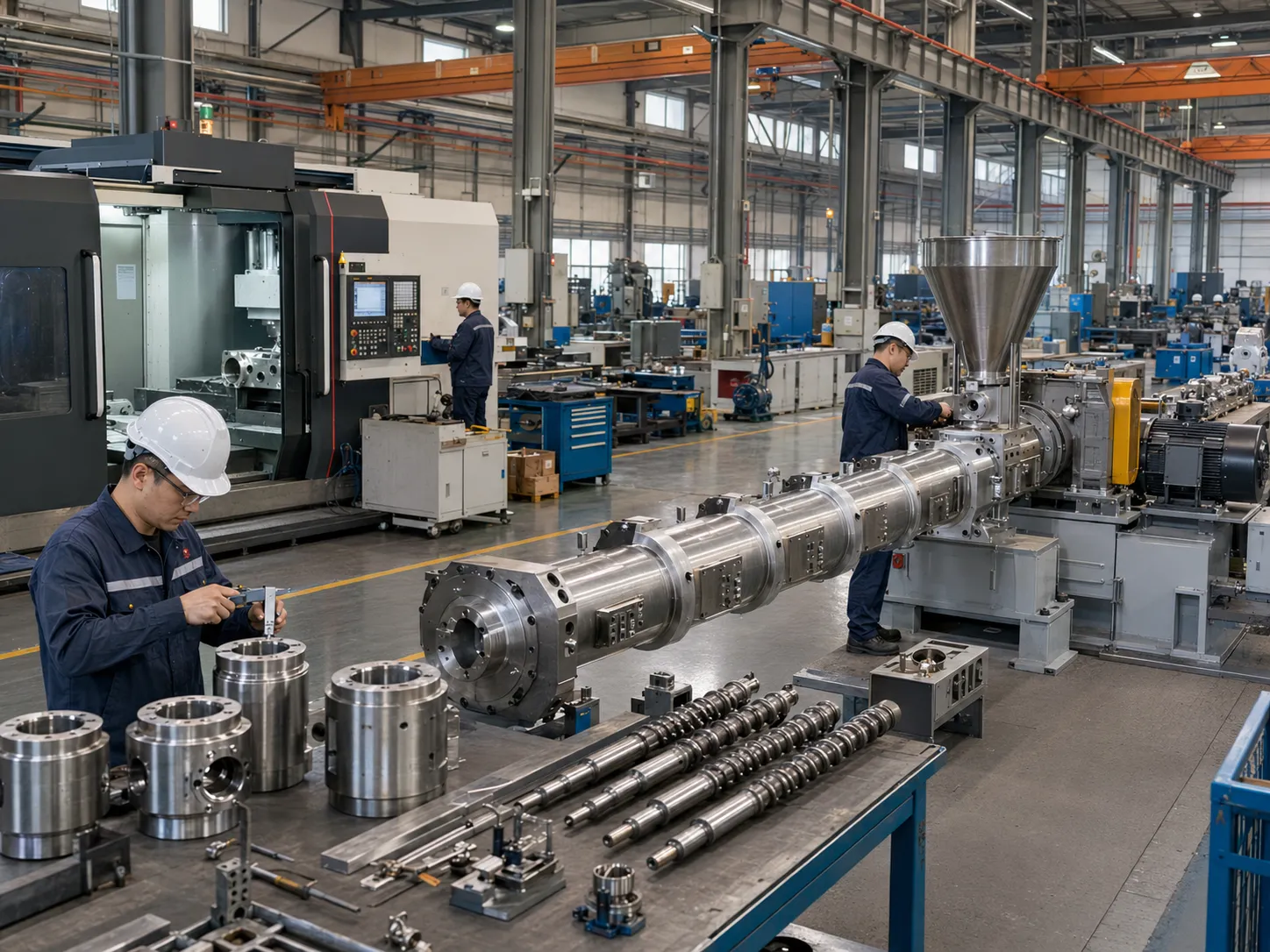
Advanced Manufacturing
CNC machining centers, precision grinding and automated assembly keep tolerances tight on every screw and barrel.
20+Years Exp.
350+Employees
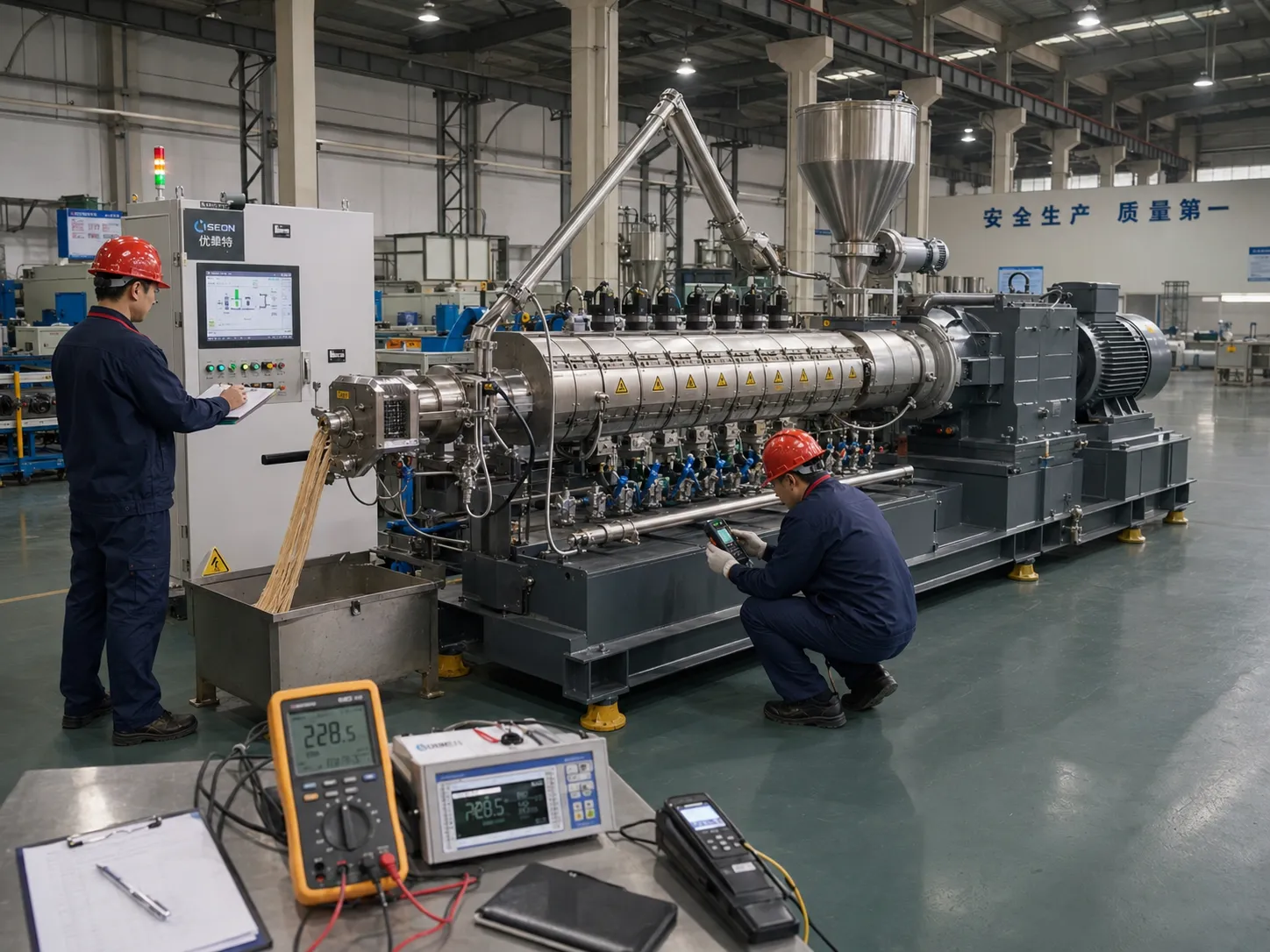
Rigorous Quality Testing
48+ hours of factory testing per machine: load runs, temperature calibration and a material trial you can witness live.
48+Hours Test
98%Pass Rate
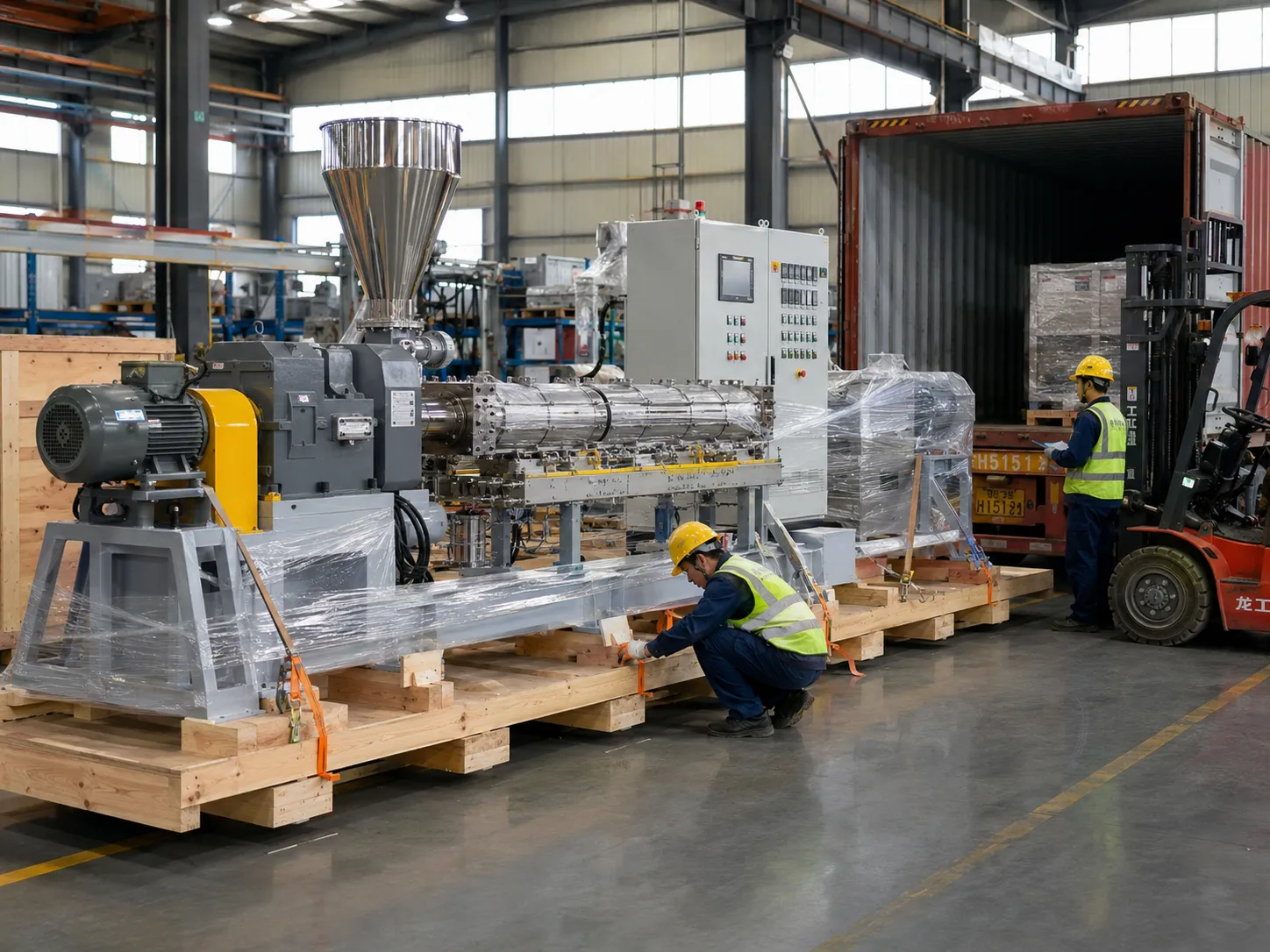
Global Delivery Network
Seaworthy export packing and full documentation, delivered to 80+ countries. Standard models ship in 2-4 weeks.
5600+Units Delivered
80+Countries
Customer Success Stories
What buyers in three markets report after running UET bio extruders on real production schedules.

“The UET Bio Extruder resolved uneven mixing in our R&D. Technical support during commissioning boosted our sample quality stability by 30%.”

“Processing high-viscosity biomass eliminated our past clogging issues. The UET-BIO-75 ran continuously for 72 hours with stable output.”

“Changeover time dropped from 2 hours to 20 minutes. It flexibly switches between 5 materials, helping us meet EU environmental standards.”
Frequently Asked Questions
Answers to the questions our sales engineers hear most often.
What is a bio extruder and what materials can it process?
A bio extruder is a twin-screw machine built for heat-sensitive, bio-based materials. It uses low-temperature zones and special screw geometry so the material melts and mixes without degrading.
Materials we run regularly: PLA, PHA, PBS, starch-based polymers, biomass composites, biodegradable packaging compounds, organic fertilizers and pharmaceutical HME formulations.
How does a biodegradable plastic extruder differ from a standard plastic extruder?
A biodegradable plastic extruder runs cooler and tighter: lower melt temperatures, independent zoned heating/cooling, gentler shear and bigger vents for moisture. Standard extruders simply run too hot for PLA, PBAT or starch blends, which degrade and lose strength if overheated.
Why choose twin-screw over single-screw for bioplastics?
Four practical reasons we see on customer sites:
- Mixing: co-rotating screws disperse additives and fills evenly at low melt temperature.
- Temperature control: each zone holds ±1°C, so the recipe window is respected.
- Self-wiping barrels: no stagnant material to degrade between batches.
- Feeding: sticky, high-viscosity biomass conveys reliably where single screws bridge and starve.
What is the optimal L/D ratio for biomass extrusion?
It follows the job, not the brochure:
- L/D 32:1 – 36:1: lab R&D and low-viscosity biopolymers.
- L/D 36:1 – 40:1: pilot runs and standard PLA/PBS compounding.
- L/D 40:1 – 44:1: industrial production, high-viscosity biomass, intensive mixing.
- L/D 44:1 – 52:1: devolatilization and multi-stage reactive processes.
When customers are unsure, we default to 40:1 — the best mixing-to-power balance for most bio recipes.
Can bio extruders handle high-viscosity or sticky biomass without clogging?
Yes, when the feed section is specified correctly. We use progressive-pitch screws, optional forced feeders and torque monitoring that adjusts speed before a bridge becomes a blockage. Lines configured this way have run fills above 50,000 Pa·s without cleaning shutdowns.
Are you a bio extruder manufacturer or a trading company?
We are the manufacturer. UET Machine has built extruders since 2005 in our own 11,400 m² works, and we supply directly to 80+ countries. You get factory-direct pricing, in-house machining and one point of responsibility for spares and service.
What is the typical output capacity and delivery time?
Output: BIO-35 (10-50 kg/hr), BIO-50 (150-350 kg/hr), BIO-75 (500-900 kg/hr), BIO-90 (1000-1800 kg/hr).
Delivery: standard models ship in 2-4 weeks; customized lines take 6-8 weeks because the screw layout and downstream are built to your recipe. International shipping adds 2-6 weeks.
Do you provide customization and after-sales support?
Both. Screw design, L/D, barrel alloy and zone count are matched to your material before order. After delivery: on-site commissioning, 3-5 days of operator training, 24/7 remote diagnostics, 12-month machine warranty (24 months on screws, barrels and gearbox) and spare parts at cost price for life.