
China Factory-Direct · Since 2005
Industrial-Grade Extruder Machines Engineered for Your Production
Twin screw, single screw, triple screw and laboratory extruders — machined, assembled and test-run in our own 11,400㎡ Nanjing facility. Custom screw configurations for your material, output and budget.
20+Years
5,600+Delivered
85+Countries
24/7Support
CEISO 9001:2015RoHSREACHSGS Verified
Extruder 101
What Is an Extruder Machine? Definition & Key Components
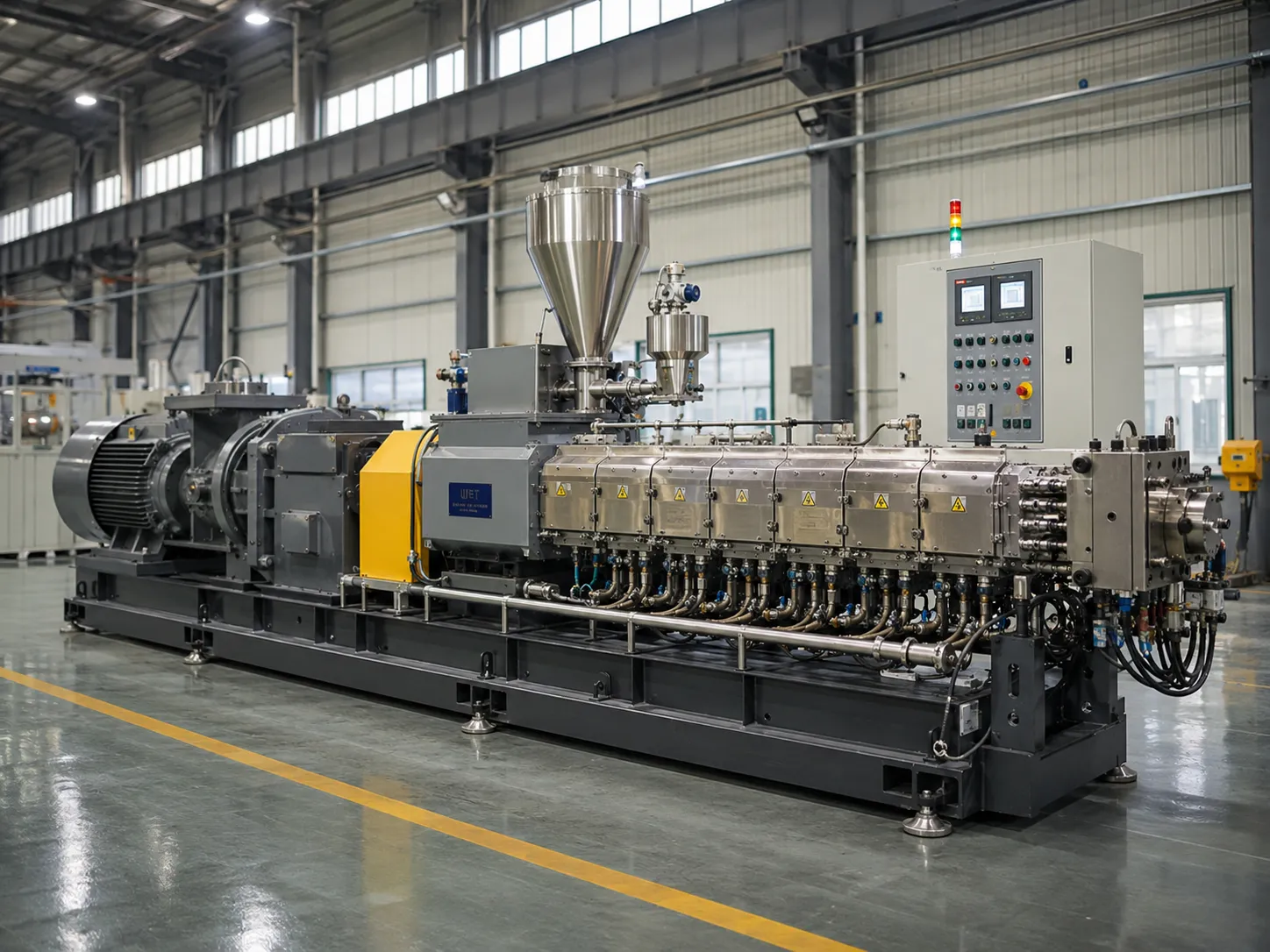
An extruder machine is the core equipment of the plastics and rubber processing industry. It melts raw polymer — pellets, powder, flakes or regrind — homogenizes it under precisely controlled temperature and pressure, then continuously forces the melt through a die to create a product with a constant cross-section: pipe, profile, sheet, film, strand or pellet.
Every extruder shares the same basic anatomy — a rotating screw inside a heated barrel, driven by a gearbox, with a hopper above and a die at the end. What changes is the screw configuration: single screw machines excel at melting & forming, twin screw at mixing & compounding, triple screw at ultra-fine dispersion.
- Continuous 24/7 production with stable, repeatable quality
- Tight dimensional tolerance on any constant cross-section
- High material yield — low scrap, regrind directly reusable
- Handles blends, filled, reinforced and recycled formulations
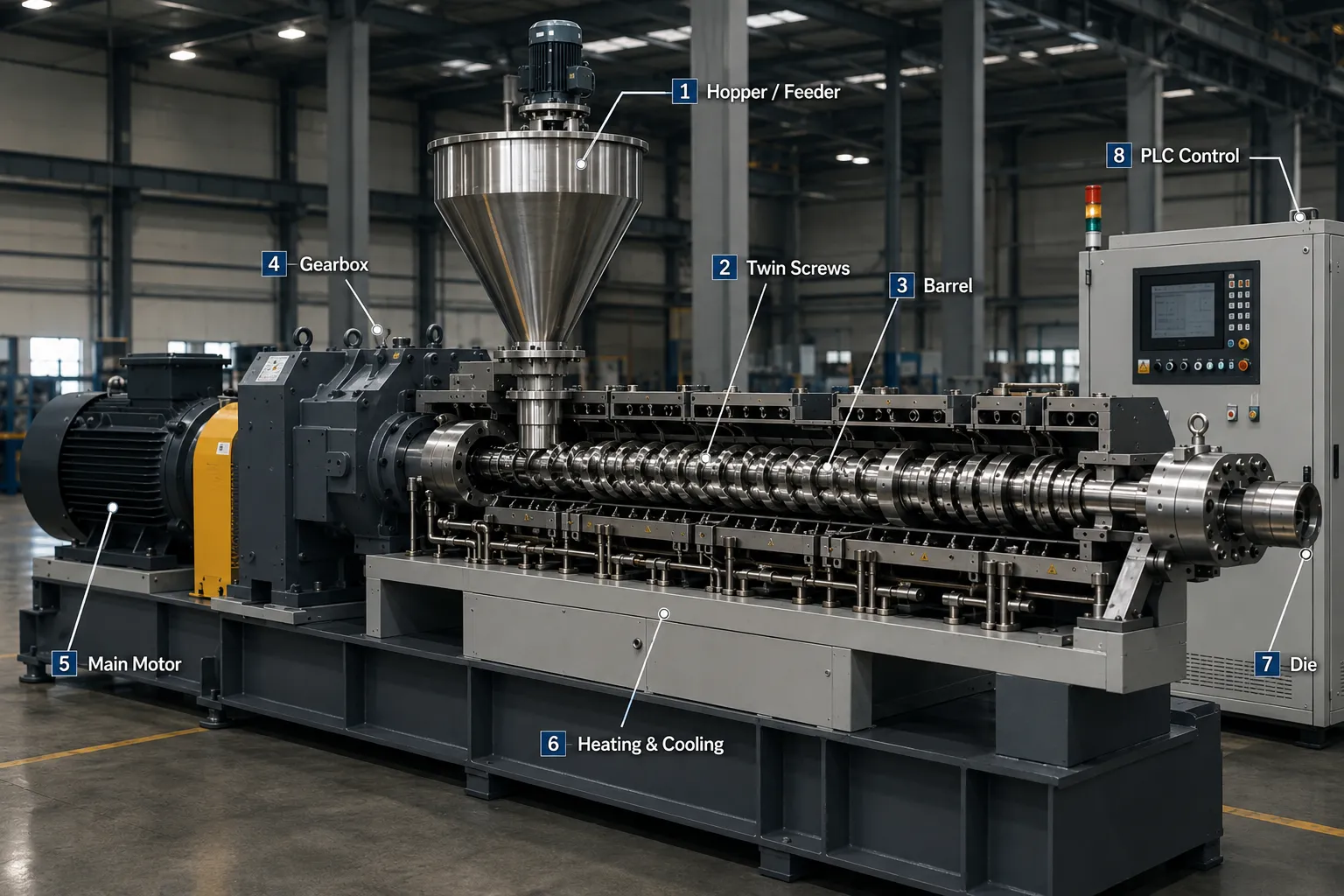
The 8 Key Components of an Extruder Machine
Hopper
Gravity or forced feeding of pellets, powder and regrind into the barrel throat.
Barrel (Cylinder)
Hardened, heated housing for the screw — bimetallic liners reach HRC 58–62.
Screw
The heart of the machine — conveys, compresses, melts and meters the polymer.
Heater Bands
Independent PID heating/cooling zones hold melt temperature within ±1.5°C.
Gearbox & Drive
High-torque transmission keeps screw speed stable under full load.
Die Head
Shapes the homogeneous melt into the target cross-section — pipe, sheet, strand.
PLC Control
Recipe storage, alarms, data logging and multi-language HMI touch screen.
Downstream
Cooling tank, haul-off, cutter or pelletizer — completes the finished product.
Product Range
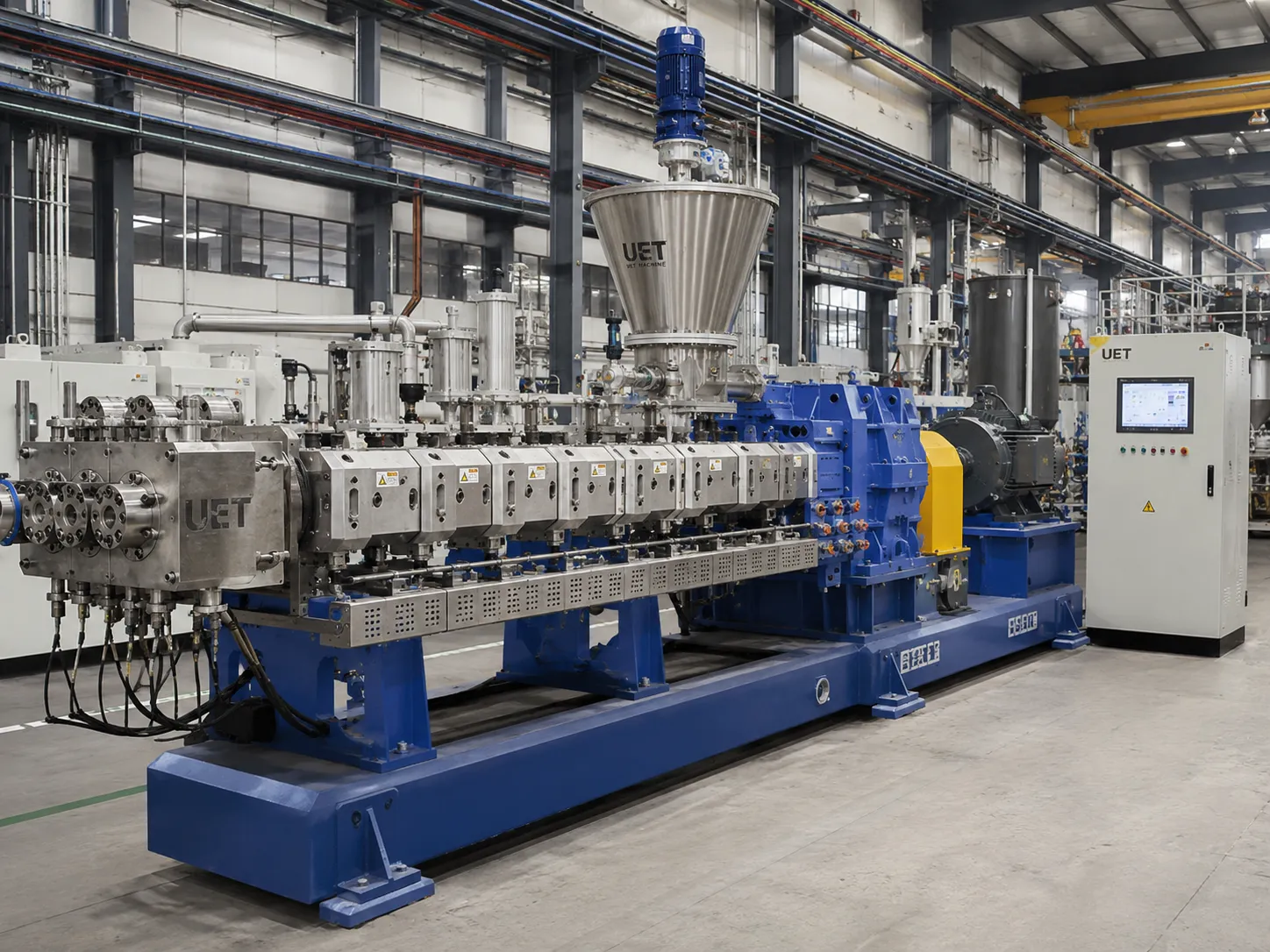
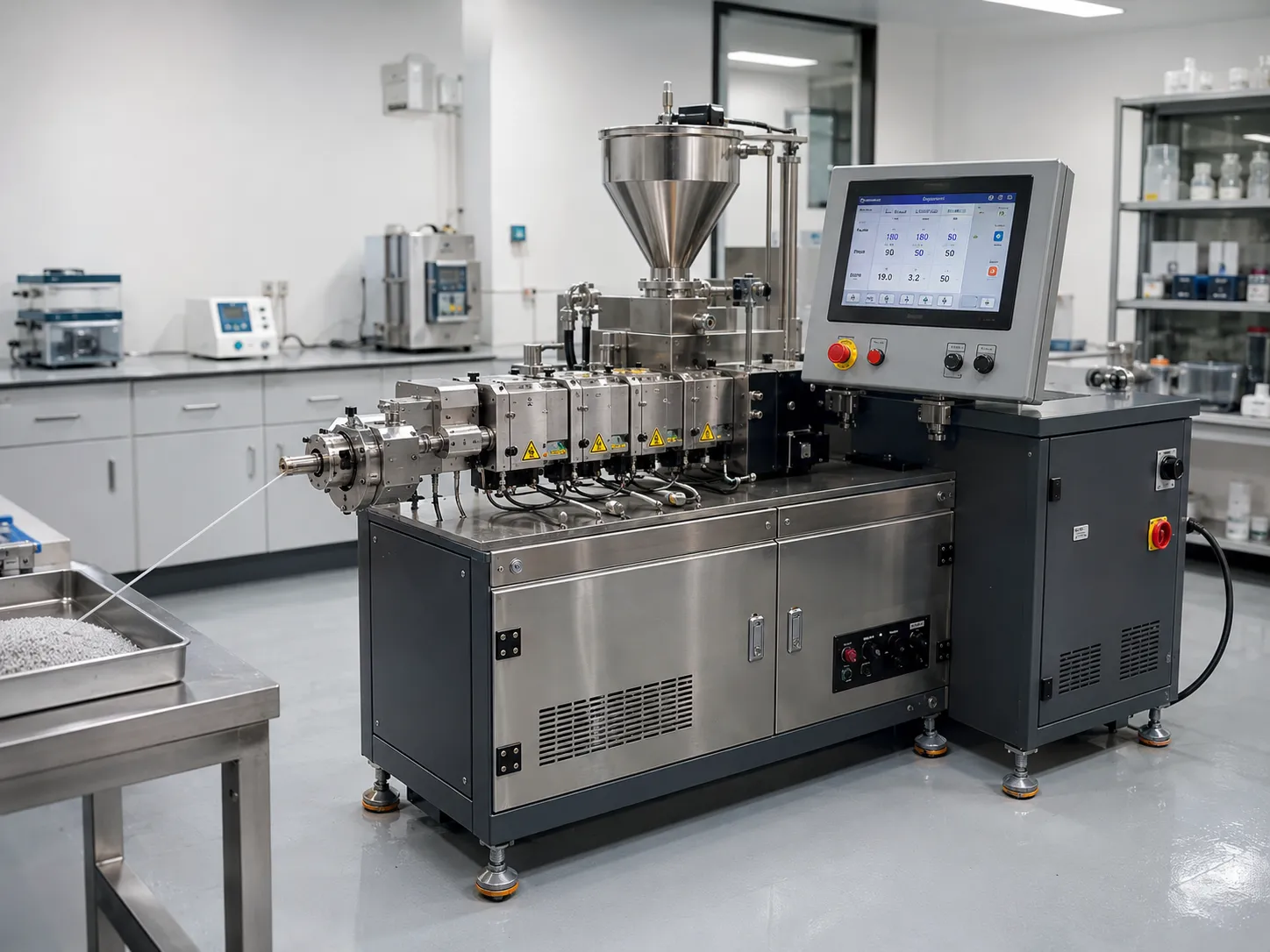
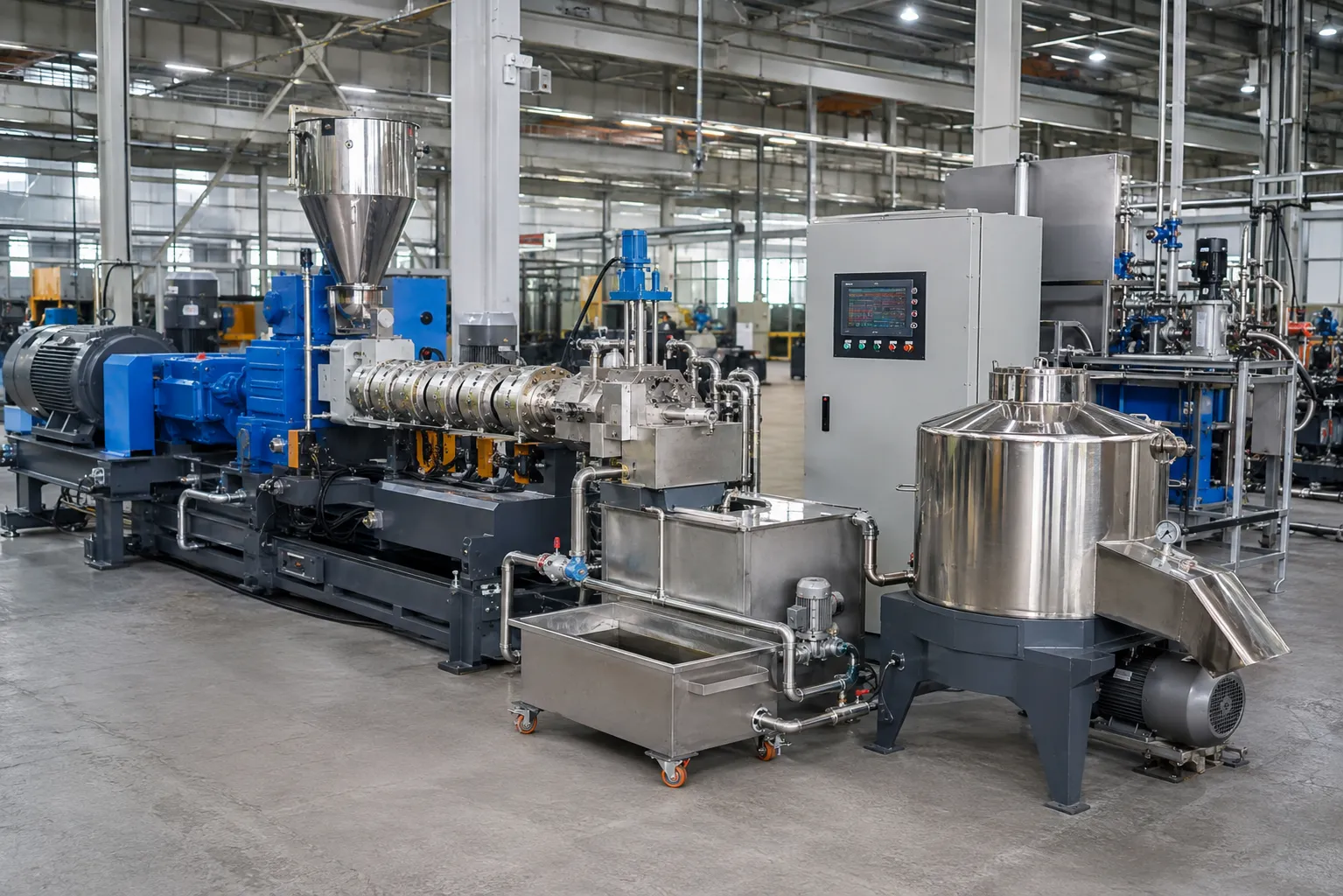
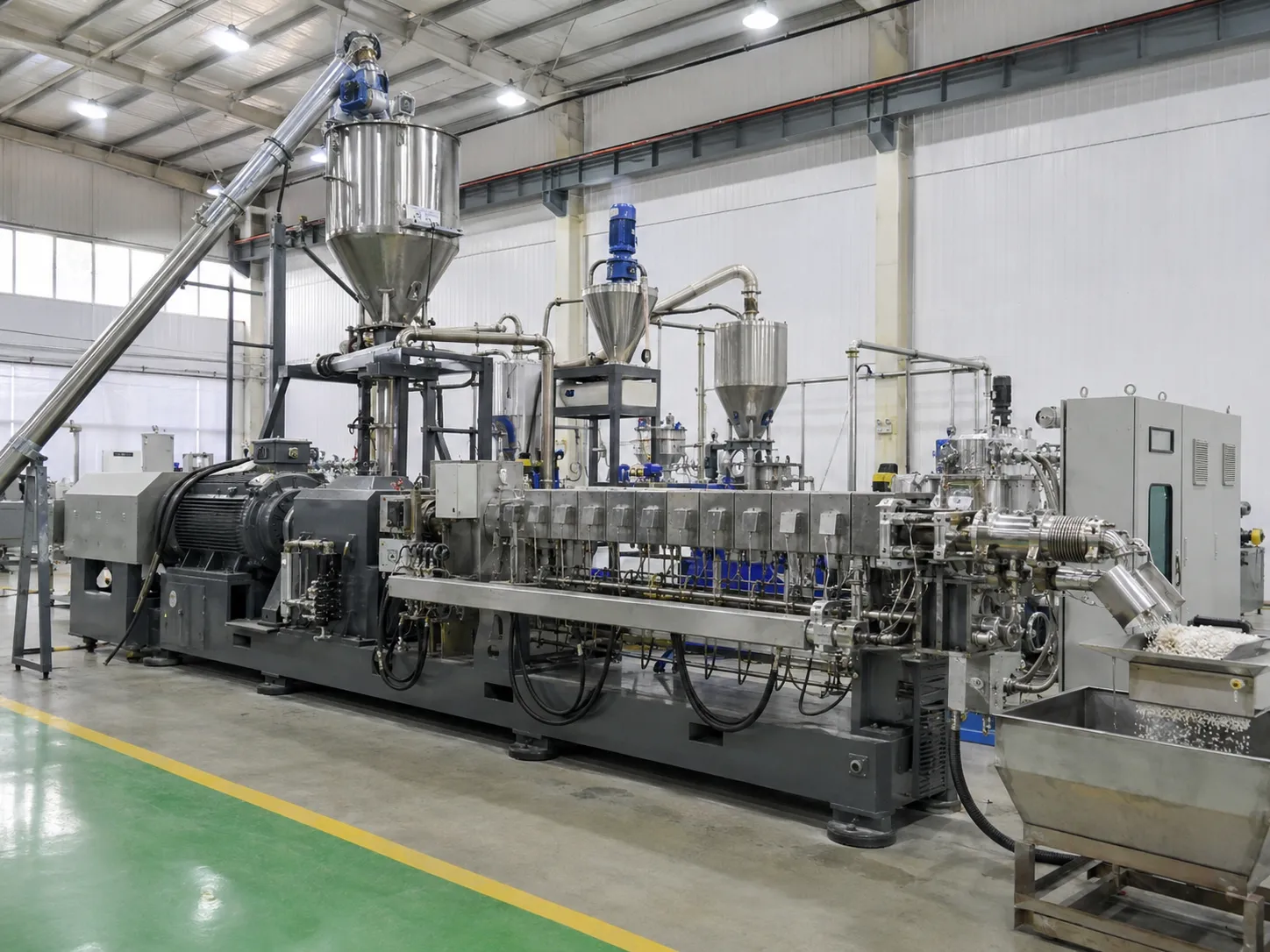
Extruder Machine Types for Sale
From laboratory R&D to 24/7 high-volume production — six proven platforms, factory-direct and customizable to your exact process.
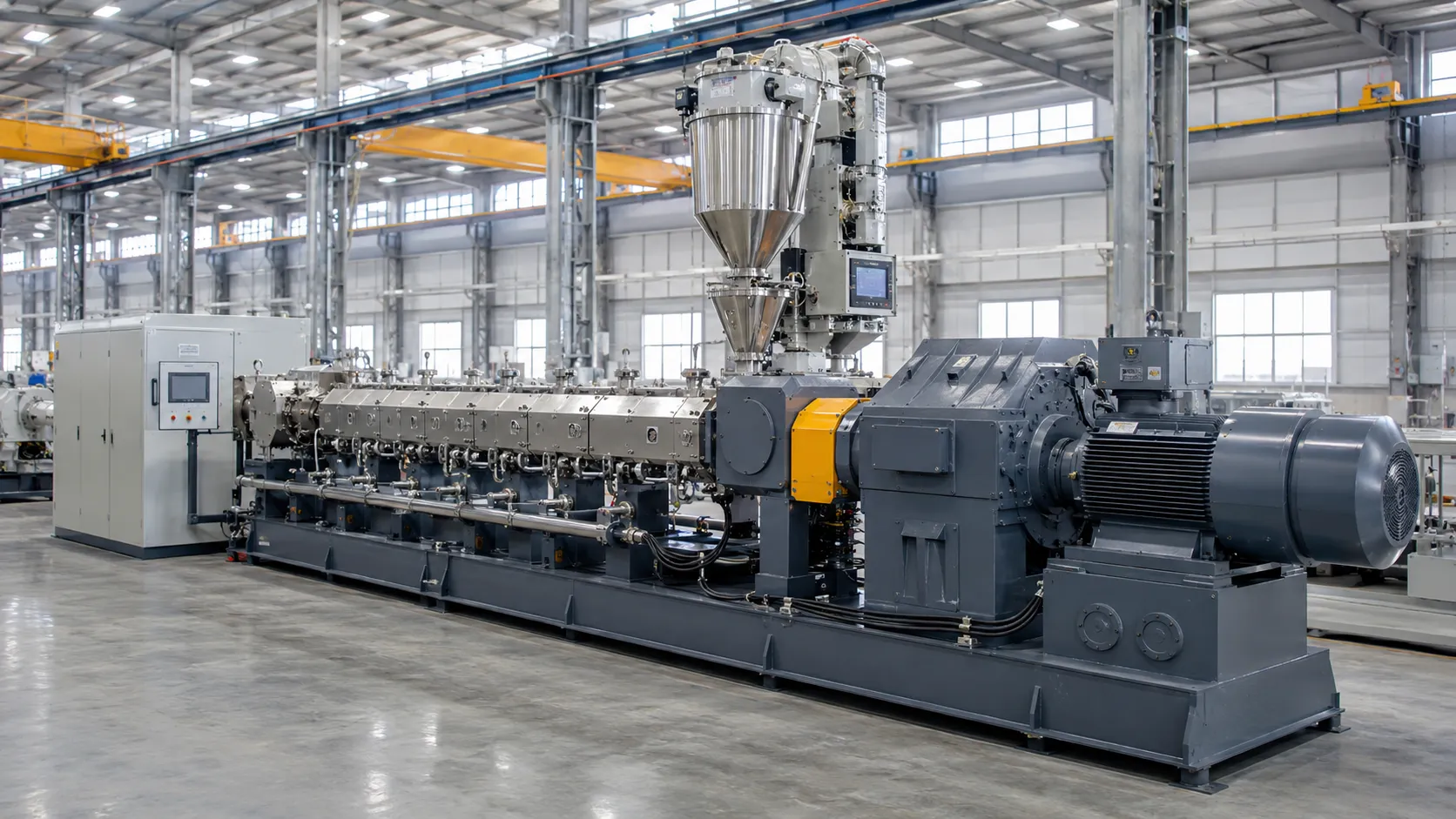
Twin Screw Extruder
High-torque compounding for masterbatch, engineering plastics and biodegradables. Self-cleaning, modular barrel design.
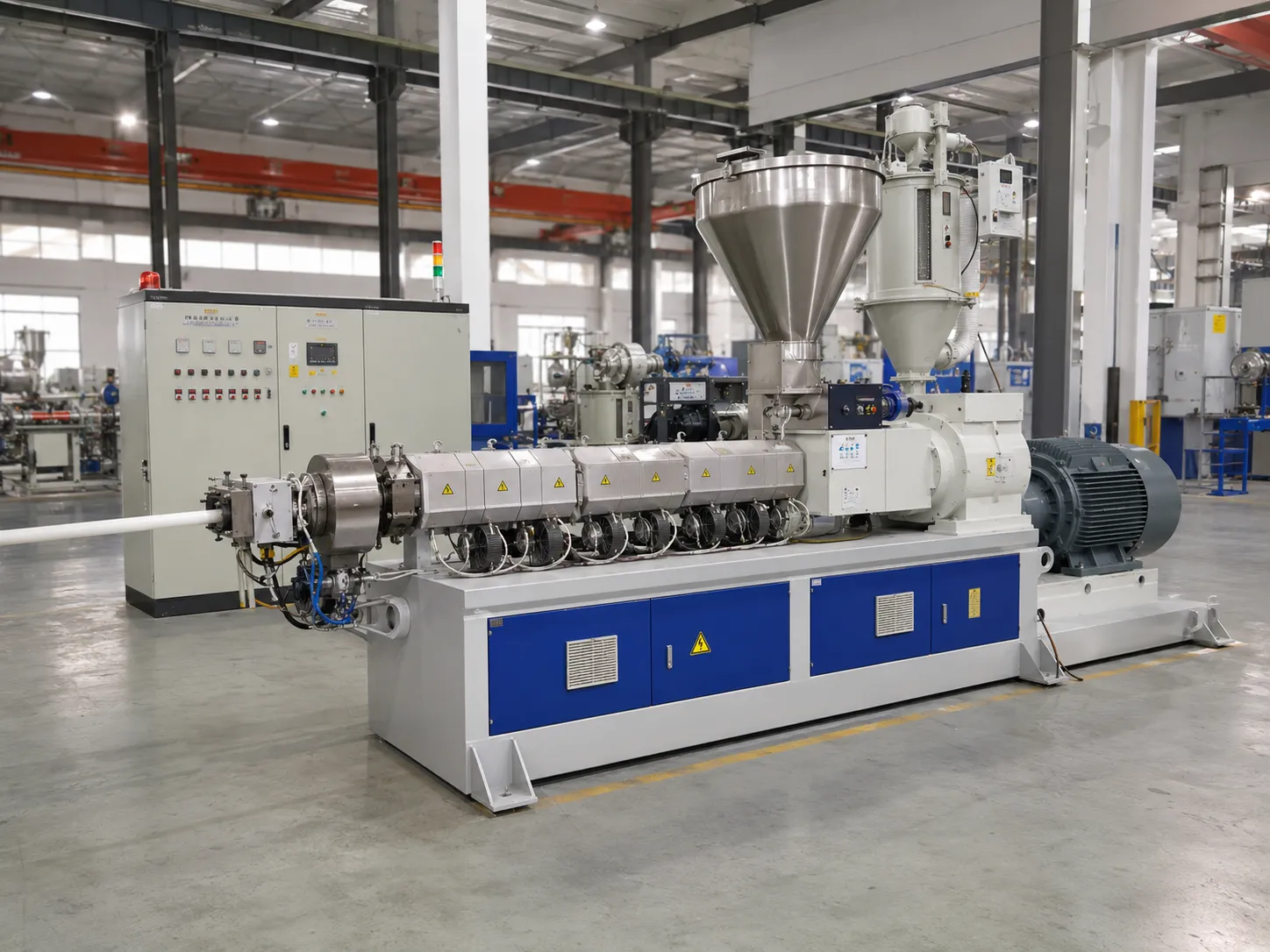
View Details →Single Screw Extruder
Cost-effective melting & forming for pipes, sheets, films and profiles. 15% lower energy, 30% lower maintenance cost.
View Details →Triple Screw Extruder
Ultra-high dispersive mixing for nano-materials, medical-grade and high-value biodegradable compounds.
View Details →Laboratory Extruder
Precision benchtop & pilot-scale units for material R&D, formula testing and small-batch validation.
View Details →Underwater Pelletizing System
Uniform, dust-free pellets for engineering plastics and biodegradables. Pairs with any UET extruder platform.
View Details →Filler Masterbatch Compounding Extruder
Stable 70–85% CaCO₃ high-fill compounding with uniform dispersion and high output at low kWh/kg.
View Details →
Capability Map
Materials & Products an Extruder Machine Can Process
Match your raw material to the end product and the UET platform engineered for it.
| Material Category | Typical End Products | Recommended UET Platform |
|---|---|---|
| PE / PP / HDPE / LDPE | Pipes, sheets, films, strand pelletizing | Single Screw Extruder |
| PVC (rigid / flexible / foamed) | Pipes, window profiles, foamed boards, granules | PVC Extruder Machines |
| Color / filler / additive masterbatch | Uniform pellets at 70–85% filler loading | Filler Masterbatch Compounding Extruder |
| Engineering plastics (PA, PC, ABS, POM, PBT + GF/CF) | Compounded pellets for automotive & electrical parts | Twin Screw Extruder |
| Biodegradable (PLA, PBAT, PBS, starch blends) | Pellets, films, straws, cutlery stock | Bio Extruder / Triple Screw |
| TPE / TPV / silicone / rubber | Profiles, seals, strips, hoses | Rubber Extruder |
| XLPE / LSZH / PVC cable compounds | Wire insulation & sheathing | Wire & Cable Extruder |
| Recycled PE / PP / ABS / PS regrind | Re-pelletizing for reuse in new products | Recycled Plastic Extruder |
| Reactive / specialty (EVA, hot melt, TPU) | Hot-melt adhesives, grafting, specialty compounds | Reactive Extruder |
Why UET
Why Engineers Choose UET Extruders
Two decades of extrusion expertise, delivered to recycling plants, compounders and manufacturers in 85+ countries.
Energy-Efficient Drive
High-efficiency gearbox and optimized screw profiles cut specific energy by 15–20% versus conventional designs.
Modular Barrel & Screws
Swap screw elements and barrel sections in minutes — recipe changeover time cut by 30% with quick-release clamps.
Wear-Resistant Core
Bimetallic barrels (HRC 58–62) and powder-metallurgy screw elements extend service life 3× in abrasive, high-fill runs.
±1.5°C Temperature Control
Independent zoned heating/cooling with PID control protects heat-sensitive materials like PLA from degradation.
Smart PLC Control
PLC + 10″ touch screen, multi-language interface, 12+ recipe presets and remote monitoring readiness.
Global Lifecycle Support
Installation, training, 48-hour spare-parts dispatch and 24/7 remote engineering support in 85+ countries.
Applications
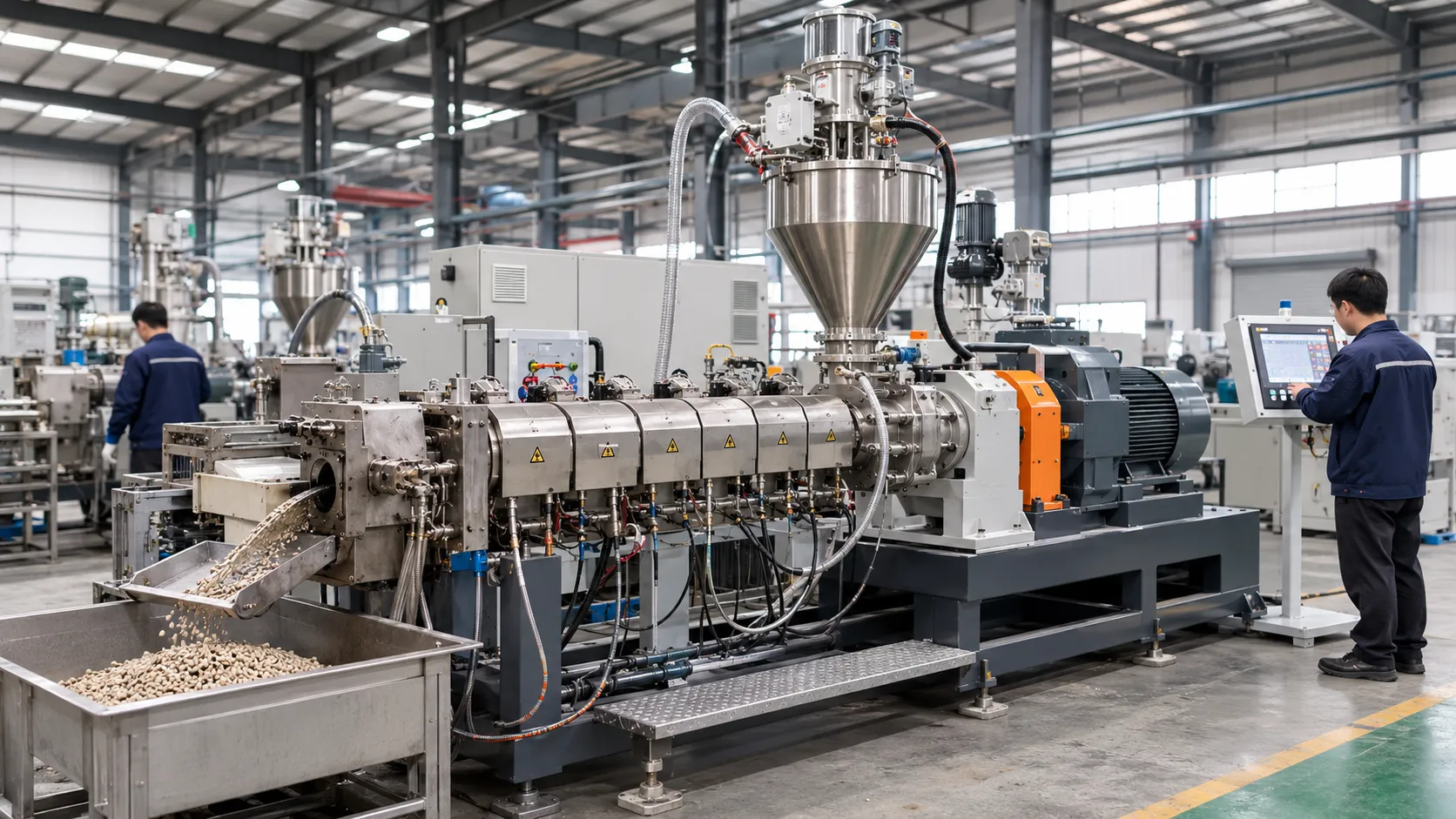
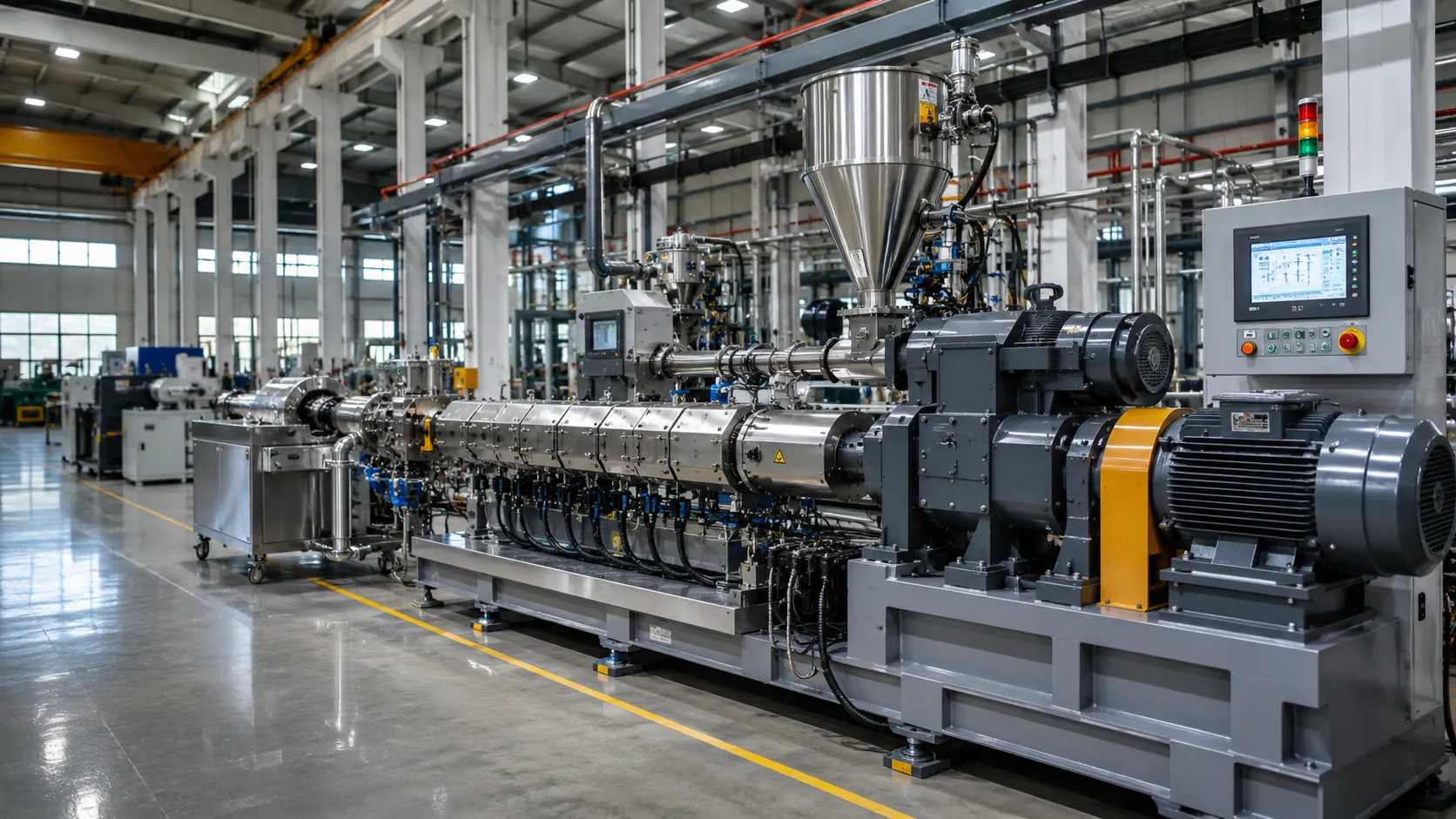
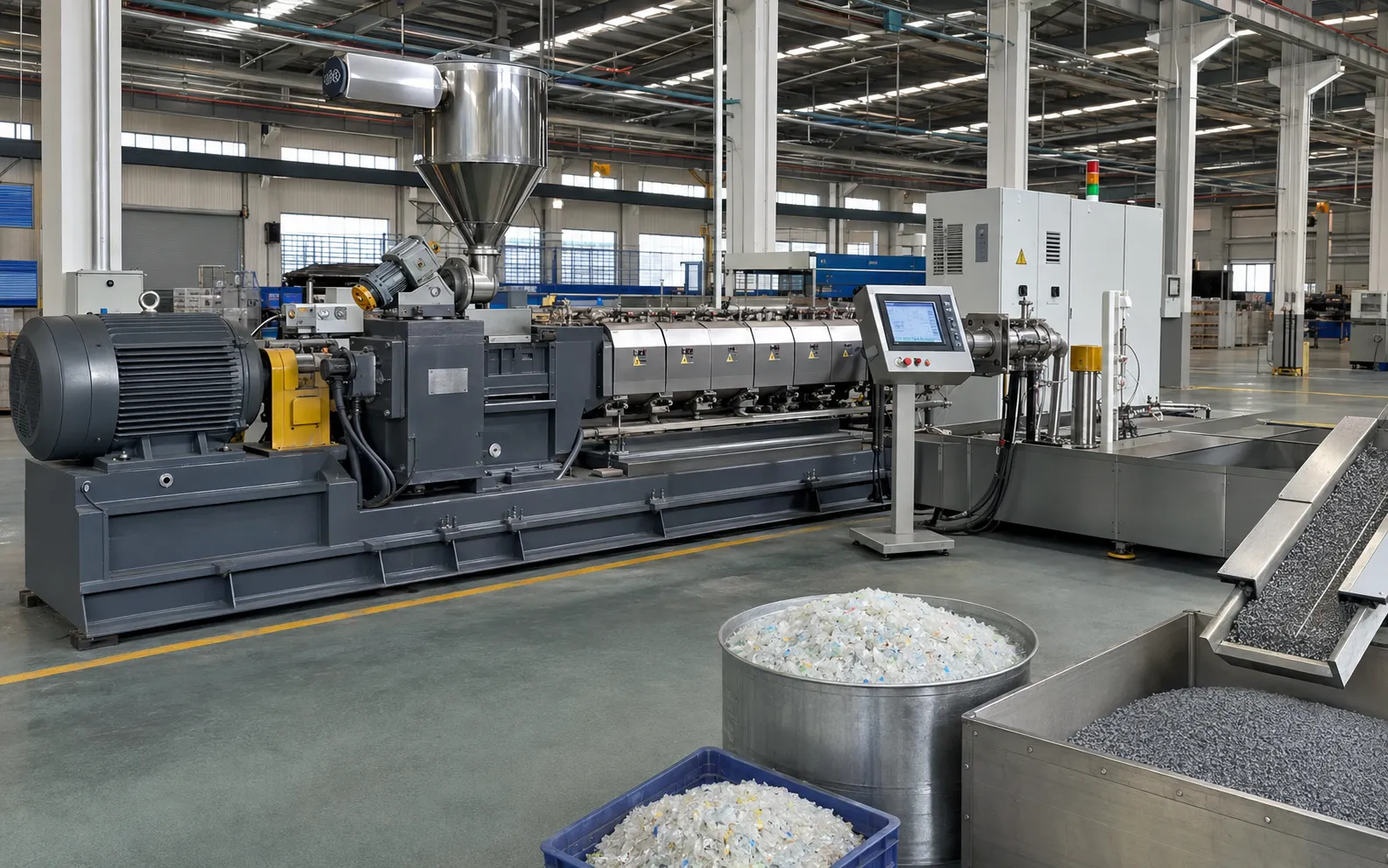
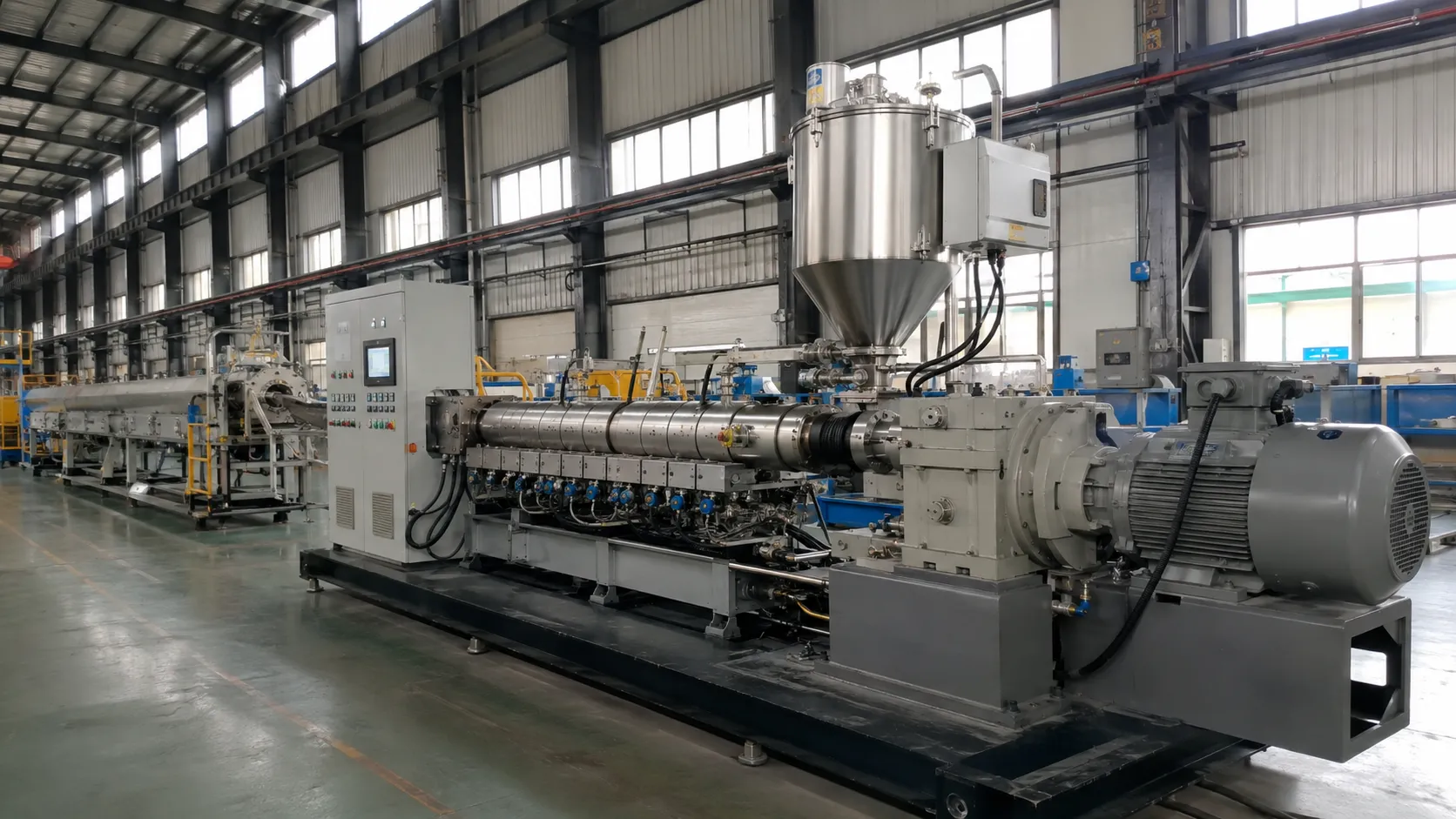
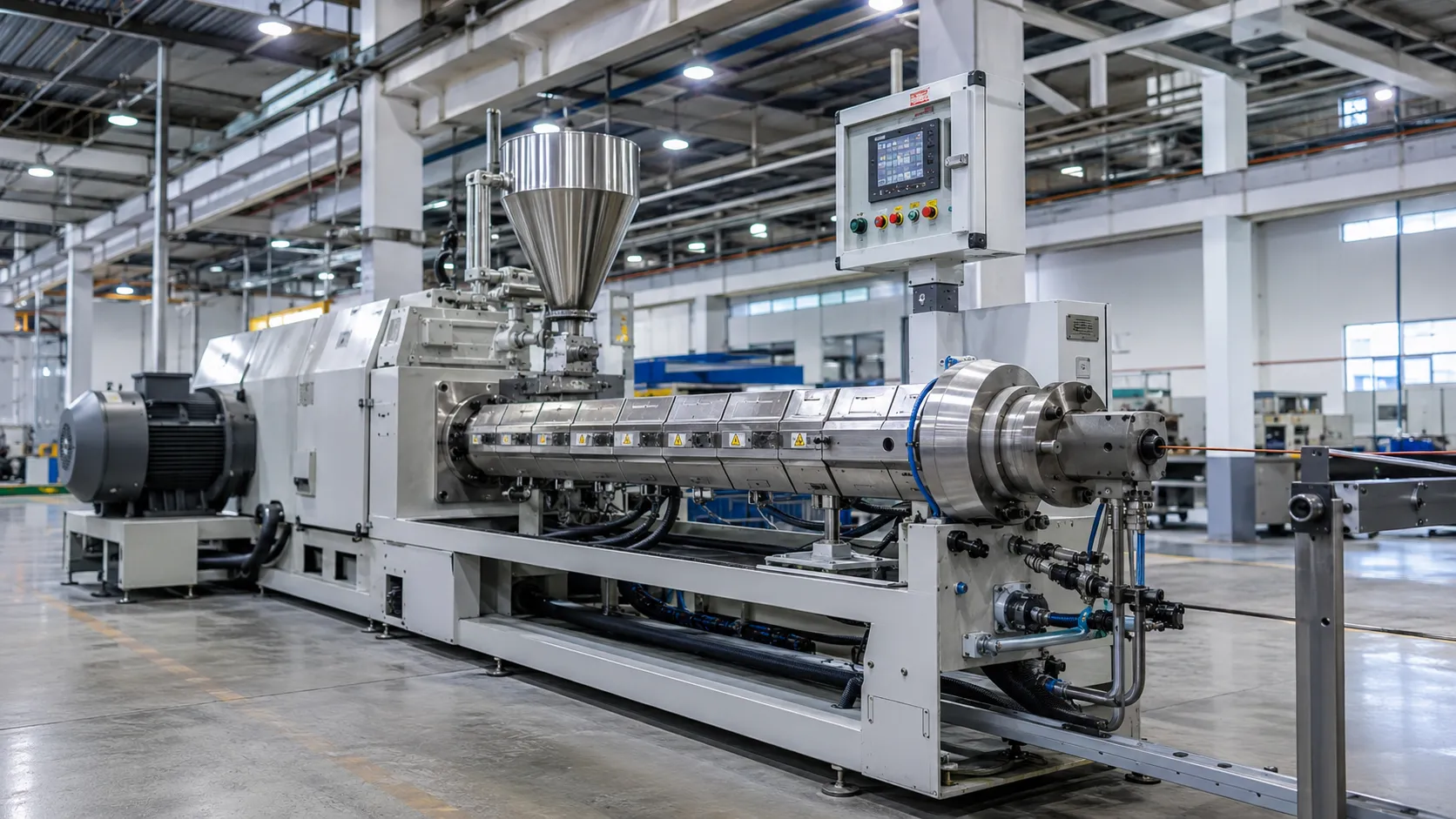
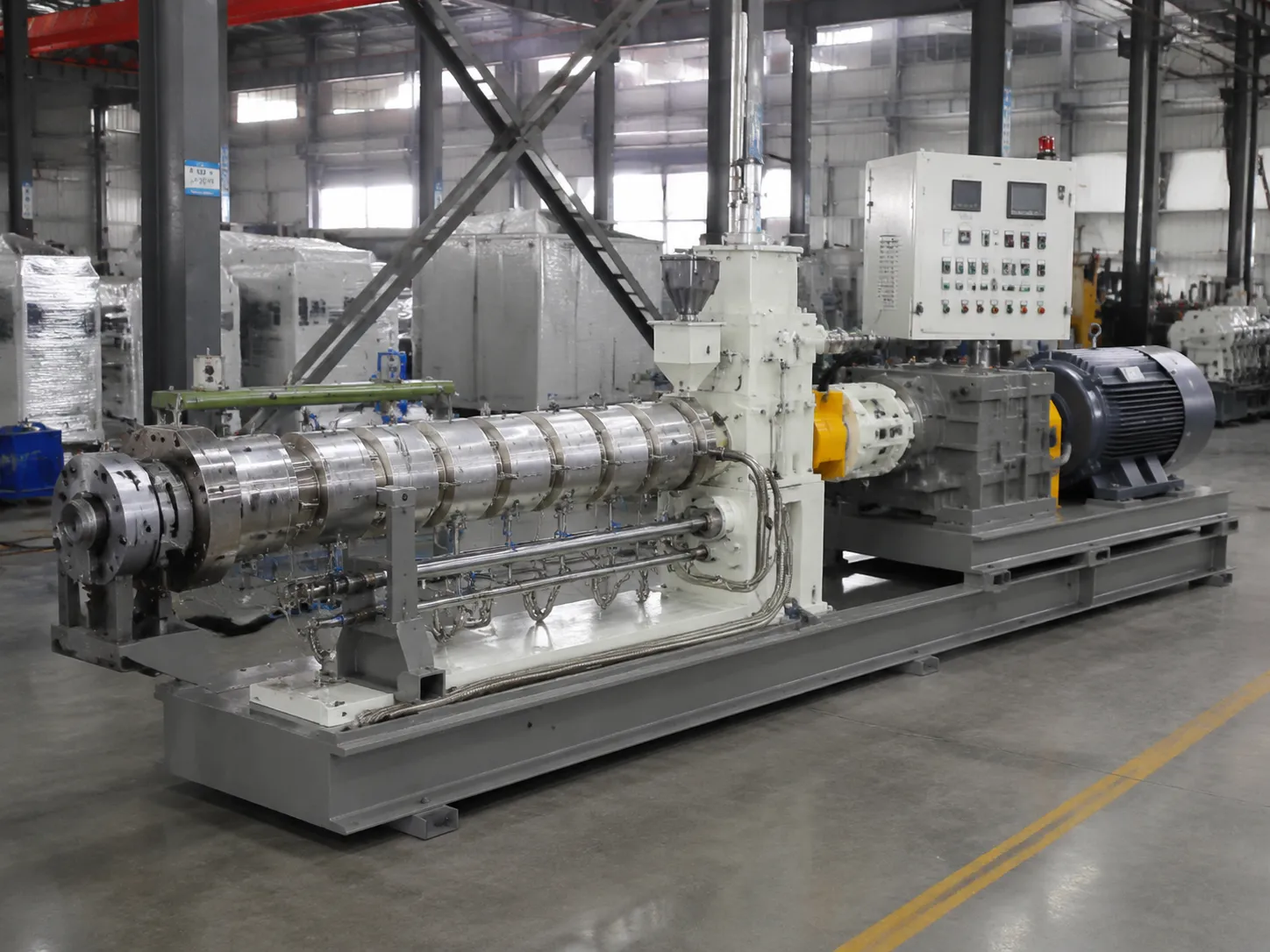
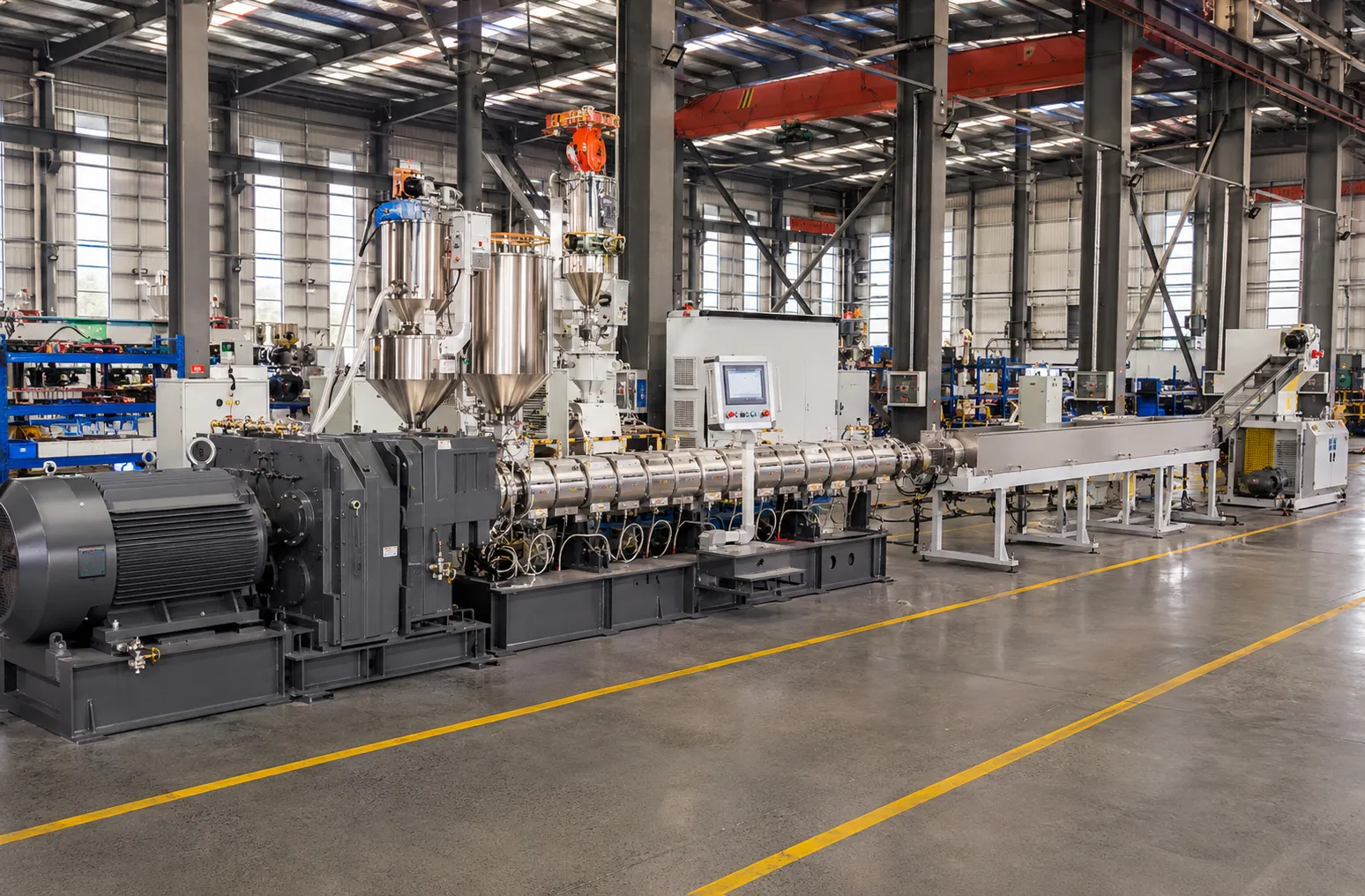
Extruder Applications by Industry & Material
One engineering platform, seven proven application lines — each optimized with custom screw configurations.
Need a Custom Line?
Send your material & output target — our engineers reply within 2 hours.
Get Free Quote
Selection Guide
Which Extruder Type Do You Need?
Rule of thumb: single screw for forming, twin screw for compounding, triple screw for nano dispersion.
| Feature | Single Screw | Twin Screw | Triple Screw |
|---|---|---|---|
| Best For | Melting & forming | Mixing & compounding | Nano dispersion |
| Mixing Intensity | Low | High | Very High |
| Self-Cleaning | ✗ No | ✓ Yes | ✓ Yes |
| Typical Materials | PE, PP, PVC | Masterbatch, engineering plastics | Biodegradable, medical-grade |
| Typical Products | Pipes, sheets, films | Pellets, compounds | High-value compounds |
| Investment Level | Entry — most economical | Mid-range | Premium |
| Operator Skill | Easy to learn | Moderate | Advanced |
Working Principle
How an Extruder Machine Works — From Pellets to Product
Blue = solid conveying, orange = molten zone. Follow numbers 1–6, explained below the diagram.
1
Feeding
Raw pellets, powder or regrind enter the barrel through the hopper; loss-in-weight feeders meter each recipe component precisely.
2
Conveying & Compression
The rotating screws convey material forward, compressing it and squeezing out trapped air before melting begins.
3
Melting & Mixing
Barrel heaters plus shear friction melt the polymer; screw geometry distributes pigments, fillers and additives uniformly.
4
Degassing & Filtration
Vent ports remove volatiles and moisture; melt filters capture residual impurities for clean, stable output.
5
Extrusion Through the Die
The homogeneous melt is pushed through a precision die, forming the target cross-section — strand, pipe, sheet or profile.
6
Cooling & Pelletizing
Strands are cooled, cut into uniform pellets, or the profile is hauled off and cut — ready for downstream use.
Buyer’s Guide
How to Choose an Extruder: 6 Key Parameters Engineers Check
The diagram maps each parameter to its physical location on a twin screw extruder. Send these values with your enquiry for an accurate, itemized quote.
Send Your Parameters01
Screw Diameter (Ø)
The primary driver of output capacity — larger diameter means higher kg/h at the same screw speed.
Rule of thumb: size Ø to your target output, never oversize “for safety”.02
L/D Ratio
Barrel length ÷ diameter. Longer residence time means better mixing, dispersion and devolatilization.
Rule of thumb: 32–40 covers most compounding; 40+ for high-fill or reactive processes.03
Torque Grade (N·m/cm³)
Higher torque pushes more output at lower RPM — lower melt temperature, better material quality.
Rule of thumb: ≥9 for engineering plastics; 6.5–8 is fine for general compounding.04
Screw Speed (RPM)
High RPM raises output but also shear heat. It must be balanced against your material’s heat sensitivity.
Rule of thumb: heat-sensitive resins need torque headroom, not speed.05
Temperature Control Precision
Independent PID zones with tight tolerance (±1.5°C) protect PLA, PBAT and PVC from thermal degradation.
Rule of thumb: ask for zoned heating + cooling, not heating-only barrels.06
Material-Driven Customization
Screw layout, barrel vents and downstream (strand, water-ring or underwater pelletizer) must follow your recipe.
Rule of thumb: the configuration should follow the material — never the other way around.
Our Facility
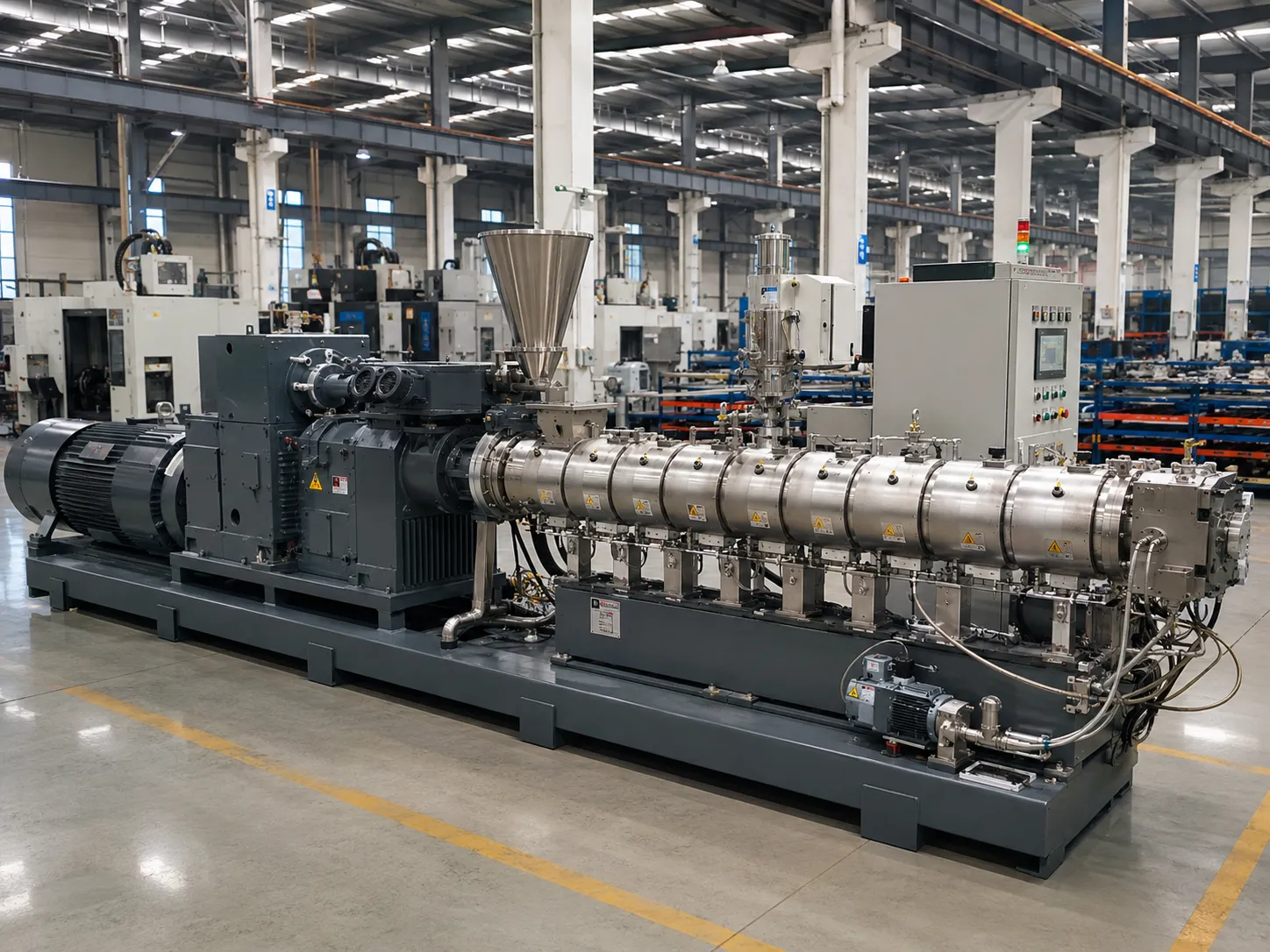
Our Extruder Factory: Built In-House, Proven Before Shipping
Every extruder is machined, assembled and test-run inside our 11,400㎡ facility in Nanjing, China. Inspect in person or by live video before dispatch.
- Screws & barrels machined in-house (HRC 58–62 surface hardness)
- 72-hour full-load mechanical test + material trial run on every unit
- CE-certified builds with itemized, transparent quotations
- 18-month machine warranty · 24-month screw & barrel coverage
- Third-party inspection welcome (SGS, BV, TÜV)
CE CertifiedISO 900120+ Years85+ Countries
What Happens After You Order
Extruder Service & Support — From Enquiry to Lifetime
A transparent four-stage process so you always know where your machine stands.
01
Pre-Sales Engineering
- Itemized quote within 2 hours
- Free screw-configuration proposal
- Material & output feasibility advice
02
Production & Testing
- In-house machining, HRC 58–62
- 72h full-load FAT with your material
- Live video inspection before shipment
03
Delivery & Commissioning
- Seaworthy export packing + full docs
- On-site or remote installation
- 5-day operator training program
04
Lifetime Support
- 24/7 engineer response < 2 hours
- Spare parts dispatched in 48 hours
- Lifetime parts at cost price
Customer Stories



Customer Reviews: UET Extruders in 85+ Countries
Real reviews from real customers across diverse industries.
★★★★★
“Maintenance costs are 30% lower than our old equipment with reliable stability for small-batch pipe production. After-sales guided us remotely and fixed a minor issue in 2 hours.”
RyanPlastic Pipe Processing · Southeast Asia
★★★★★
“Extremely easy to operate — new employees get up to speed within half a day. Parameter switching is twice as fast, so we kept delivery schedules during urgent orders.”
ChloePackaging Material Production · Europe
★★★★★
“Compact and space-saving, commissioning was easier than expected. The rubber strips produced have stable precision with no batch variations — a reliable workhorse.”
DylanRubber Product Processing · North America
Knowledge Base
Guide
Guide
Guide
Extruder Knowledge Base — Learn Before You Buy
Guides written by our application engineers — not marketers.
What Is an Extruder Machine? Working Principle & Key Components
How an extruder turns raw polymer into pipe, sheet, film or pellets — screw, barrel and die explained.
Read Article →Twin Screw Compounding Extruder: Everything You Need to Know
Torque, L/D ratio and screw configuration — what actually decides compounding quality.
Read Article →PVC Twin Screw Extruder: Everything You Need to Know
Why counter-rotating twin screws dominate PVC pipe and profile production.
Read Article →
Technical FAQ
Extruder Machine Questions, Answered by Engineers
Equipment-first answers about extruder machines, twin screw extruders and buying — not marketing.
An extruder machine melts and homogenizes plastic or rubber, then continuously pushes it through a die to form pipe, sheet, film, profile or pellets. A rotating screw inside a heated barrel conveys, compresses, melts and meters the material through feeding, compression and metering zones.
Any product with a constant cross-section: pipes, profiles, sheets, films, strands and pellets. Single screw lines make pipes, sheets and films; twin screw systems output compounded pellets (masterbatch, engineering plastics, biodegradables); specialty lines produce cable insulation, rubber strips and filament.
A twin screw extruder is mainly used for compounding — intensively mixing polymers with fillers, pigments or additives. Typical outputs include filler/color masterbatch, engineering plastics, biodegradable compounds and cable compounds, where high mixing quality and devolatilization are required.
A single screw extruder melts and forms a single material at the lowest cost — pipes, sheets, films. A twin screw extruder mixes and compounds multiple ingredients. Rule of thumb: single for forming, twin for compounding, triple screw for nano-level dispersion.
A twin screw extruder processes PE, PP, PVC, ABS, PA, PBT, PC, biodegradable PLA/PBAT, TPE/TPV elastomers and high-fill CaCO₃ formulations. The screw configuration is customized to your specific recipe.
A laboratory extruder is a small-scale unit for R&D: formula testing, material trials, sample preparation and small-batch validation before full-scale production — typically 0.5–20 kg/h with the same screw geometry as production machines.
An underwater pelletizing system cuts molten polymer strands underwater into uniform, dust-free pellets. It is ideal for engineering plastics, biodegradable materials and high-fill compounds where traditional strand pelletizing struggles with quality.
A filler masterbatch compounding extruder stably handles 70–85% CaCO₃ or talc loading with uniform dispersion, thanks to high torque (up to 18 N·m/cm³) and a modular barrel design that prevents over-shearing.
Four items: (1) your material and recipe, (2) target output in kg/h, (3) final product and dimensions, (4) plant power standard such as 380V/50Hz/3-phase. With these we return an itemized, transparent quotation within 2 hours.
Standard extruder models ship in 1–2 weeks; customized lines take 4–6 weeks. Warranty: 1 year on the whole machine, 24 months on screws and barrels, 24/7 engineer response and lifetime spare-parts supply at cost price.