Factory Direct
CE & ISO Certified
Ships in 2 Weeks
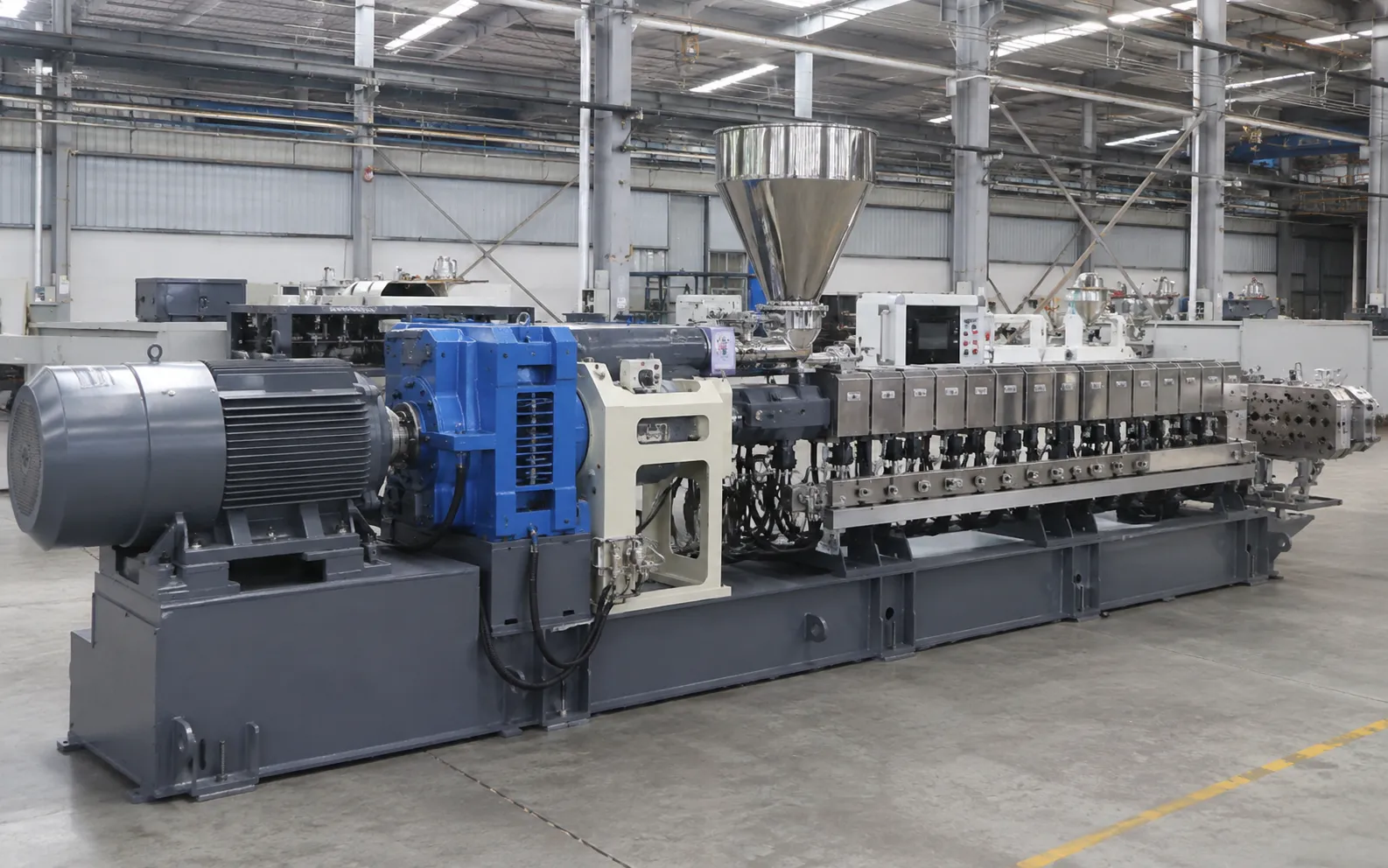
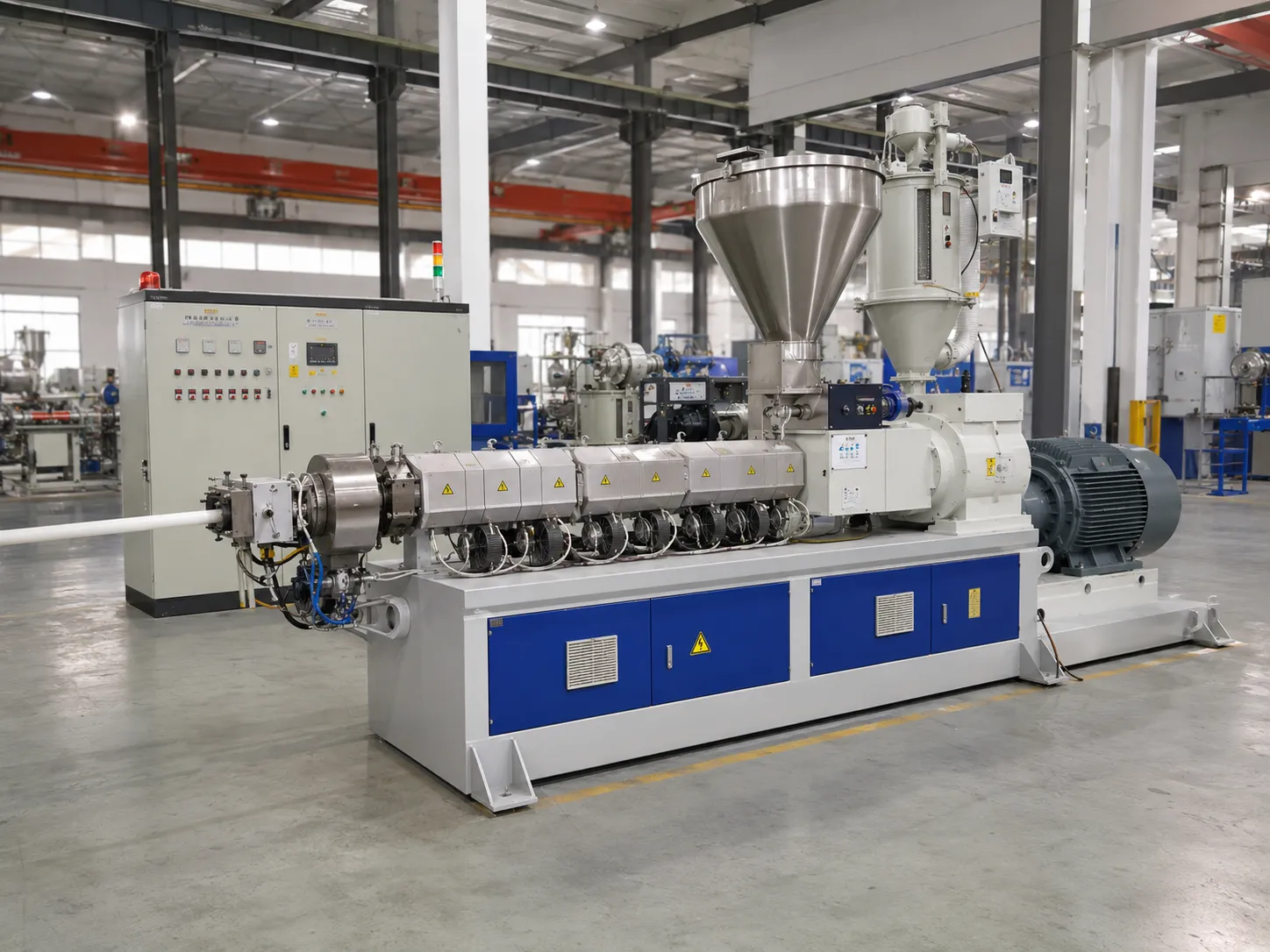
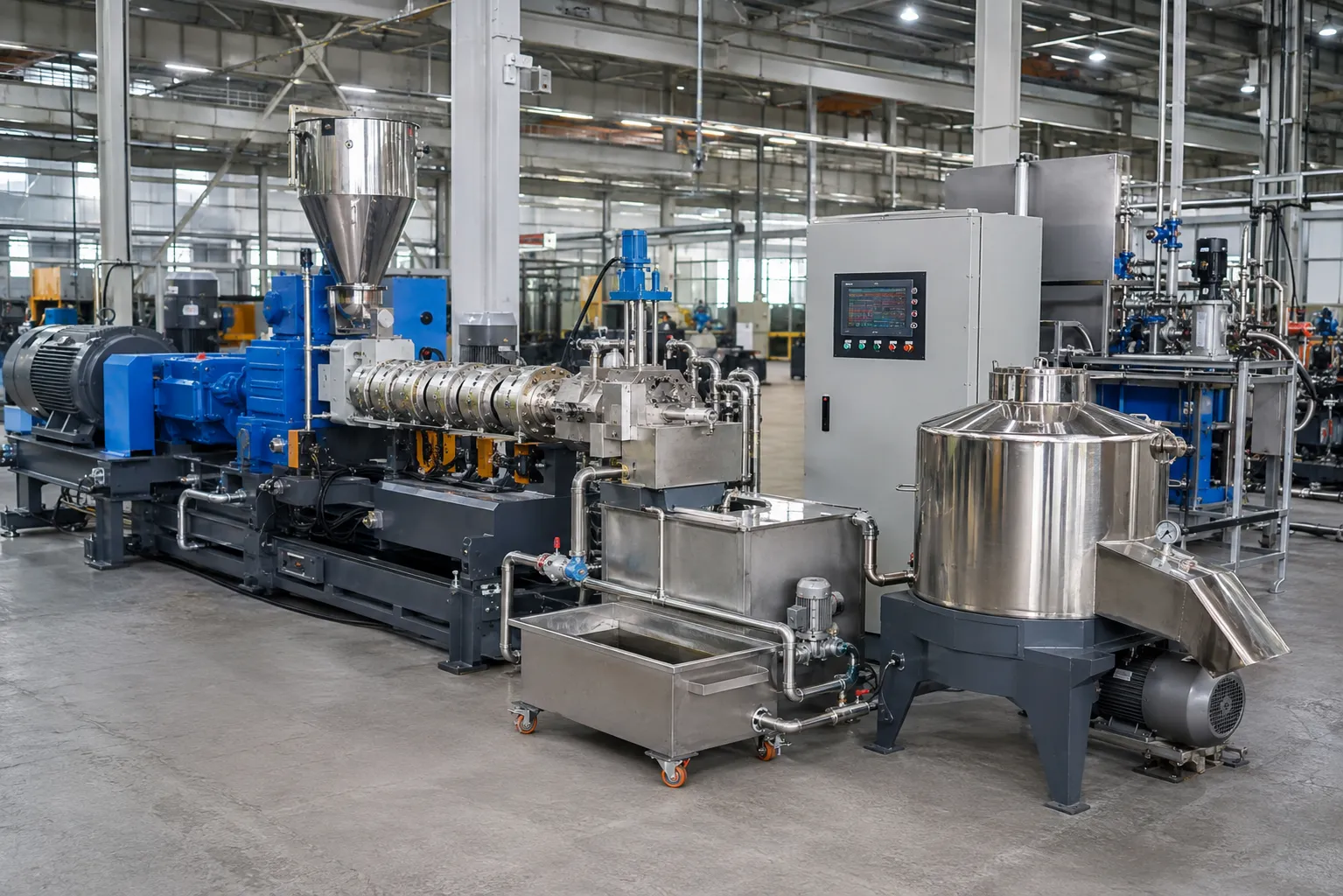
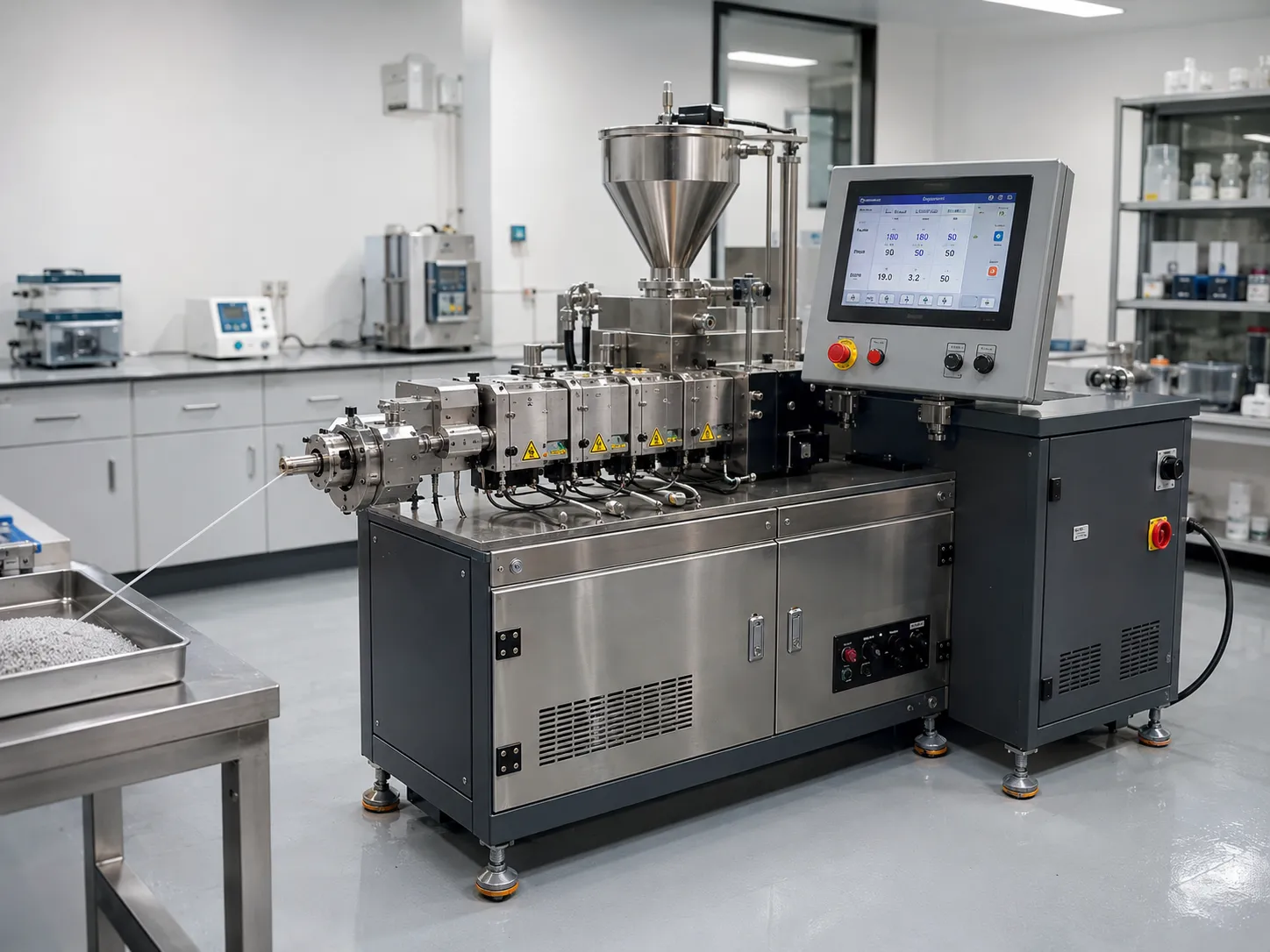
Precision Laboratory Extruder for R&D and Pilot Testing
Small-batch compounding with ±0.3°C temperature precision and 95%+ mixing uniformity — factory-direct from UET’s China manufacturing base to laboratories in 80+ countries.
20+Years Engineering
5,600+Machines Delivered
80+Export Countries
±0.3°CLab Temp Precision
95%+Mixing Uniformity
≤0.8㎡Lab Footprint
≤65dBOperating Noise
The Basics
What Is a Laboratory Extruder?
A compact, high-precision extrusion platform that bridges the gap between a formulation idea and full-scale production.
A laboratory extruder is a small-scale extrusion machine engineered for research and development, formulation testing and pilot-scale production. Unlike production extruders built for throughput, a lab extruder is optimized for precision, repeatability and minimal material consumption — melting and compounding polymers with as little as 100 grams per trial while recording the process data your team needs to make scale-up decisions.
It replicates the melt temperature, shear rate and residence time of industrial lines at a fraction of the size, so results transfer directly to production. That is why a laboratory extruder is the core instrument in polymer labs worldwide.
Who uses it:
Universities
Research Institutes
Corporate R&D Centers
Material Startups
QC Laboratories
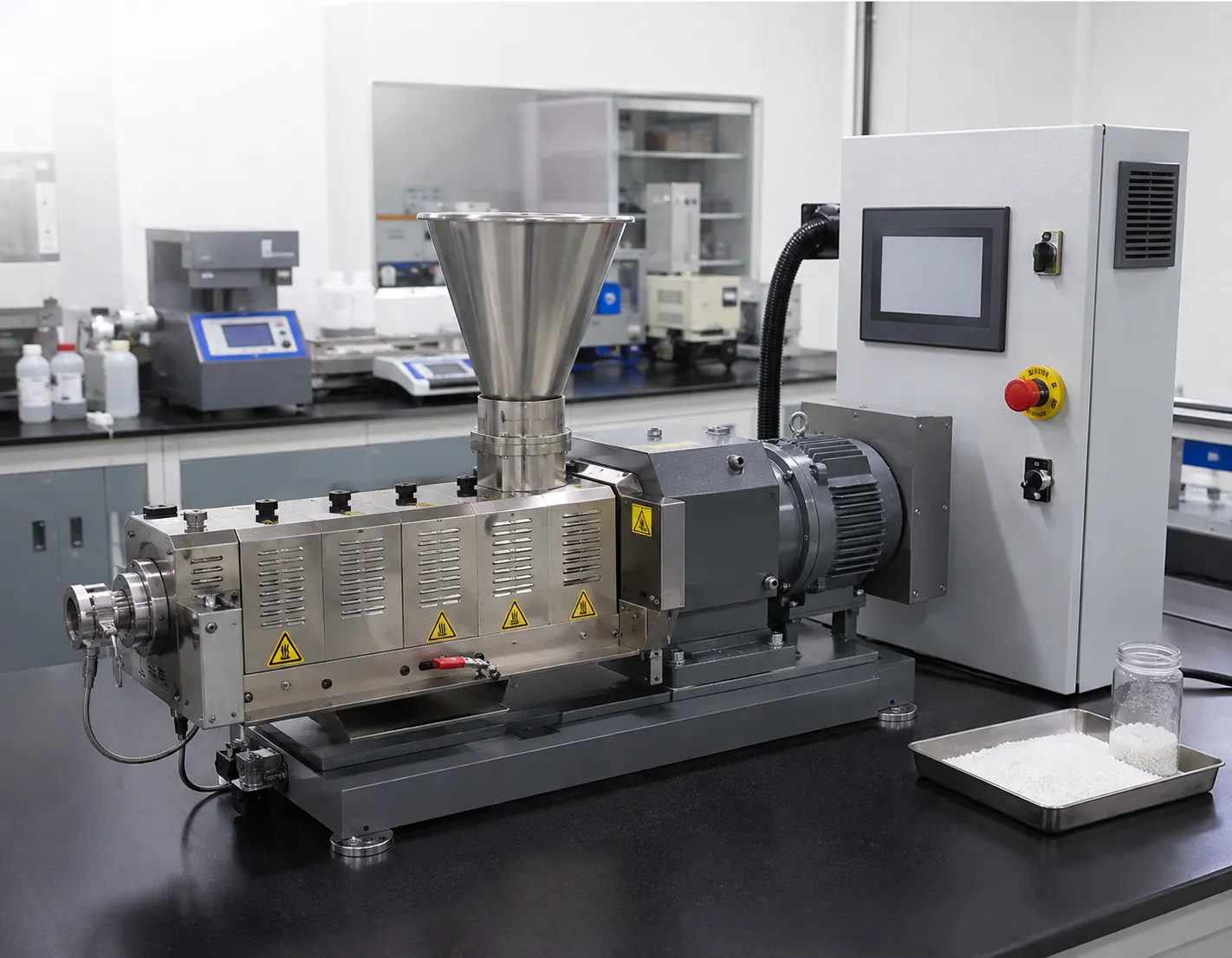
| Parameter | Laboratory Extruder | Production Extruder |
|---|---|---|
| Primary purpose | R&D, formulation testing, samples | Mass manufacturing |
| Typical output | 0.5 – 200 kg/h | 100 – 2,500 kg/h |
| Material per trial | 100 g – 5 kg | Hundreds of kg |
| Footprint | 0.5 – 1.2 ㎡ | 10 – 100 ㎡ |
| Design focus | Data precision & repeatability | Throughput & uptime |
Model Selection
Choose the Right Laboratory Extruder Model
Three platforms covering every R&D scenario — from basic plasticizing trials to high-viscosity, heat-sensitive compounding.
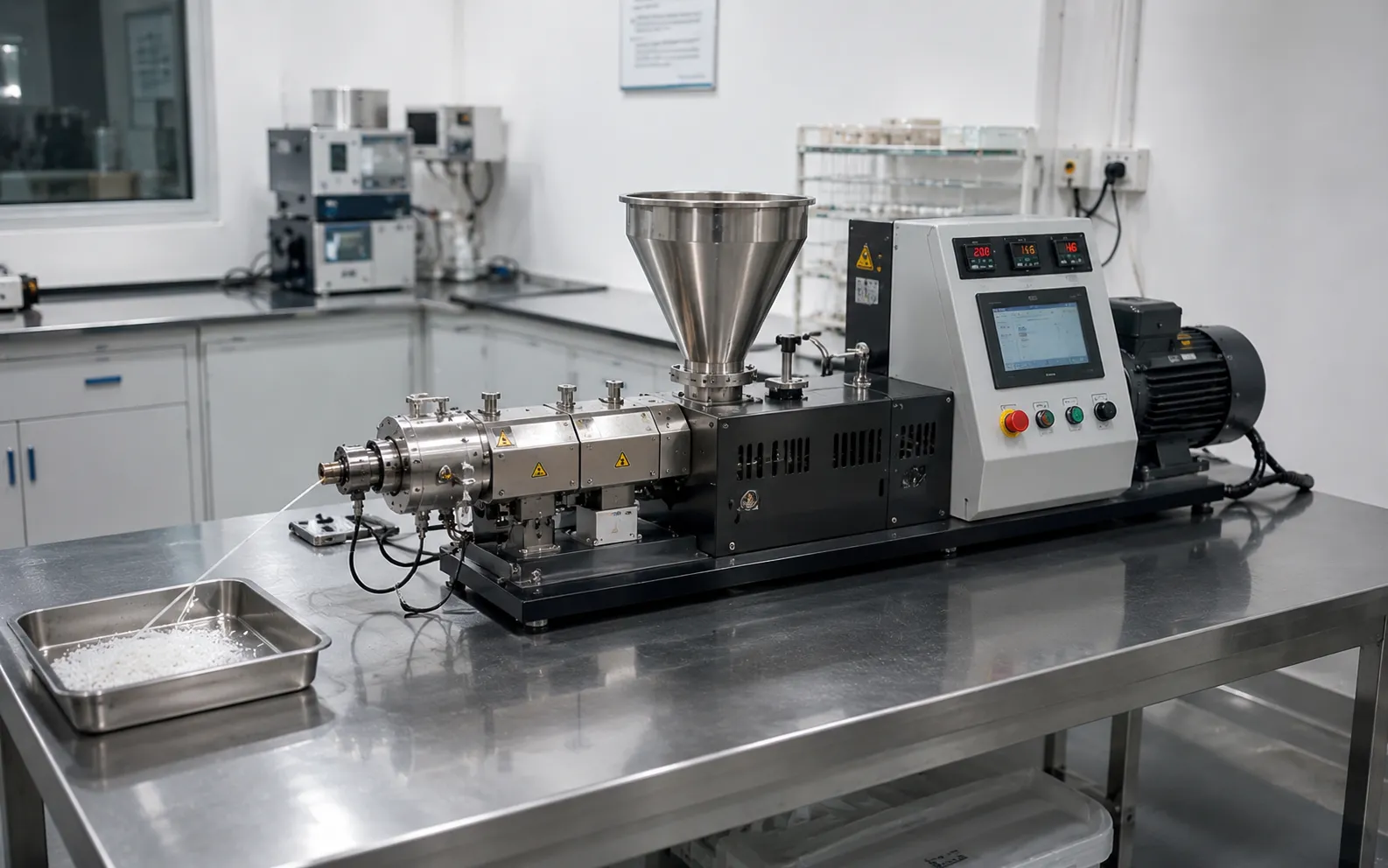
Lab Single Screw Extruder
Simple formulation validation and basic plasticizing tests at one-third the cost of twin screw models.
- Best forPE / PP testing
- TemperatureRT – 350°C
- Output0.5 – 5 kg/h
- Footprint0.5㎡
- InvestmentEntry level
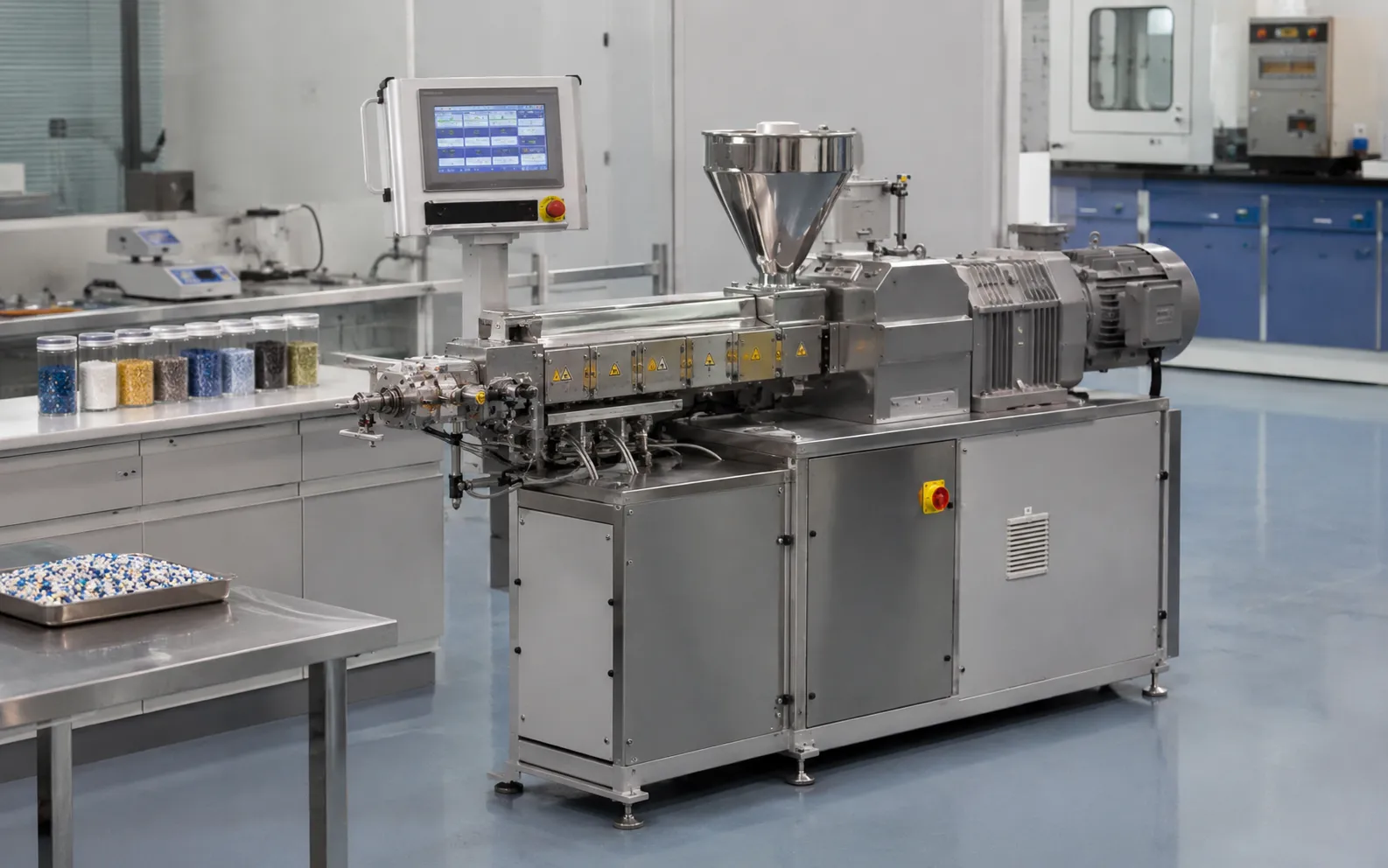
Lab Twin Screw Extruder
High-precision compounding for modified plastics, masterbatches and biodegradable polymers.
- Best forCompounding R&D
- Temperature±0.3°C control
- Output5 – 200 kg/h
- Mixing95%+ uniform
- Footprint0.8㎡
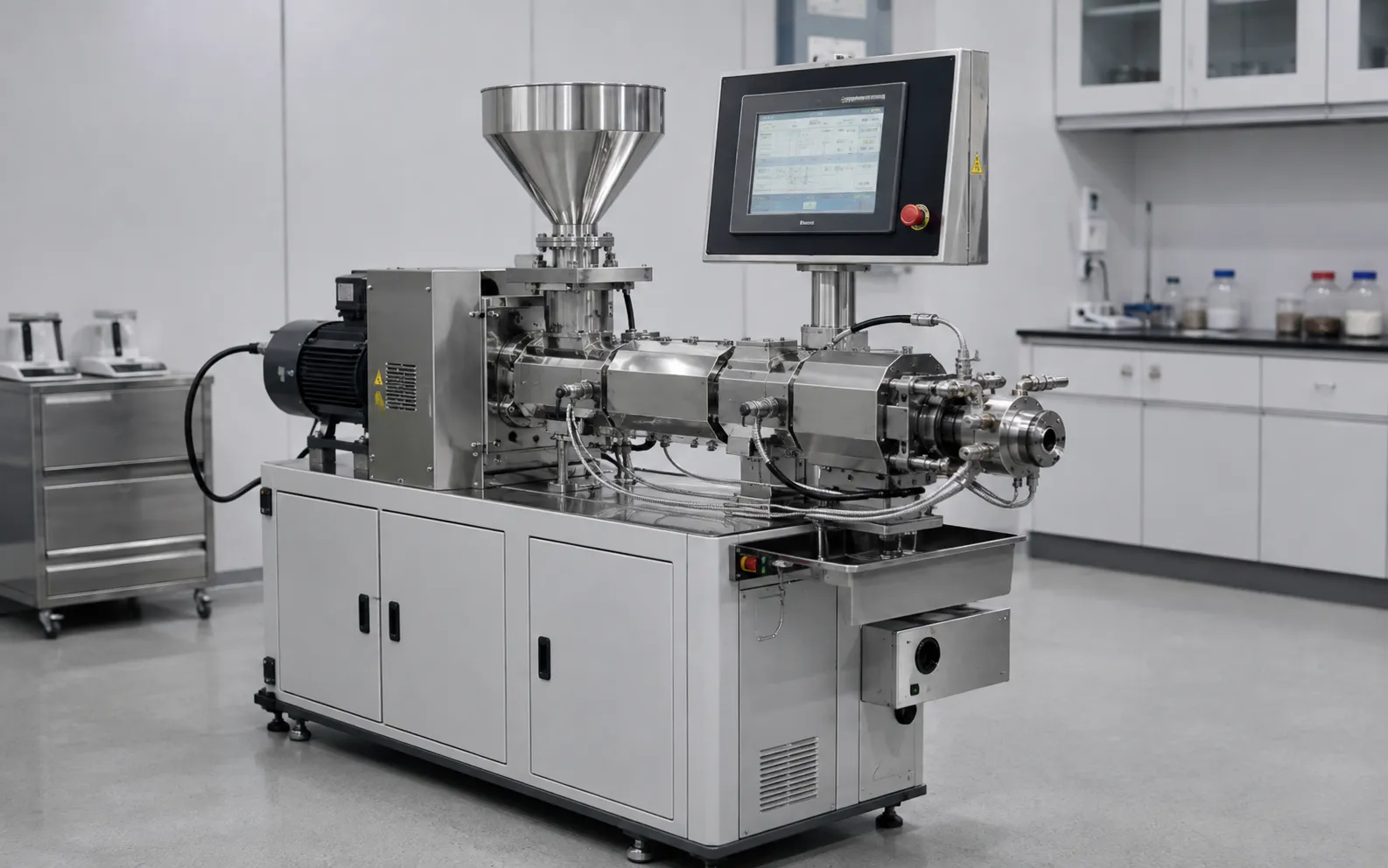
Specialized Lab Extruder
Low-shear design for PVC, medical-grade and other heat-sensitive, high-viscosity materials.
- Best forPVC / Bio / Medical
- Precision±1°C control
- Degradation↓40% reduced
- CleaningSelf-cleaning
- InvestmentPremium
Decision Framework
Find Your Ideal Lab Extruder in 4 Steps
Work through four questions — each answer narrows the field until only one platform fits your laboratory.
The 4-Question Selection Path
Answer honestly and match your profile against the quick-reference recommendations below.
1
Material Type
What will you process most often?
Commodity plastics
Engineering plastics
Bio-based
Heat-sensitive
2
Mixing Intensity
Simple melting or true compounding?
Melting / forming
Blending
High-shear dispersion
Reactive
3
Batch Size
How much material per trial?
<1kg micro
1–10kg
10–50kg pilot
50kg+
4
Budget & Precision
Validation budget or publication-grade data?
Entry budget
Best value
Premium precision
PE/PP forming + entry budget → Lab Single Screw
Masterbatch / PLA / PA compounding → Lab Twin Screw
Medical PVC / hot-melt / high viscosity → Specialized Model
Working Principle
How Does a Laboratory Extruder Work?
Follow the numbered flow — each callout matches one of the five process stages below.
1
Feeding
Pellets or powder enter the barrel through a sealed hopper at a controlled rate.
2
Conveying & Melting
The rotating screw conveys material through independently heated zones (±0.3°C PID).
3
Mixing & Shearing
Screw elements knead the melt, dispersing additives and homogenizing temperature.
4
Metering & Die Forming
The melt is pumped at stable pressure through the die — strand, tube, film or sheet.
5
Cooling & Data Logging
Output is cooled and pelletized while the HMI records torque, temperature and RPM.
Anatomy
Key Components of a Laboratory Extruder
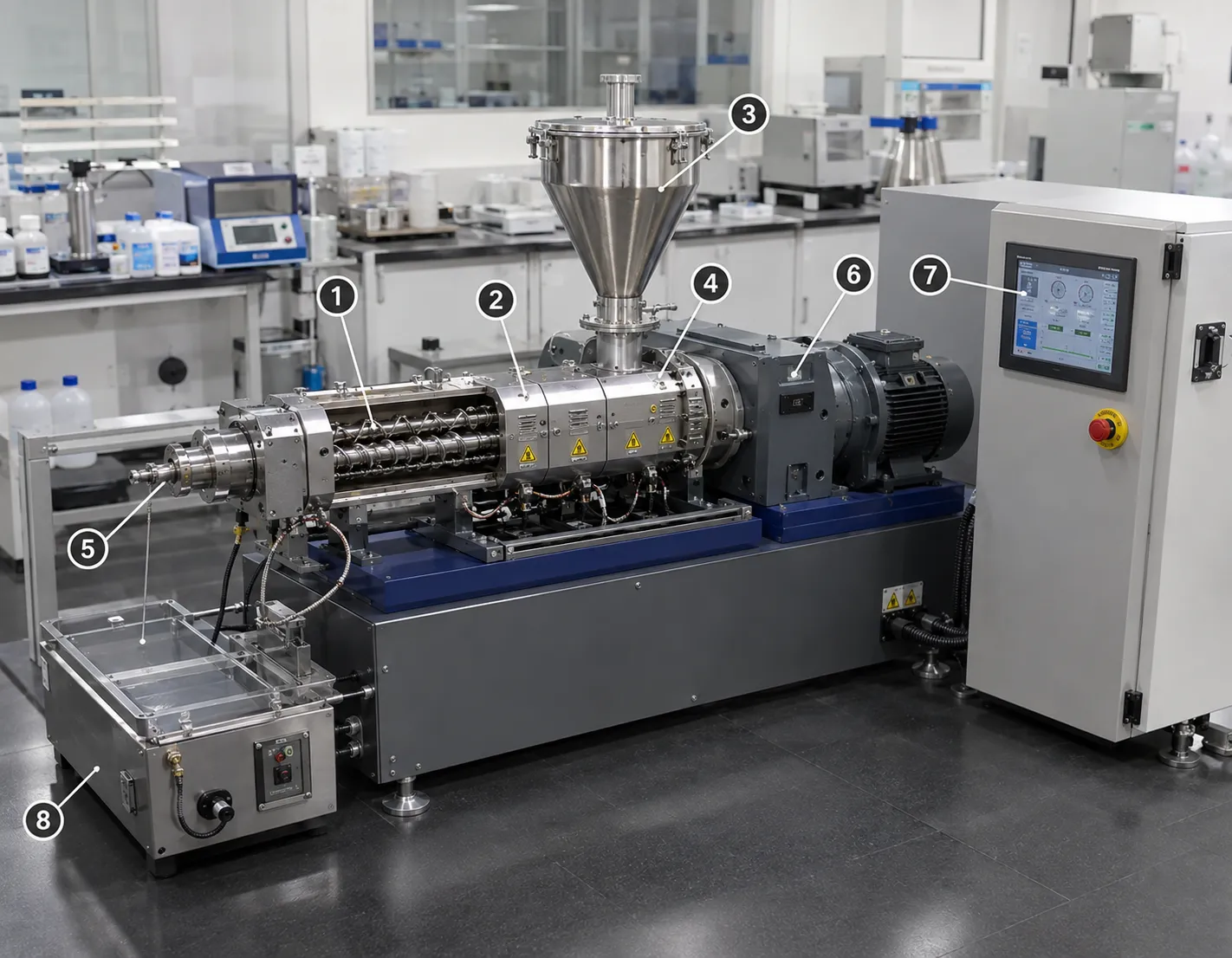
Every UET laboratory extruder is built from eight precision-engineered subsystems — numbered to match the labeled diagram.
1
Screw
Conveys, melts and mixes; modular elements in 38CrMoAlA or HSS.
2
Barrel
Multi-zone heated bore; L/D 26–75 configurable per recipe.
3
Sealed Hopper
Dust-free feeding protects precious or active materials.
4
Heaters + PID
Independent zones holding ±0.3°C melt stability.
5
Die Head
Interchangeable dies for strand, tube, film and sheet samples.
6
Gearbox & Drive
High-torque transmission, stable 55–800 rpm speed range.
7
PLC + 7″ HMI
Templates, one-touch control and CSV data logging.
8
Downstream Options
Strand pelletizer, cooling tank, take-up and film winder.
Engineering
Laboratory Extruder Features for Research Excellence
Every subsystem of the laboratory extruder is designed for precise, repeatable experiments and fast formulation iteration.
Multi-Zone Temperature Control
Independent PID heating zones hold ±0.3°C, preventing thermal degradation in sensitive polymers.
Real-Time Data Logging
Torque, pressure, temperature and RPM recorded every second; CSV export for formulation reports.
Modular Screw Design
Interchangeable screw elements and barrel sections for different shear levels and mixing intensity.
7″ Touchscreen HMI
10 preloaded process templates and one-touch start/pause — operation simplified to 3 steps.
Low-Noise Operation
≤65dB running noise fits standard lab environments without extra sound insulation.
40% Faster Changeover
Sealed hopper and quick-release barrel cut cleaning and material changeover time by 40%.
Scale-Up Pathway
From Lab Trial to Full Production
UET lab extruders share the same screw geometry and L/D principles as our production lines — your validated formulation scales directly.
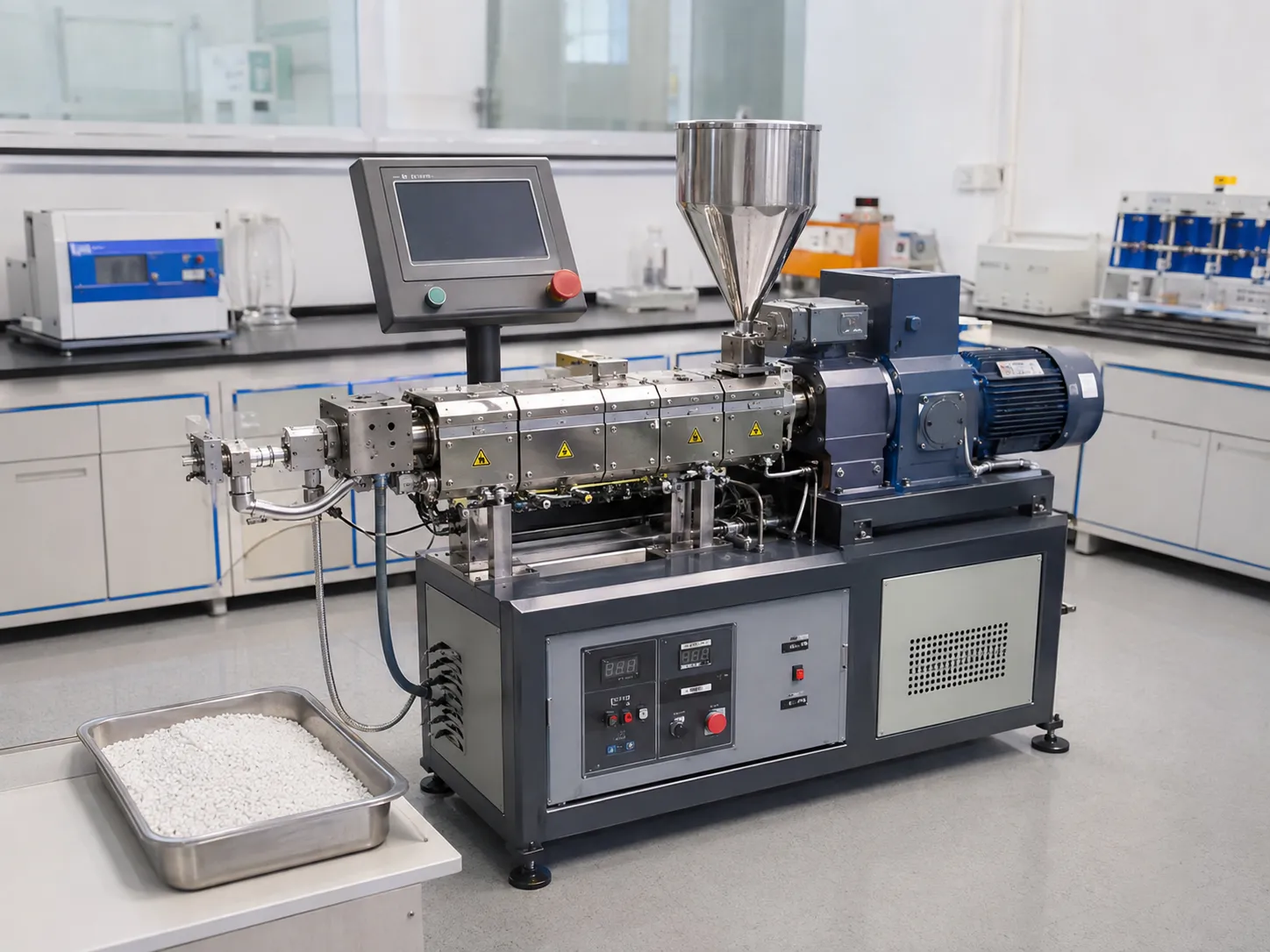
Stage 1 · R&D
Lab R&D Phase
Validate formulations with 100g–1kg per trial. Screen 10+ recipes before committing to scale-up.
100g – 5kg batches View lab models ↑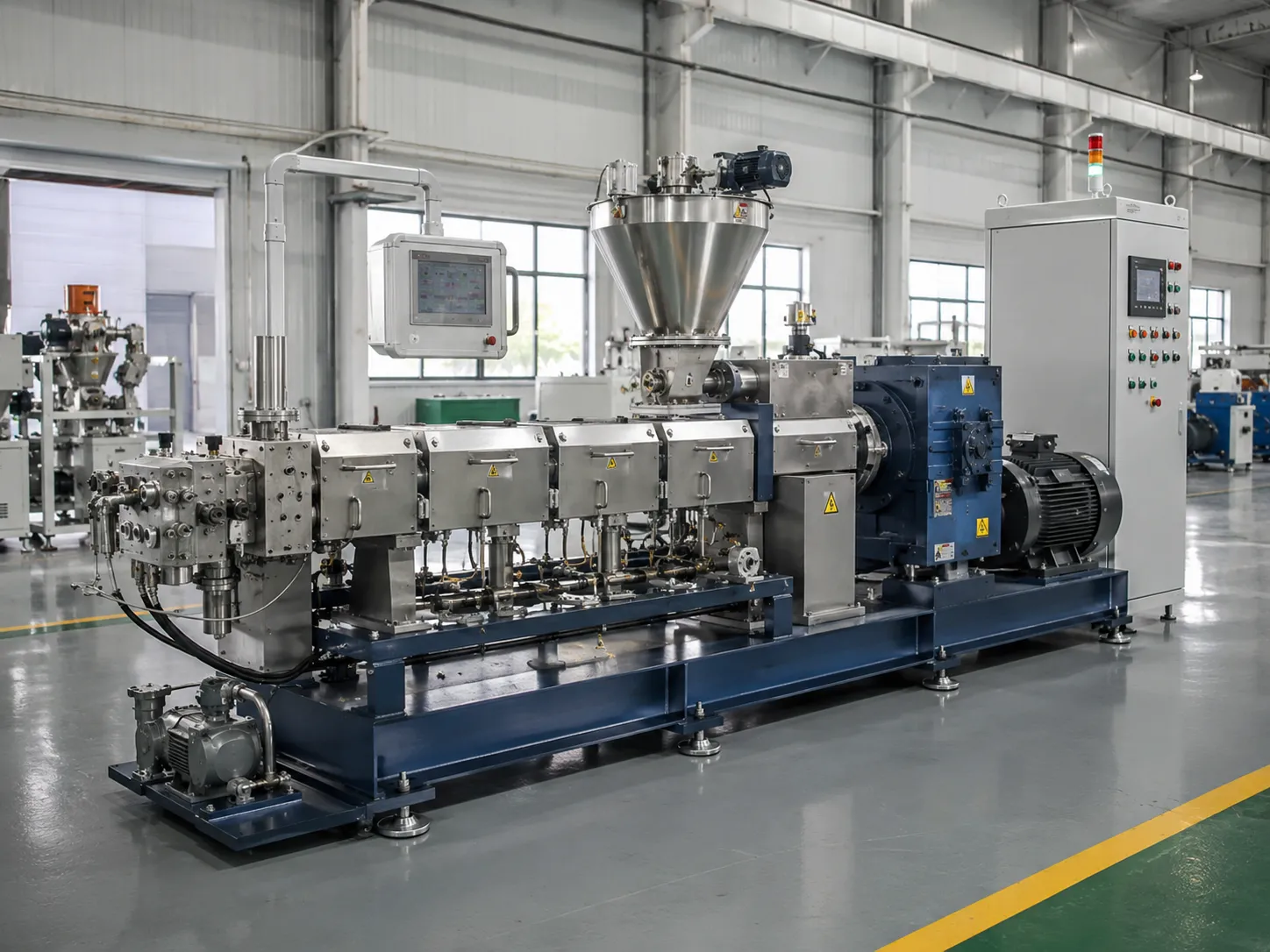
Stage 2 · Pilot
Pilot Scale
Transfer parameters directly to UET 20/25/31 twin screw for 10–100kg/h validation batches.
10 – 100 kg/h output Twin Screw Extruder →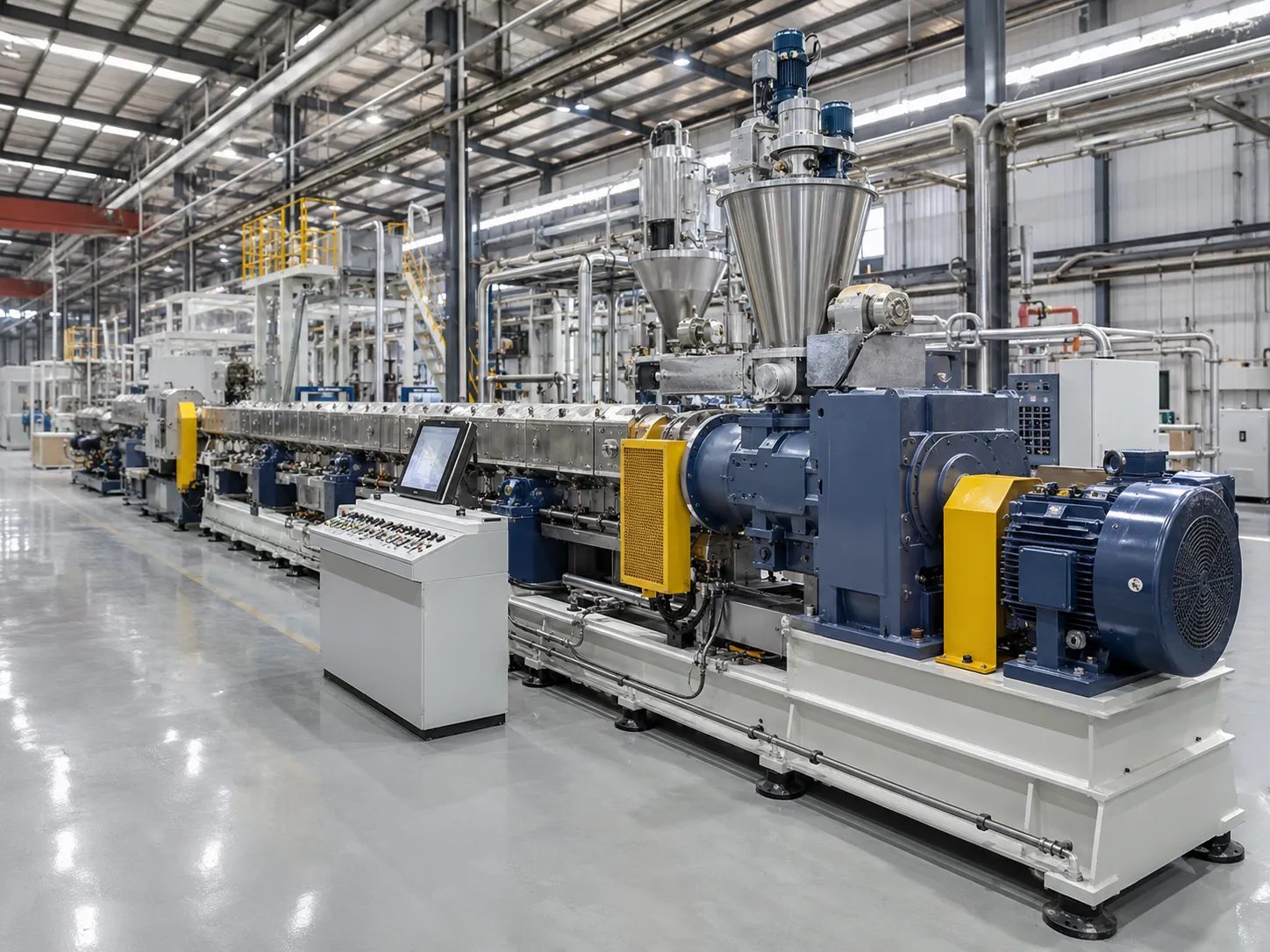
Stage 3 · Production
Full Production
Scale to UET 40/52/65 twin screw compounding lines for 100–2,500kg/h continuous output.
100 – 2,500 kg/h Compounding Line →
Datasheet
Laboratory Extruder Technical Specifications
Complete parameters for all laboratory extruder series. Custom screw diameters, L/D ratios and voltage standards available on request.
Twin Screw Series
Micro Series
General
| Model | Diameter (mm) | L/D | Speed (rpm) | Power (kW) | Output (kg/h) |
|---|---|---|---|---|---|
| UET20B | 20 | 26–75 | 55–700 | 2/3 | ~12 |
| UET20D | 20 | 26–75 | 55–750 | 4/5 | ~22 |
| UET20-Max | 20 | 26–75 | 55–800 | 5/6 | ~32 |
| UET25B | 25 | 26–75 | 55–700 | 4/5 | ~25 |
| UET25D | 25 | 26–75 | 55–750 | 6/7 | ~40 |
| UET25-Max | 25 | 26–75 | 55–800 | 7/8 | ~55 |
| UET31B | 31 | 26–75 | 55–700 | 6/7 | ~45 |
| UET31D | 31 | 26–75 | 55–750 | 9/10 | ~70 |
| UET31-Max | 31 | 26–75 | 55–800 | 11/12 | ~95 |
| UET34B | 34 | 26–75 | 55–700 | 10/11 | ~80 |
| UET34D | 34 | 26–75 | 55–750 | 14/15 | ~120 |
| UET34-Max | 34 | 26–75 | 55–800 | 18/20 | ~200 |
| Model | Screw Dia. (mm) | Speed (rpm) | Power (kW) | Output (g/h) |
|---|---|---|---|---|
| UET-14 | 14 | 550 | 0.4/1.0 | 500–3,500 |
| UET-15 | 15 | 650 | 0.5/1.3 | 2,000–5,000 |
| Screw material | 38CrMoAlA nitrided / W6Mo5Cr4V2 (HSS) |
| Barrel material | Alloy steel with bimetallic lining |
| Temperature control | ±0.3°C PID multi-zone |
| Voltage | 380V / 50Hz / 3-phase (customizable) |
| Control system | PLC + 7″ HMI touchscreen |
| Cooling | Air cooling / water cooling optional |
| Certification | CE, ISO 9001, SGS |
| Warranty | 12 months machine / 24 months screw & barrel |
| Lead time | 1–2 weeks standard / 4–6 weeks custom |
Supported Materials
What Materials Can Your Laboratory Extruder Process?
Comprehensive compatibility matrix covering 24+ polymer families with the recommended UET laboratory extruder model.
Material × Recommended Model Matrix
Green = Single Screw · Orange = Twin Screw · Red = Specialized
Polyethylene (PE)HDPE, LDPE, LLDPESingle Screw
Polypropylene (PP)Homo, random, copolymerSingle Screw
Polyvinyl Chloride (PVC)Rigid, flexible, medicalSpecialized
Polystyrene (PS)General, HIPS, EPSSingle Screw
ABSEngineering gradesTwin Screw
Polyamide (PA)Nylon 6, Nylon 66Twin Screw
Polycarbonate (PC)Clear, reinforcedTwin Screw
POMAcetal homopolymerTwin Screw
PET / PBTPackaging, engineeringTwin Screw
PLABiodegradable bio-basedTwin Screw
PBATCompostable polymerTwin Screw
PHA / PBSBio-compostable blendsSpecialized
TPU / TPEThermoplastic elastomersTwin Screw
MasterbatchColor, filler, additiveTwin Screw
Wood-Plastic CompositesWPC formulationsTwin Screw
Flame RetardantHalogen / non-halogenTwin Screw
Carbon Fiber CompositeShort-fiber reinforcedTwin Screw
Glass Fiber FilledReinforced engineeringTwin Screw
Recycled PE / PPPost-consumer regrindTwin Screw
Recycled PETrPET processingTwin Screw
Medical PVCPharma-grade tubingSpecialized
PCL / PGABioresorbable medicalSpecialized
Hot Melt AdhesivesEVA, APAO basedSpecialized
PEEK / PPSHigh-temp engineeringTwin Screw
Applications
Laboratory Extruder Applications
Validated across polymer science, materials engineering and biotechnology R&D scenarios worldwide.
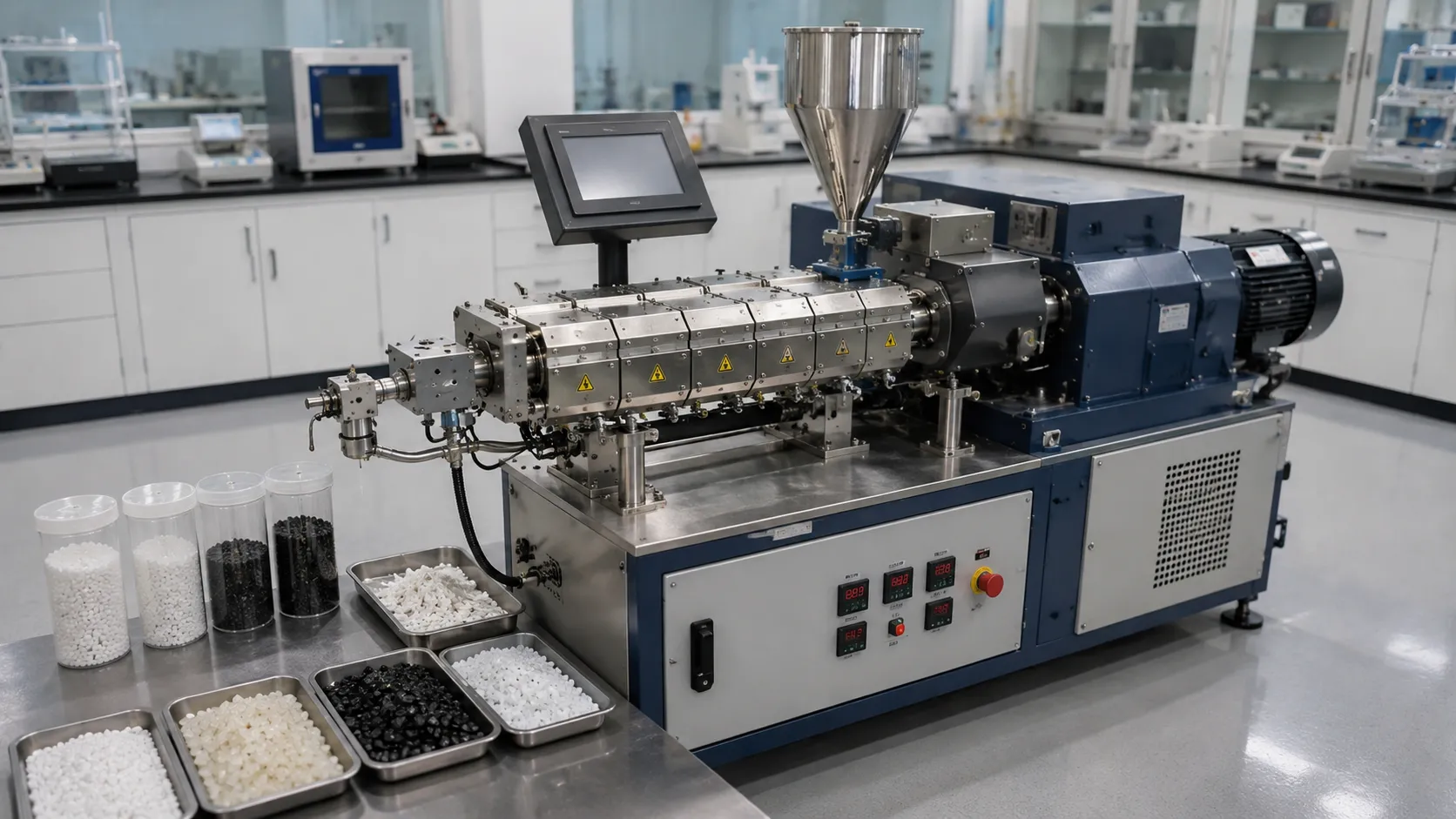
Polymer Formulation Development
Small-batch compounding verifies dispersion and flow properties across raw material ratios.
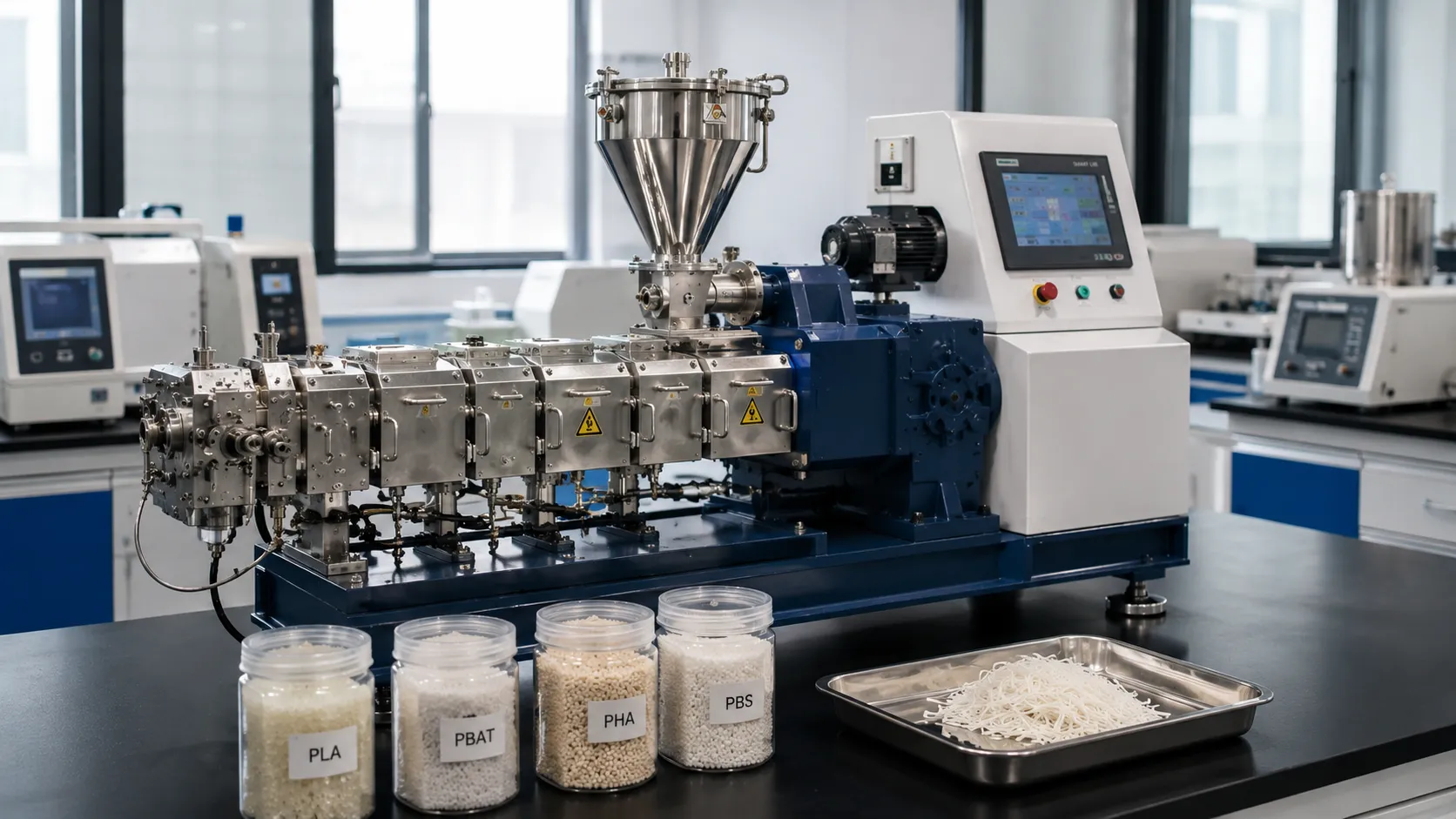
Biodegradable Material R&D
Gentle plasticization preserves degradation activity while compounding additives uniformly.
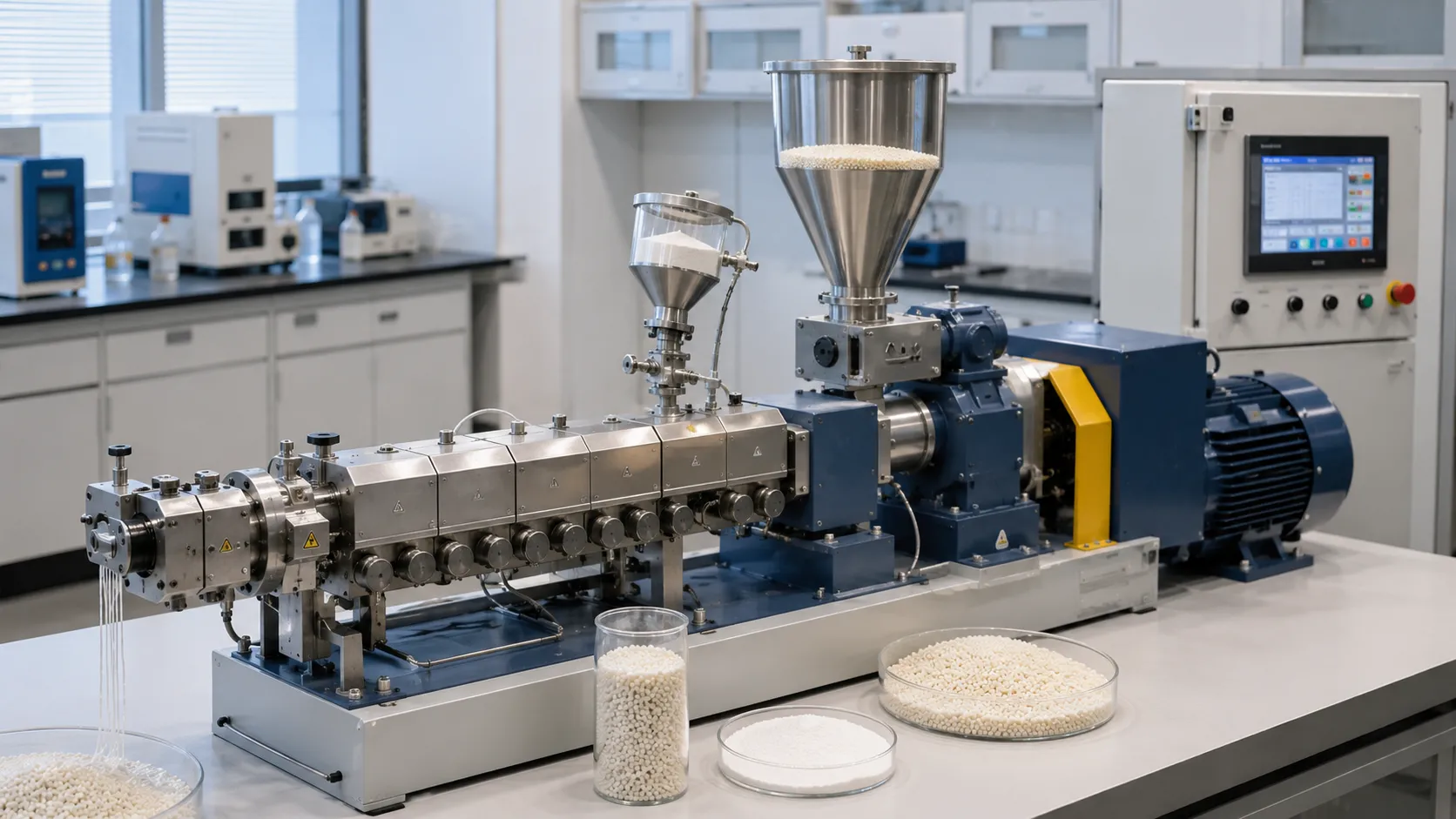
Functional Modified Materials
Uniform dispersion of flame retardants, antioxidants and stabilizers via multi-zone control.
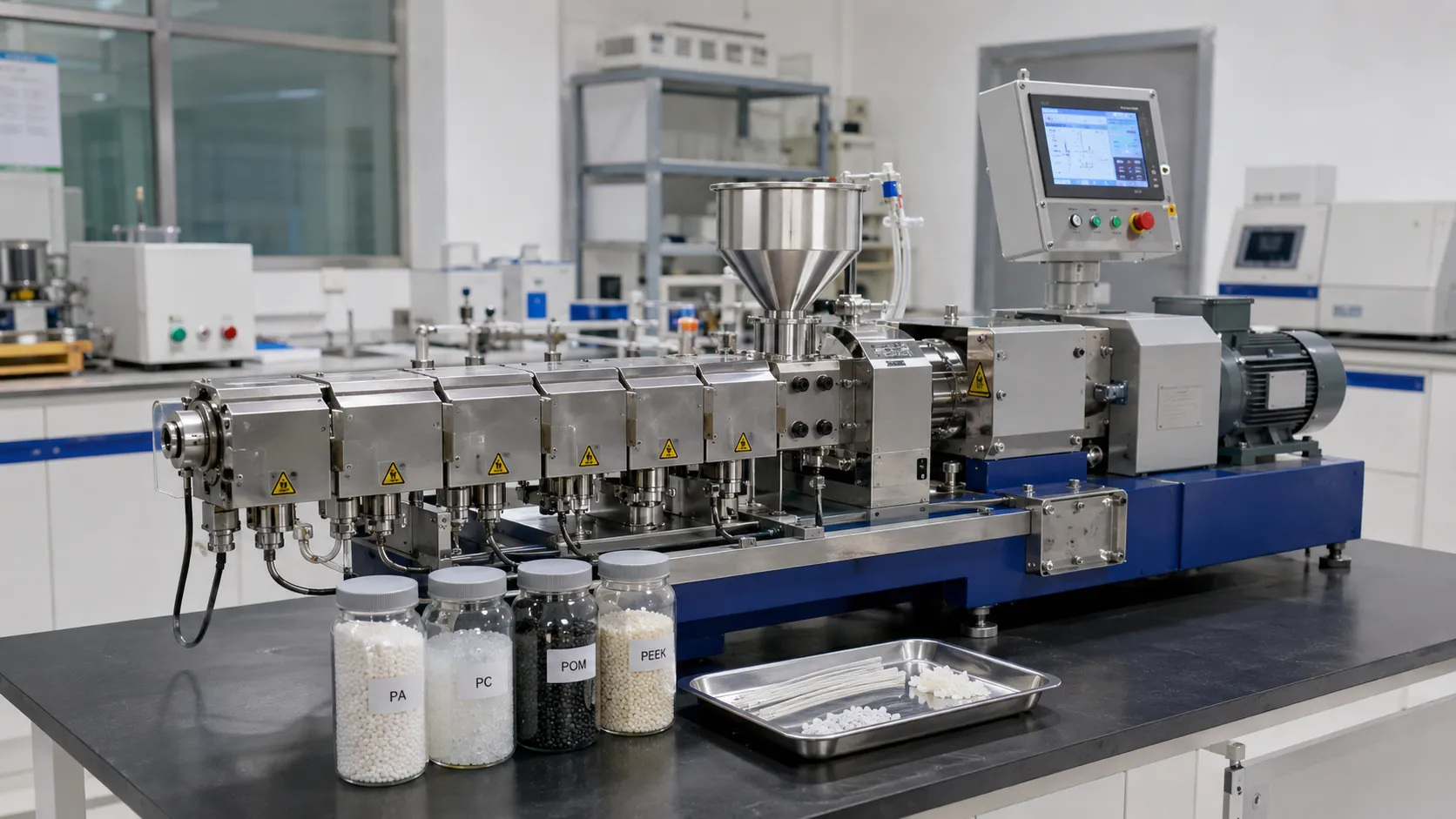
Specialty Resin Testing
Stable transmission handles high-viscosity engineering plastics for strength validation.
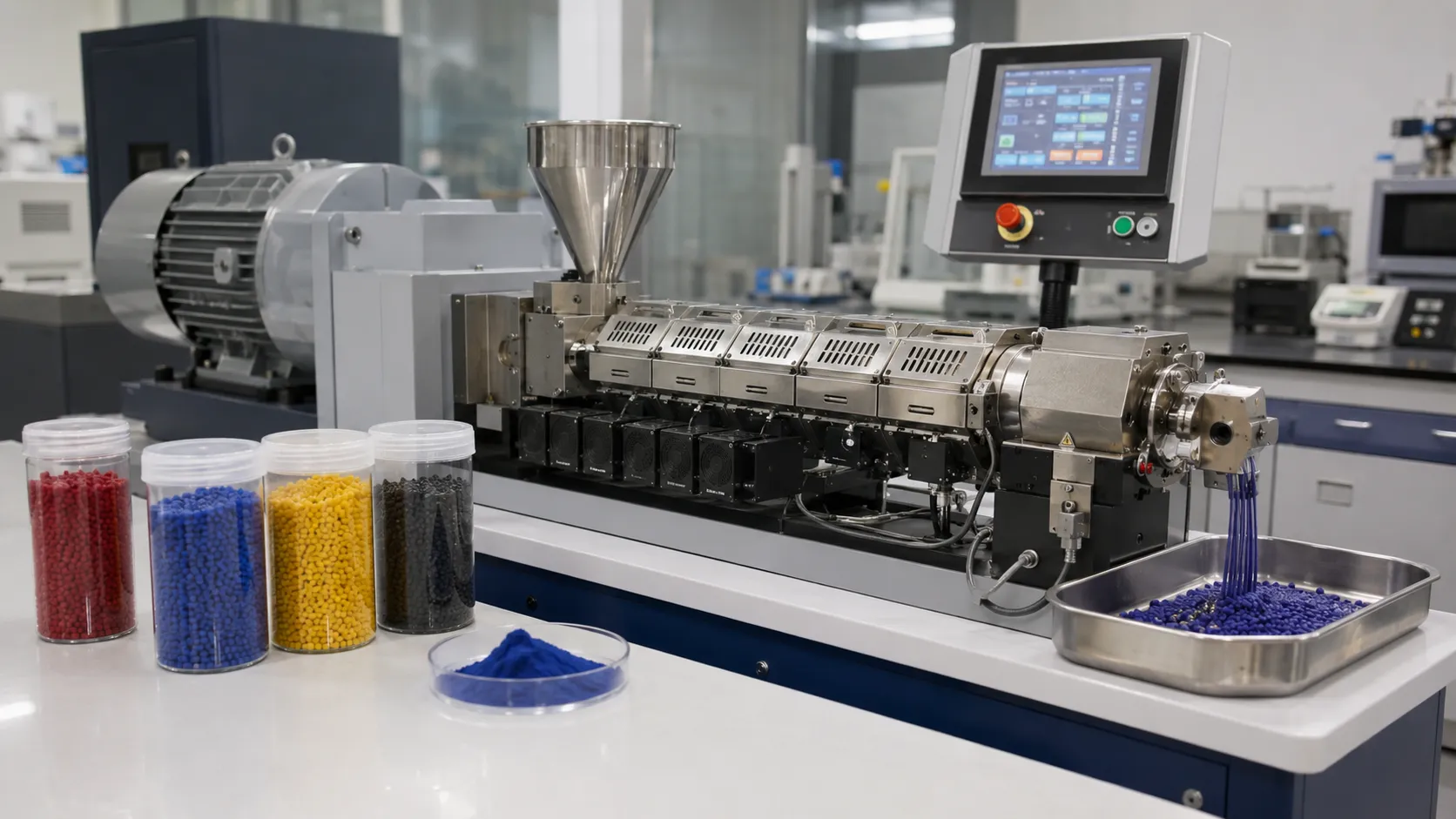
Color Masterbatch Development
High-shear elements achieve uniform pigment dispersion at low batch volumes.
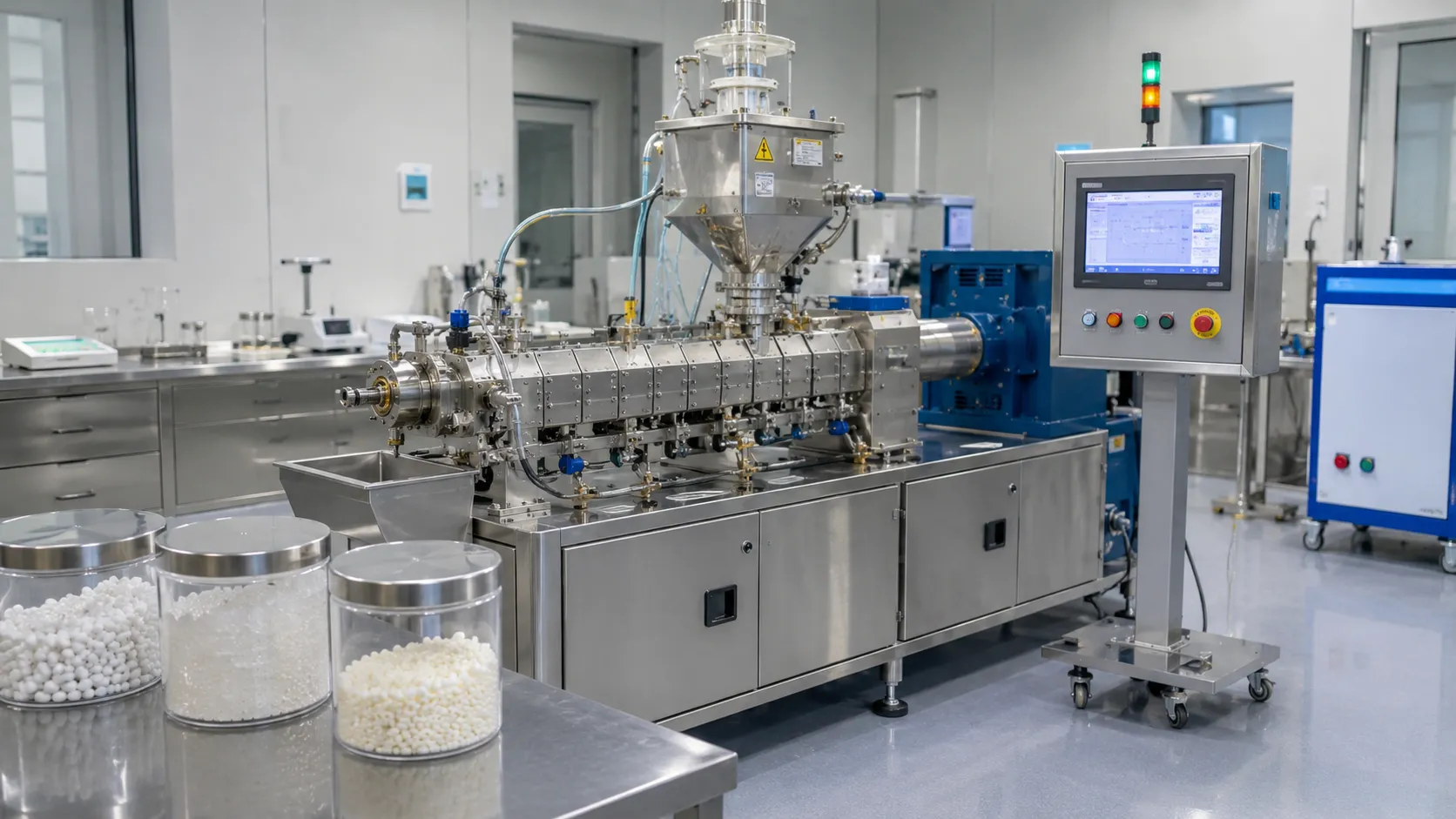
Medical-Grade Polymers
Low-shear, sealed feeding prevents contamination for pharma and medical applications.
Capabilities
What Can a Laboratory Extruder Do for Your Lab?
Six core tasks that make the laboratory extruder the most versatile instrument on your bench.
✓Formulation Screening
Test 10+ recipes per day with grams of material instead of kilograms — cut development cost dramatically.
✓Sample Preparation
Produce specimen bars, tubes, films and sheets for mechanical, thermal and degradation testing.
✓Small-Batch Production
Bridge batches for niche, medical or high-value products where full-line runs are uneconomical.
✓Process Optimization
Map temperature, screw speed and feed windows before committing production capacity.
✓Scale-Up Studies
Generate transferable parameters that move formulations straight to pilot and production lines.
✓Training & Teaching
Hands-on extrusion education for students and new engineers on safe, bench-scale equipment.
Sourcing
Your Laboratory Extruder Supplier in China
China builds the majority of the world’s extrusion equipment — choosing the right Chinese supplier decides your price, quality and long-term support.
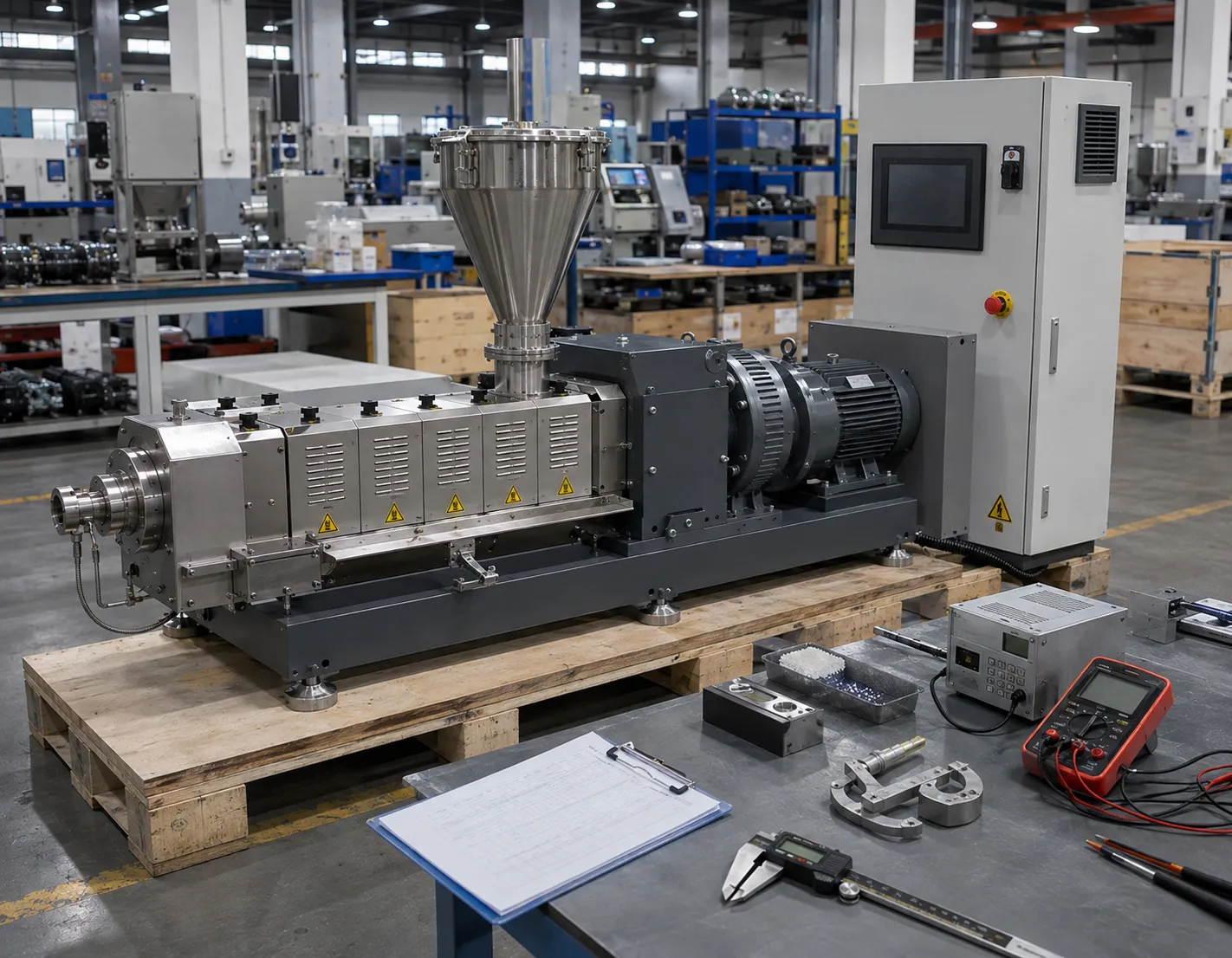
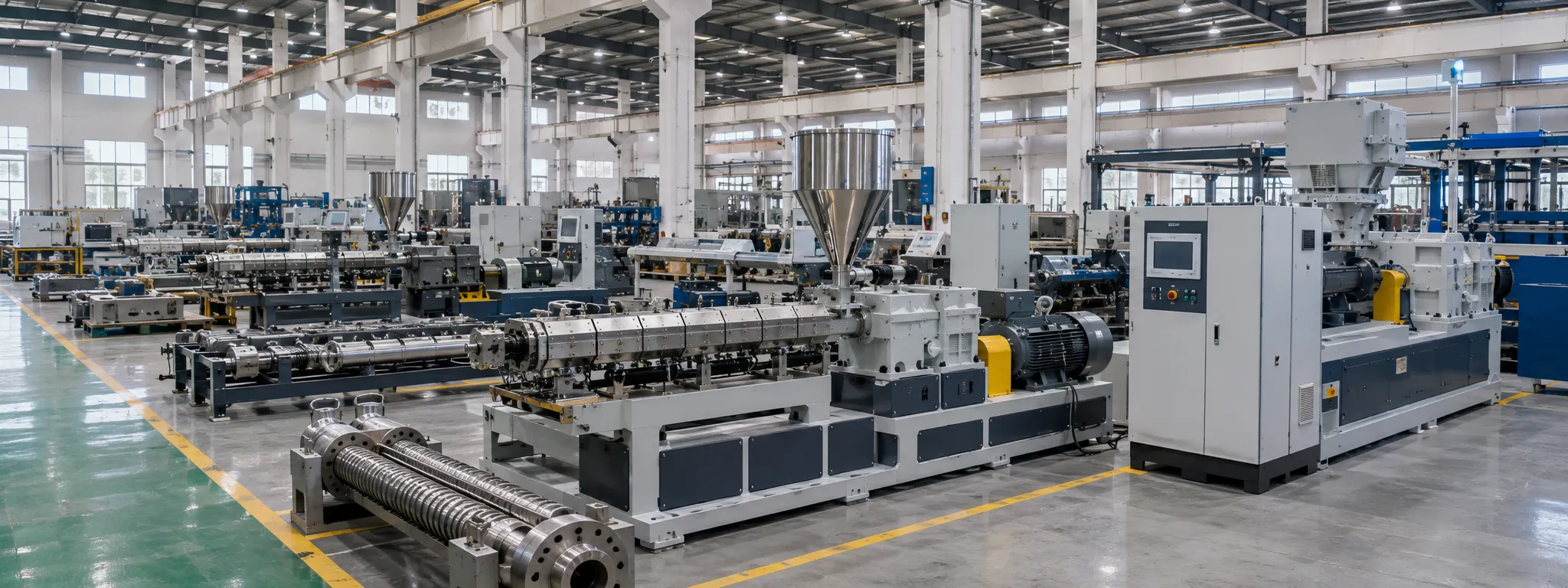
UET Machine is a factory-direct laboratory extruder supplier in China, operating an 11,400㎡ manufacturing base in Nanjing with 20+ years of extrusion engineering. There is no trading company between you and the workshop: every screw, barrel and control cabinet is machined, assembled and test-run in-house, then shipped to laboratories in 80+ countries.
- Factory-direct pricing, MOQ 1 set — save 20–35% vs trading companies
- OEM/ODM customization: voltage, screw geometry, die and downstream
- CE, ISO 9001, SGS + complete export documentation
- Material test-run and live video inspection before shipment
- 24/7 engineer support and lifetime spare parts at cost price
MOQ 1 Set
OEM / ODM
CE · ISO · SGS
Video Inspection
Why UET
Why 5,600+ Clients Choose UET Laboratory Extruders
Two decades of extrusion engineering, one factory, one point of responsibility. Six pillars of trust.
Own 11,400㎡ Factory
Direct manufacturing eliminates middleman markups. Full quality control from raw material to finished machine.
CE & ISO 9001 Certified
Full compliance with EU machinery directive and international quality standards. SGS reports included.
24/7 Engineer Support
Lifetime technical support with 2-hour response. 24-month warranty on core components. Remote troubleshooting.
80+ Export Countries
Proven logistics to Europe, Americas, Asia and Africa. Complete export docs and door-to-door delivery.
Transparent Pricing
Itemized quotations within 2 hours. No hidden fees. Factory-direct pricing saves 20–35% vs traders.
Fast Delivery
Standard models ship in 1–2 weeks. Custom configurations in 4–6 weeks. Expedited production available.
Process
From Enquiry to Running Laboratory Extruder
Transparent timelines and clear deliverables at every stage — you always know what happens next.
1
Consultation & Quotation
Share material, output target and voltage. Engineers confirm feasibility fast.
- Itemized quotation
- Configuration proposal
2
Engineering & Approval
Screw configuration, barrel zones and downstream engineered to your recipe.
- Layout drawing for approval
- Screw element design
3
Manufacturing & Testing
In-house machining, full-load mechanical test and material trial run.
- Live video inspection
- Test-run report
4
Shipping & Commissioning
Export packing, documentation, installation guidance and training.
- Operator training
- 24/7 remote support
Preparation Guide
Laboratory Extruder Installation & Setup Requirements
Prepare these essentials so your laboratory extruder is operational within one hour of arrival.
Electrical Supply
Ensure adequate power before arrival:
- 3-phase 380V/50Hz supply
- 16A independent breaker
- Grounding <4Ω resistance
- Custom voltage (220/415/440V)
Ventilation & Environment
Maintain stable lab conditions:
- Fume hood for volatile processing
- Ambient 15–35°C, humidity <85%
- No corrosive gases or dust
Space & Foundation
Allocate proper installation area:
- 0.5–1.2㎡ floor space
- Reinforced bench / level floor ±2mm
- 50cm maintenance clearance
Utilities & Safety
Connect utilities and safety systems:
- Clean water (cooling option)
- Compressed air (optional feed)
- Fire extinguisher, heat gloves, glasses
Customer Proof
What Researchers Say About UET Laboratory Extruders
Trusted by university labs, startups and specialty chemical R&D teams worldwide.
★★★★★
“Precise temperature control and stable mixing cut our formulation testing time by 30%. The compact lab extruder fits our lab perfectly — a reliable research asset.”

Dr. Michael Chen
University Materials Science Lab★★★★★
“Interchangeable screw configurations adapt to every material test. The intuitive interface eliminated training — we validated prototypes within days of delivery.”

Sarah Williams
Bio-Based Materials Startup★★★★★
“Six months of continuous testing — durability and precision are impeccable. Lab data transfers smoothly to production, saving significant time and resources.”

David Park
Specialty Chemical R&D★★★★★
“Custom adjustments for high-viscosity tests were handled seamlessly. Long-run stability and precise control have visibly improved our research efficiency.”

Emily Zhang
Polymer Research Institute
Technical FAQ
Laboratory Extruder FAQs
Answers to the questions lab managers and procurement teams ask most about laboratory extruders and sourcing from China.
A laboratory extruder is a small-scale extrusion system for R&D formulation testing, pilot production and material characterization. It heats polymer pellets or powder in a barrel while a rotating screw conveys, melts, mixes and pushes the melt through a die. The UET laboratory extruder uses multi-zone PID control (±0.3°C) and modular screw elements to deliver repeatable results with only 100g–1kg of material per trial.
A laboratory extruder is optimized for precision, repeatability and minimal material use (0.5–200 kg/h, 0.5–1.2㎡ footprint), while a production extruder is optimized for throughput (100–2,500 kg/h) and uptime. Lab machines record the process data needed for scale-up; production machines replicate those validated parameters at scale.
A single screw laboratory extruder has one rotating screw — ideal for simple melting and forming tests of PE, PP and PS at entry-level cost. A twin screw laboratory extruder uses two intermeshing screws for high-shear mixing, suited to compounding, reactive extrusion and multi-component formulations. Choose single screw for basic plasticizing; choose twin screw when you need 95%+ mixing uniformity for masterbatch, modified plastics or biodegradables.
The UET laboratory extruder processes thermoplastics (PE, PP, PVC, PS, ABS), engineering plastics (PA, PC, POM, PEEK), biodegradable polymers (PLA, PBAT, PHA), functional masterbatches, high-viscosity composites and medical-grade polymers. Custom screw configurations extend compatibility to niche materials, and the specialized model handles heat-sensitive PVC with 40% less thermal degradation.
The twin screw laboratory extruder holds ±0.3°C with multi-zone independent PID control. Each heating zone responds independently to stabilize melt temperature, preventing degradation of sensitive polymers like PLA and PVC and ensuring the batch-to-batch repeatability required for publication-grade research data.
Yes. The specialized laboratory extruder uses a low-shear screw geometry and ±1°C temperature control to reduce thermal degradation by 40%, while high-strength screws and drive systems reliably convey high-viscosity materials such as PEEK, silicone-modified polymers and hot melt adhesives without surging or blockage.
China has the world’s most complete extrusion manufacturing ecosystem, offering 20–35% lower factory-direct pricing, fast customization and mature export logistics. A verified Chinese supplier like UET adds CE/ISO/SGS compliance, in-house machining, pre-shipment test runs and 24/7 engineer support — combining cost advantage with international-grade quality.
Yes. UET laboratory extruders share the same screw geometry principles and L/D configurations as our production twin screw lines, so temperature profiles, screw speed and shear rates transfer directly — typically cutting pilot validation time by 50% or more.
Standard laboratory extruder models need only 0.5–1.2㎡ of floor space and a 3-phase 380V/50Hz supply with a 16A breaker (custom voltages available). Noise is ≤65dB, so no sound insulation is needed, and the sealed hopper keeps lab conditions clean.
Laboratory extruder pricing depends on screw diameter, L/D ratio and configuration — entry single screw models start around $8,000 while fully customized twin screw systems reach $50,000. Standard models ship in 1–2 weeks; customized configurations take 4–6 weeks plus 7–15 days international shipping. Send your requirements for an itemized quote within 2 hours.
Every UET laboratory extruder includes a 12-month machine warranty, 24-month screw and barrel warranty, 24/7 remote engineer support, commissioning training and lifetime spare parts at cost price. Wearing parts are standardized and tool-free to replace, minimizing downtime.
Scale Up
Related Extrusion Equipment
Move your validated lab formulation to full production with the matching UET platform.