
High-Fill Compounding Line · CaCO₃ / Talc / BaSO₄
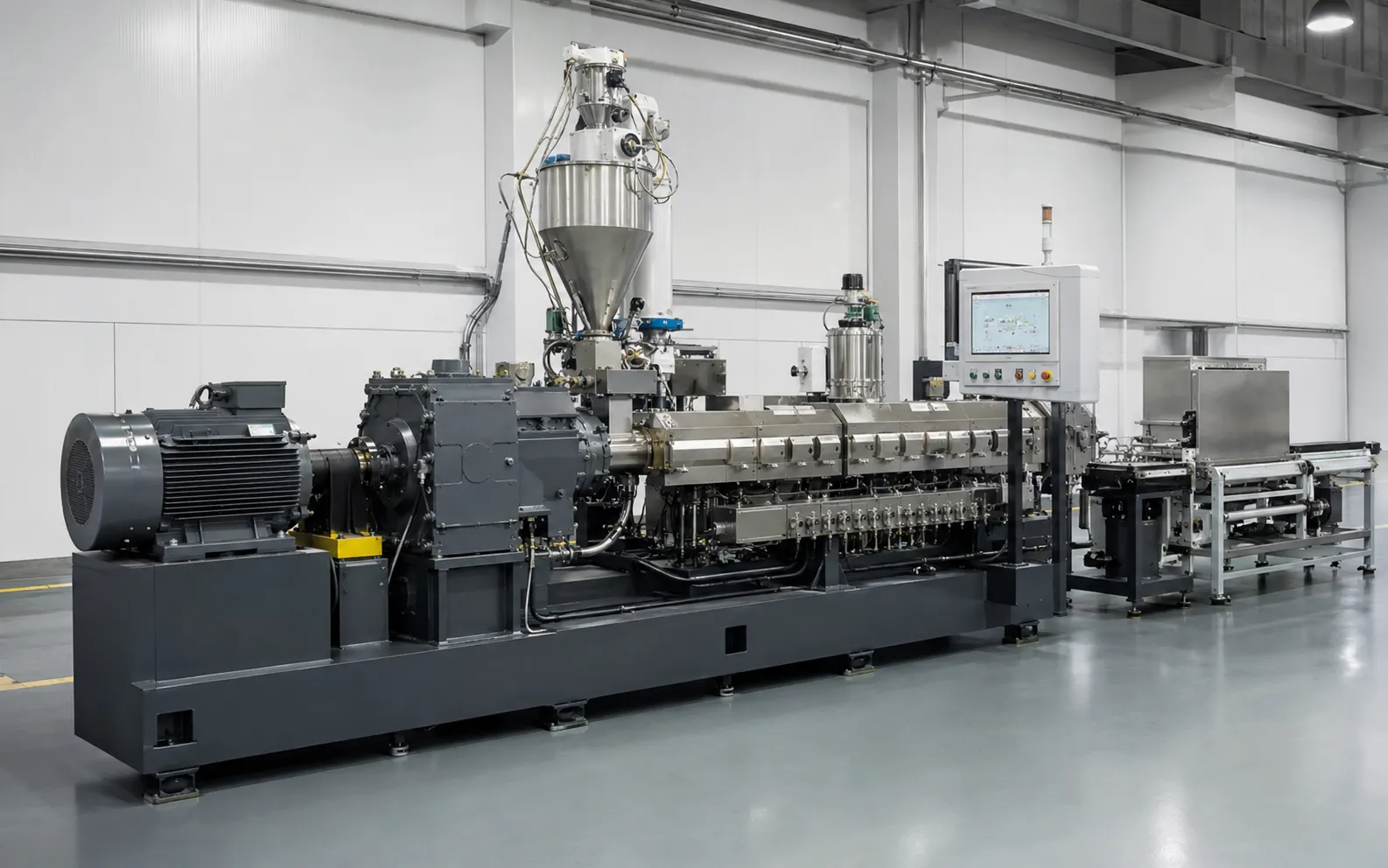
Filler Masterbatch Compounding Extruder
Co-rotating twin-screw line engineered for 50–85% filler loading — uniform dispersion, 95%+ coating rate and 22% lower maintenance cost for PP, PE and multi-substrate masterbatch production.
- CE Certified
- ISO 9001:2015
- RoHS
- REACH
- SGS Verified
95%+Filler Coating Rate
98%Batch Pass Rate
30+Filler Types
22%Maintenance Cut
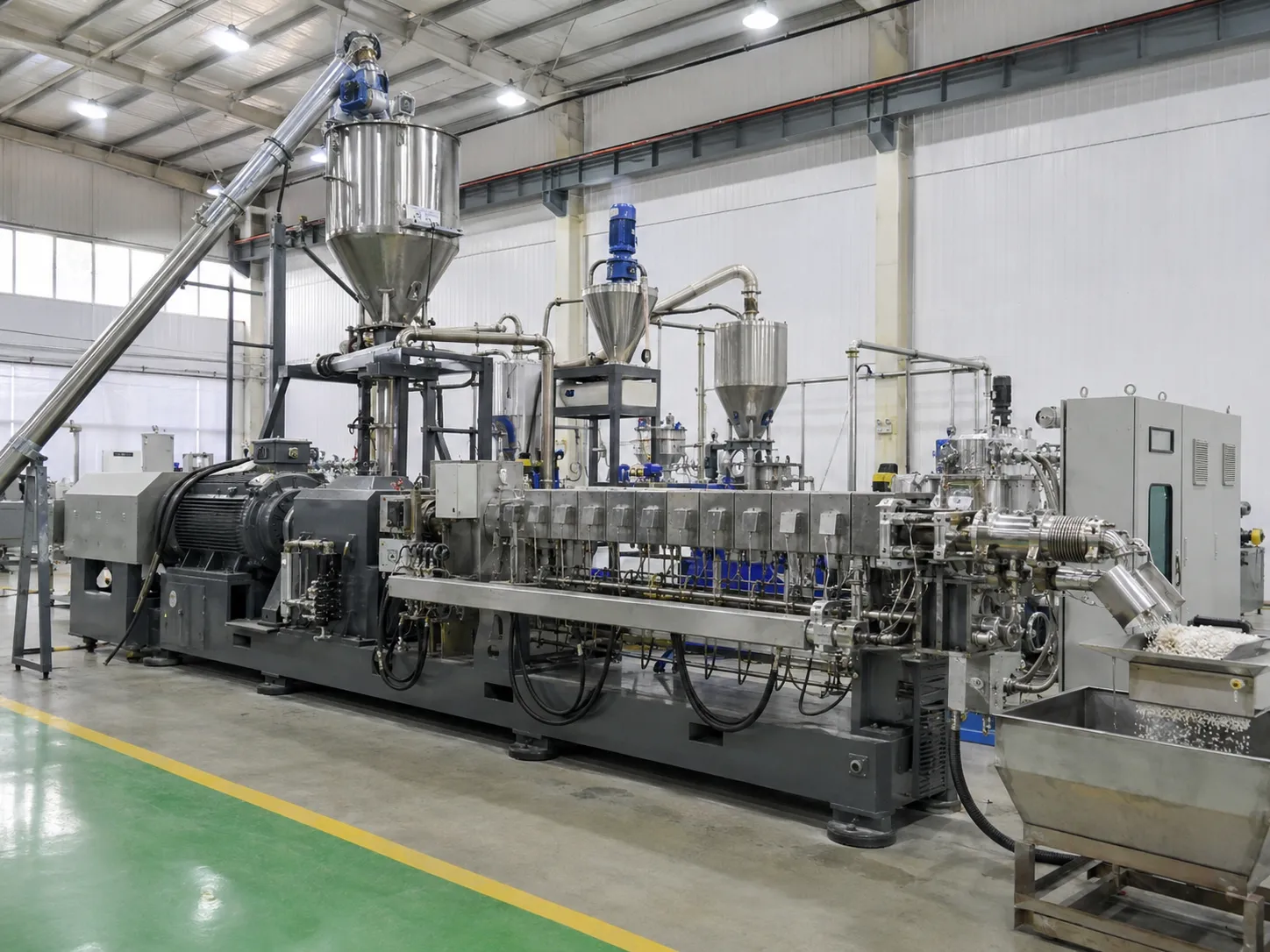
What Is a Filler Masterbatch Compounding Extruder?
A two-minute definition before you dive into models, specs and configurations below.
A filler masterbatch compounding extruder is a twin-screw line built to do one thing well: fold as much mineral powder as your carrier resin will take — CaCO₃, talc, BaSO₄, carbon black — into a clean, uniform pellet. The resin melts first; the filler is then metered in at 50–85% by weight, dispersed by the screws, vented of the moisture that powder always carries, filtered and cut.
Because we build these lines for a living, most of the machine is decided by your recipe before we ever quote: how abrasive the filler is, how high you want to push the loading, and what your downstream process will actually tolerate. Screw layout, barrel metallurgy, torque class and the pelletizer all follow from those three answers — that is the difference between a line that runs and a line that fights you.
- Working principle: feeding → high-shear compounding → venting → filtration → cooling → pelletizing (view diagram)
- Core components: modular screws, bimetallic barrels, high-torque gearbox, LIW feeders (details)
- Supported materials: 6 masterbatch families and 30+ fillers on PP/PE/ABS/EVA (view all)
- Capacity: 180–1,200 kg/h standard models, up to 7,000 kg/h custom lines (spec table)
— Compiled by the UET application engineering team, drawn from 200+ commissioned filler masterbatch lines.
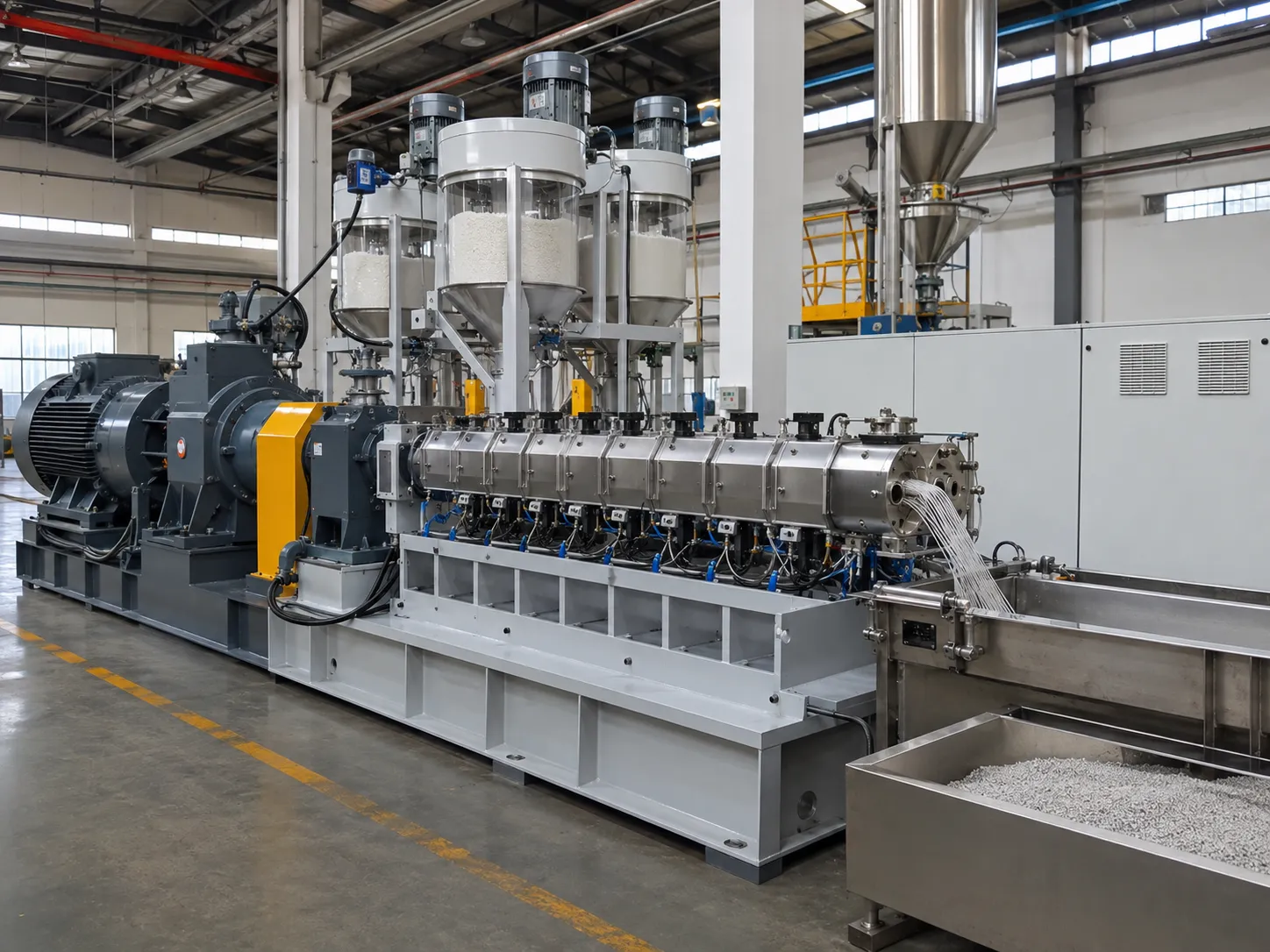
Why Our Filler Masterbatch Compounding Extruder Solves High-Fill Challenges
Engineering answers to the most common pain points in filler masterbatch production — from agglomeration and screw wear to dust and changeover downtime.
High-Proportion Uniform Dispersion
Special screw configuration achieves 18% better dispersion for CaCO₃ and talc masterbatches, eliminating agglomeration at high loading.
Novice-Friendly Operation
Intuitive PLC touch interface lets new operators work independently after short training, cutting line training costs significantly.
Continuous Mass Production
800+ hours continuous compounding with 15% higher capacity vs legacy gear; optimized startup minimizes adjustment downtime.
High Wear-Resistant Durability
Tungsten-carbide-coated screws and wear-resistant barrels extend core component life by 30% against abrasive talc and CaCO₃.
Multi-Substrate Compatibility
Adjustable shear strength adapts to PP, PE, ABS and diverse carrier resins — one line covers mainstream masterbatch scenarios.
Low-Dust Clean Manufacturing
Closed feeding with high-efficiency exhaust filtration keeps workshop dust within 0.5 mg/m³ — meeting EU occupational standards.
Filler Masterbatch Compounding Extruder Configurations
Three purpose-built configurations for different production scales, filler types and material requirements.
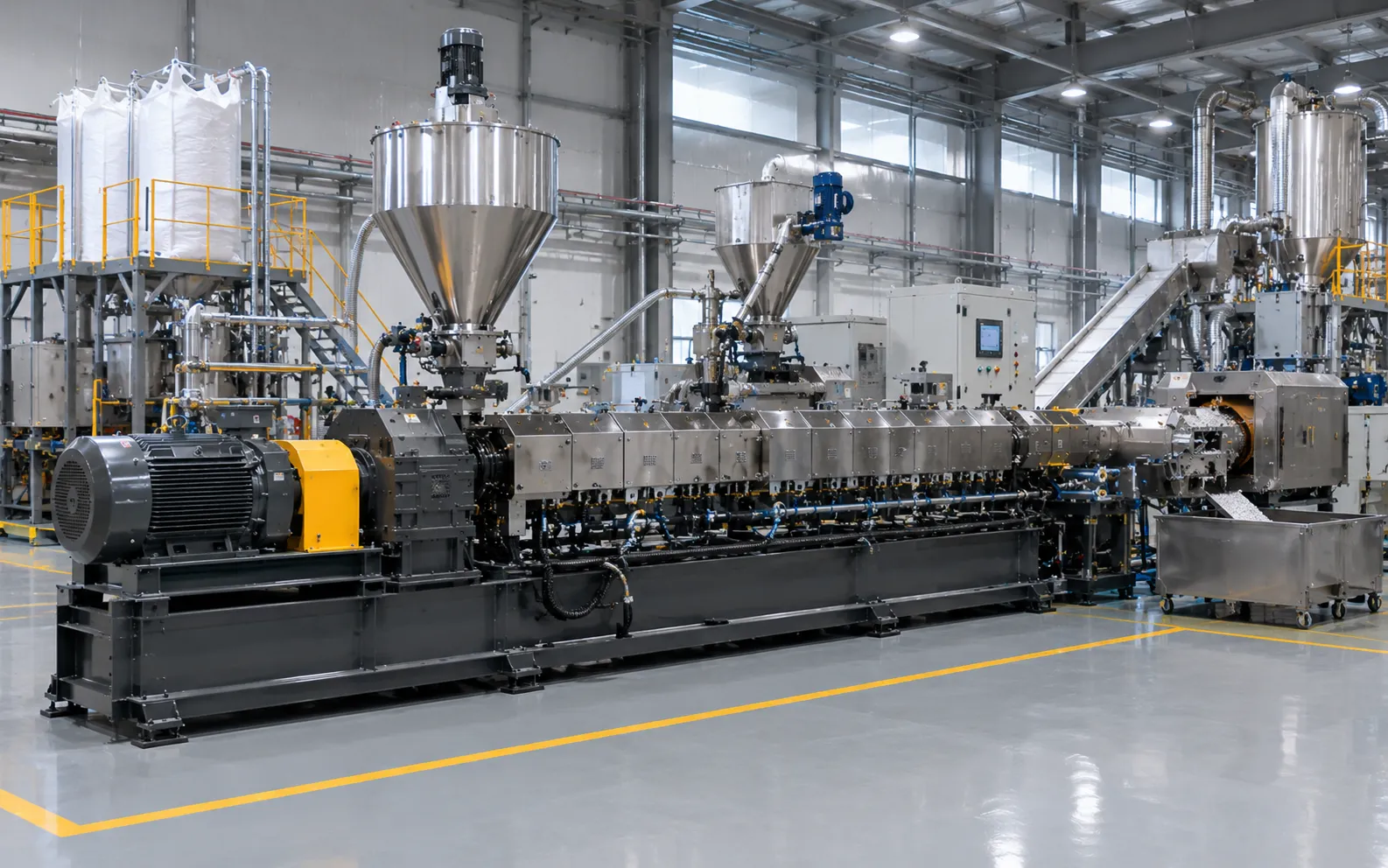
Best Seller
High Capacity Compounder
Mass production of CaCO₃ and glass-fiber filled masterbatch for automotive, packaging and construction industries.
- Output3000–7000 kg/h
- Temp Control±1°C
- Uniformity≥98%
- Energy Saving15%
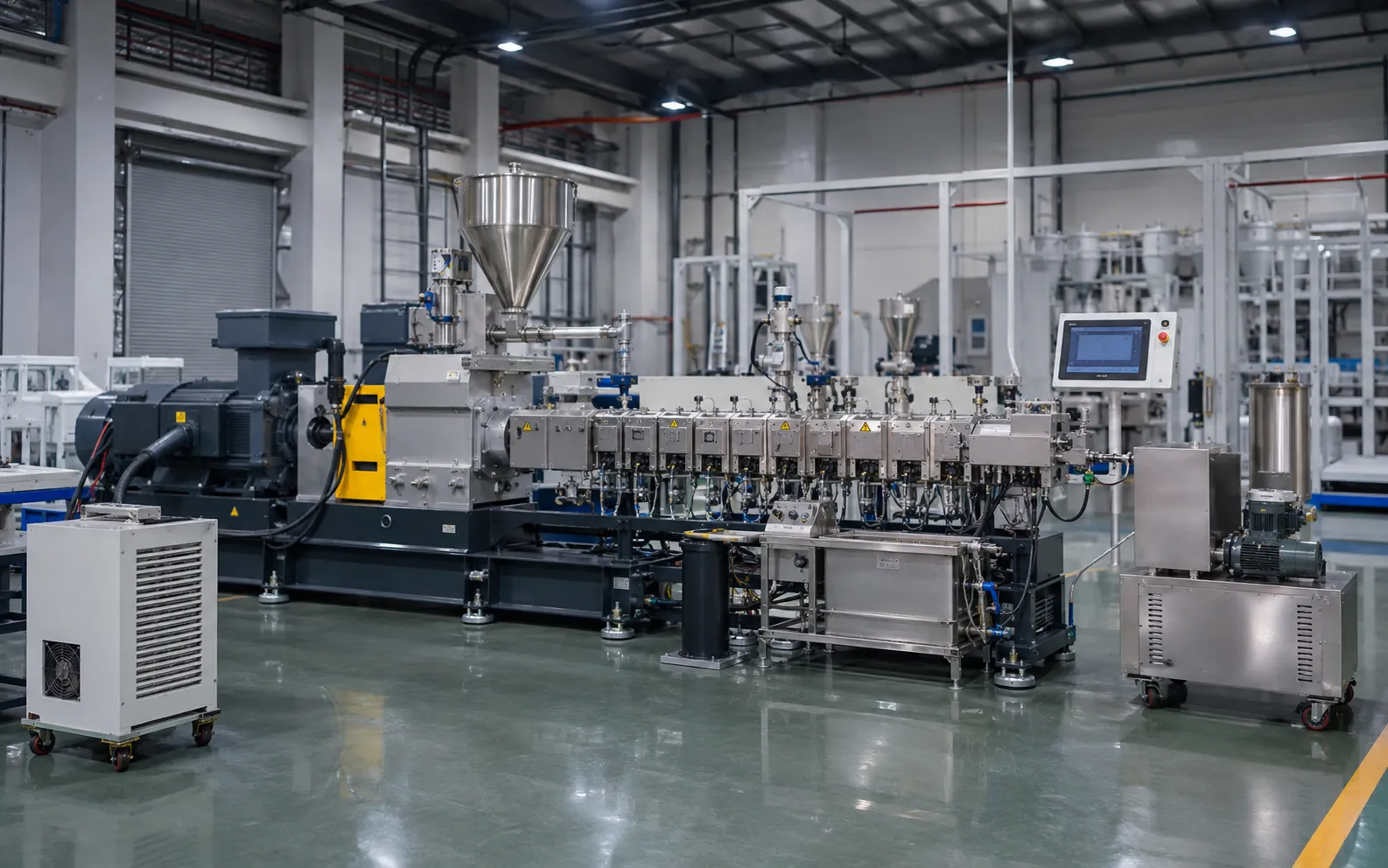
Versatile
Multifunctional Compounder
Compatible with CaCO₃, bio-based and functional fillers; modular screws for fast multi-formula changeover.
- Changeover40 min
- Formula StorageMulti-language
- Screw DesignModular
- Cleaning Time−40%
Premium
Specialty Material Compounder
High-chromium alloy and ceramic liners for long-fiber reinforced, nano-filled and aerospace-grade masterbatches.
- Temp RangeRT – 400°C
- Dispersion Dev.<1%
- BarrelCeramic liner
- ApplicationsAerospace / EV
Filler Masterbatch Types & Applications Our Extruder Produces
One platform, six masterbatch families — screw layout and pelletizing are tuned to your filler, loading rate and final product.
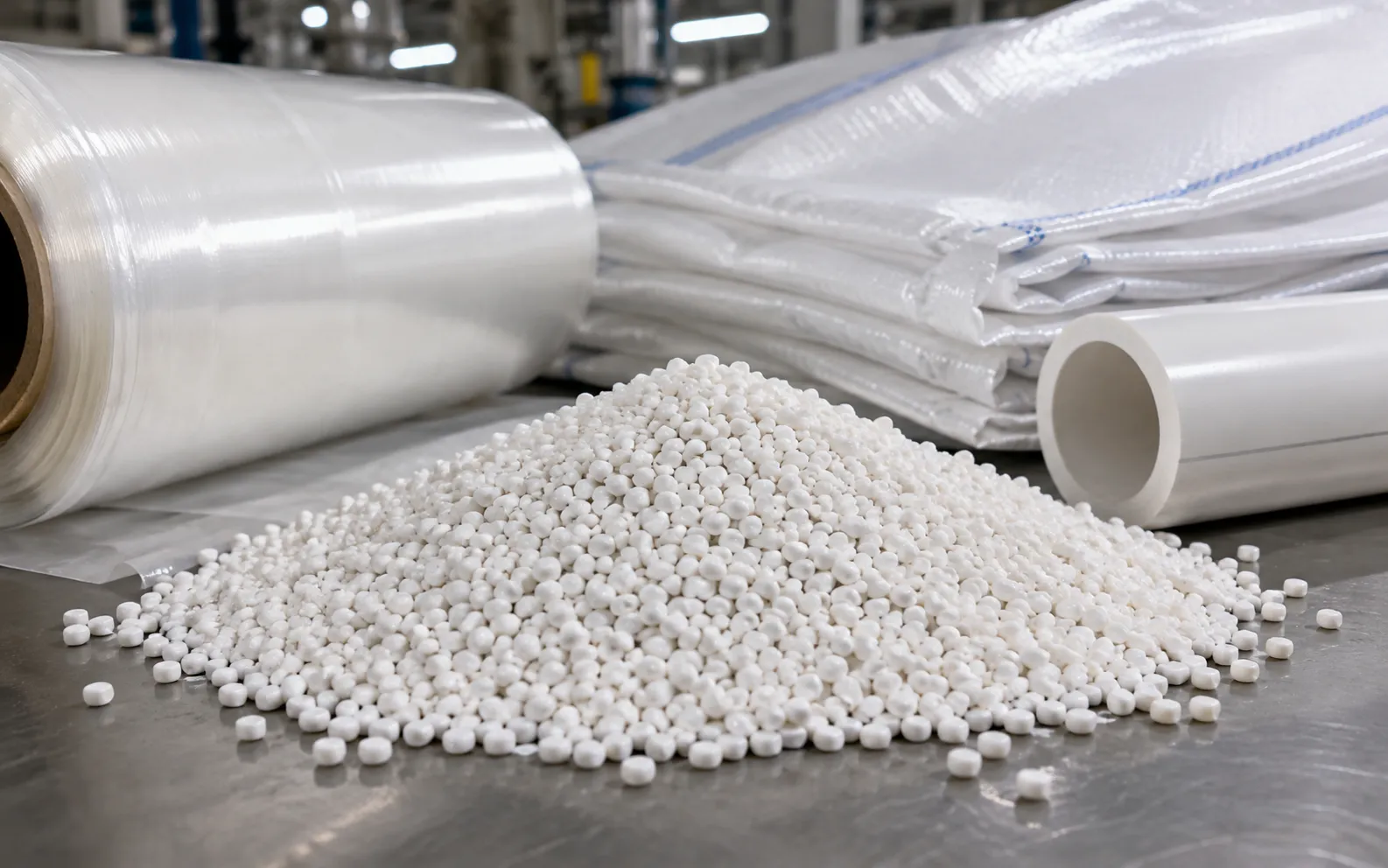
70–85% Loading
CaCO₃ Filler Masterbatch
- Blown & cast film
- Raffia, woven bags & rope
- Pipes, sheets & injection molding
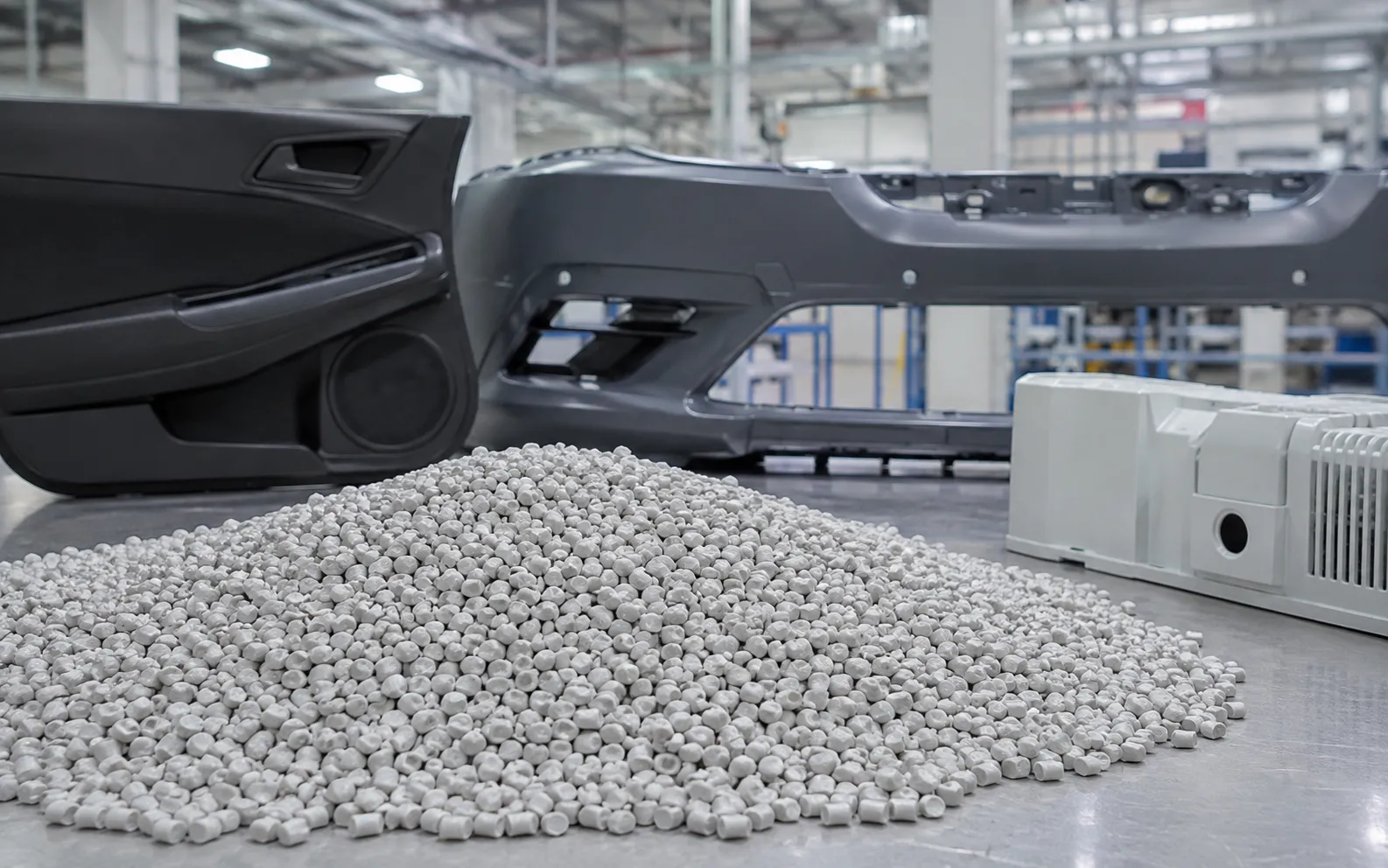
50–80% Loading
Talc Filler Masterbatch
- Automotive interiors & bumpers
- Appliance housings
- Stiffness-boosted PP compounds
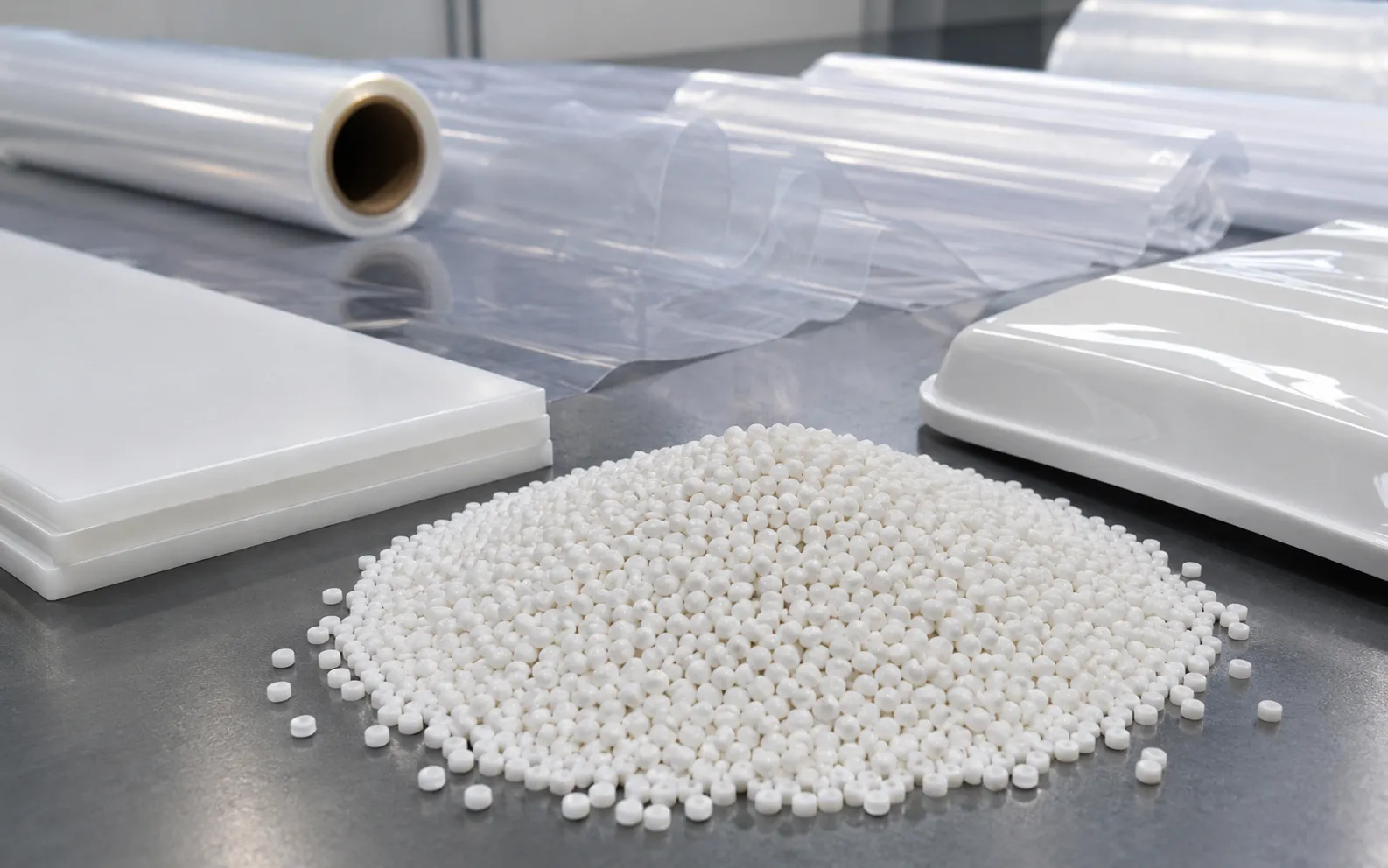
50–80% Loading
BaSO₄ Filler Masterbatch
- Medical & barrier films
- Sound-damping sheets
- High-gloss surface products
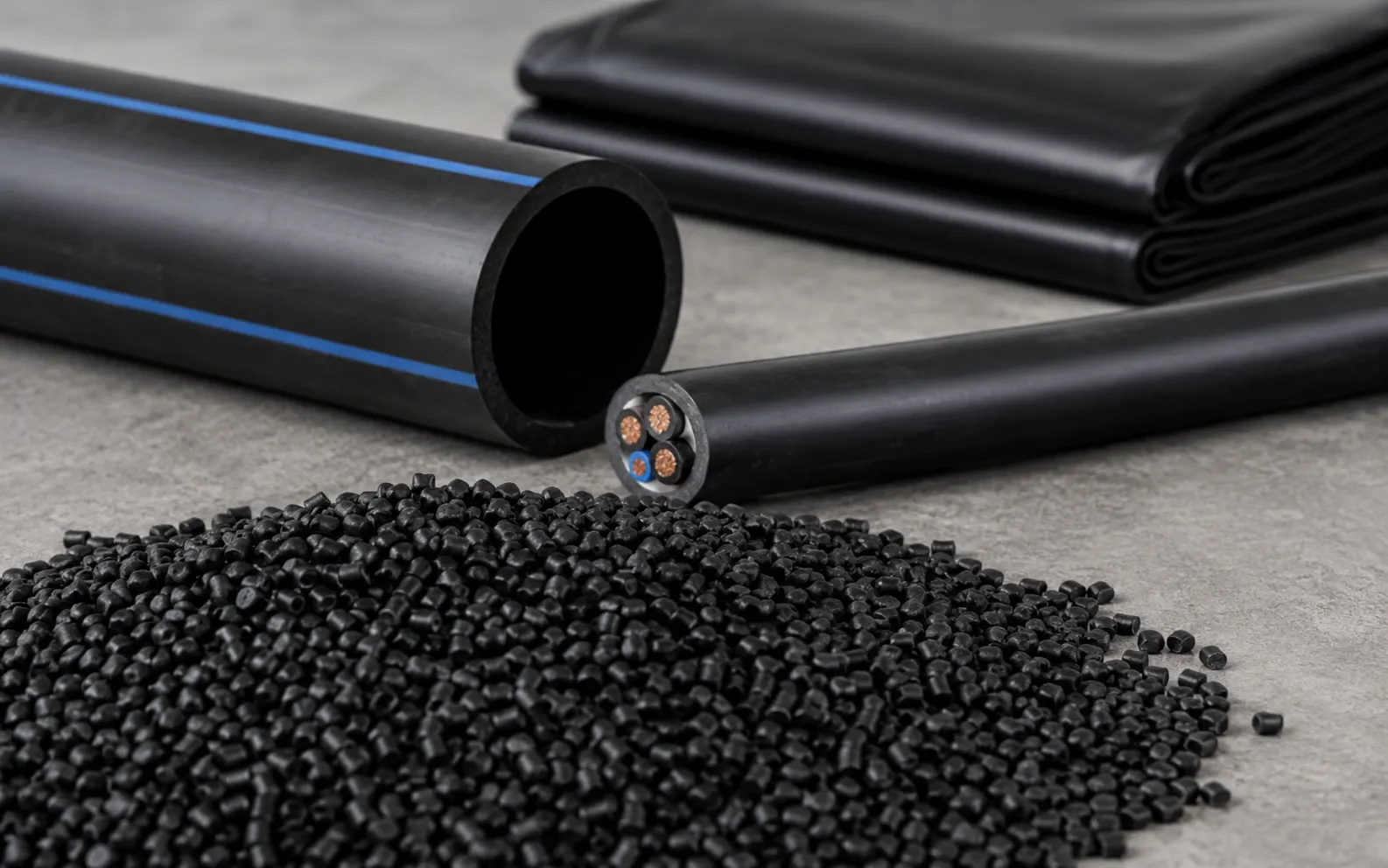
30–50% Loading
Carbon Black Masterbatch
- Pipes & conduits
- Cable jacketing
- UV-stable geomembranes
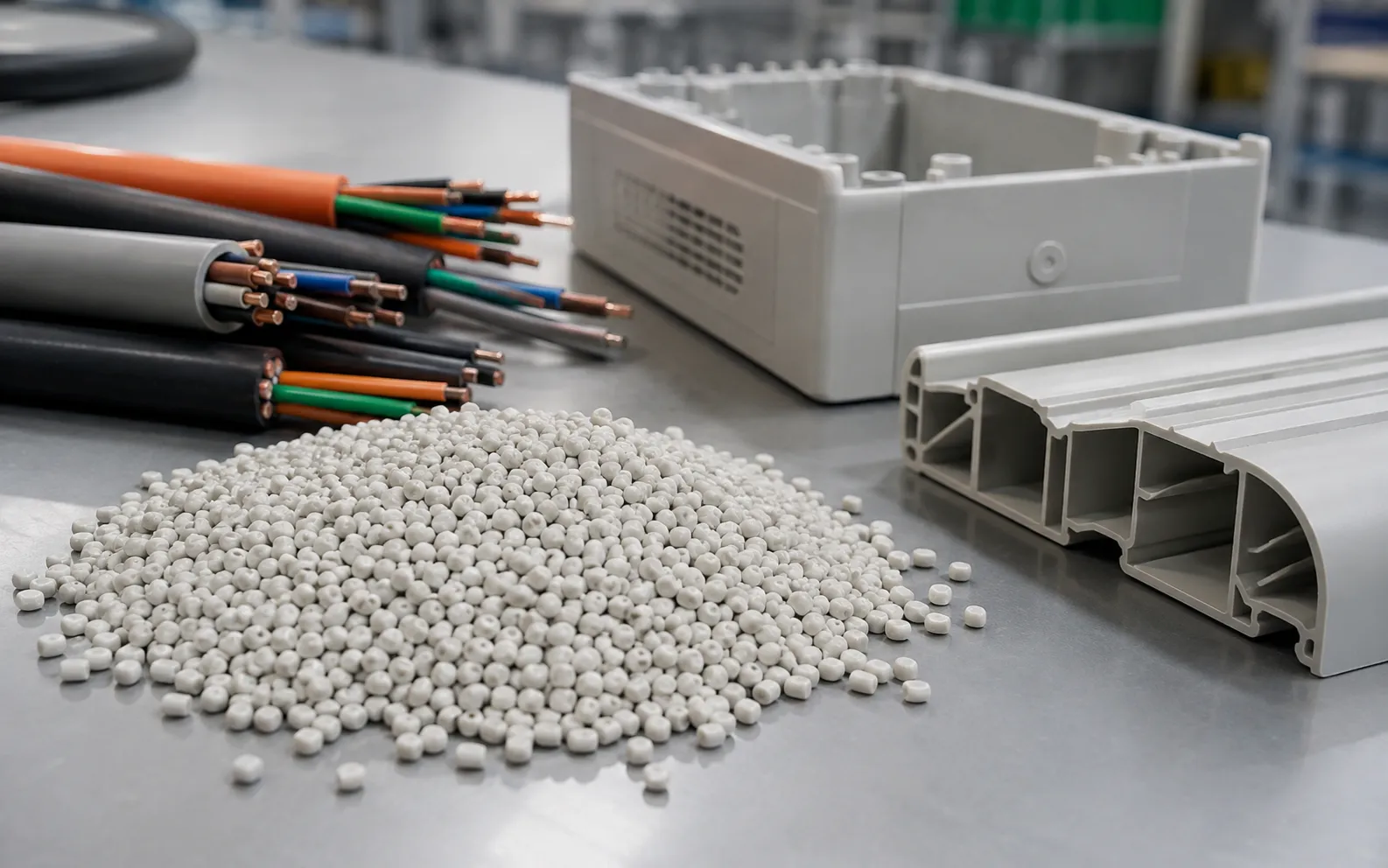
40–60% Loading
Flame-Retardant Masterbatch
- Wire & cable insulation
- Electronics housings
- Transport & building parts
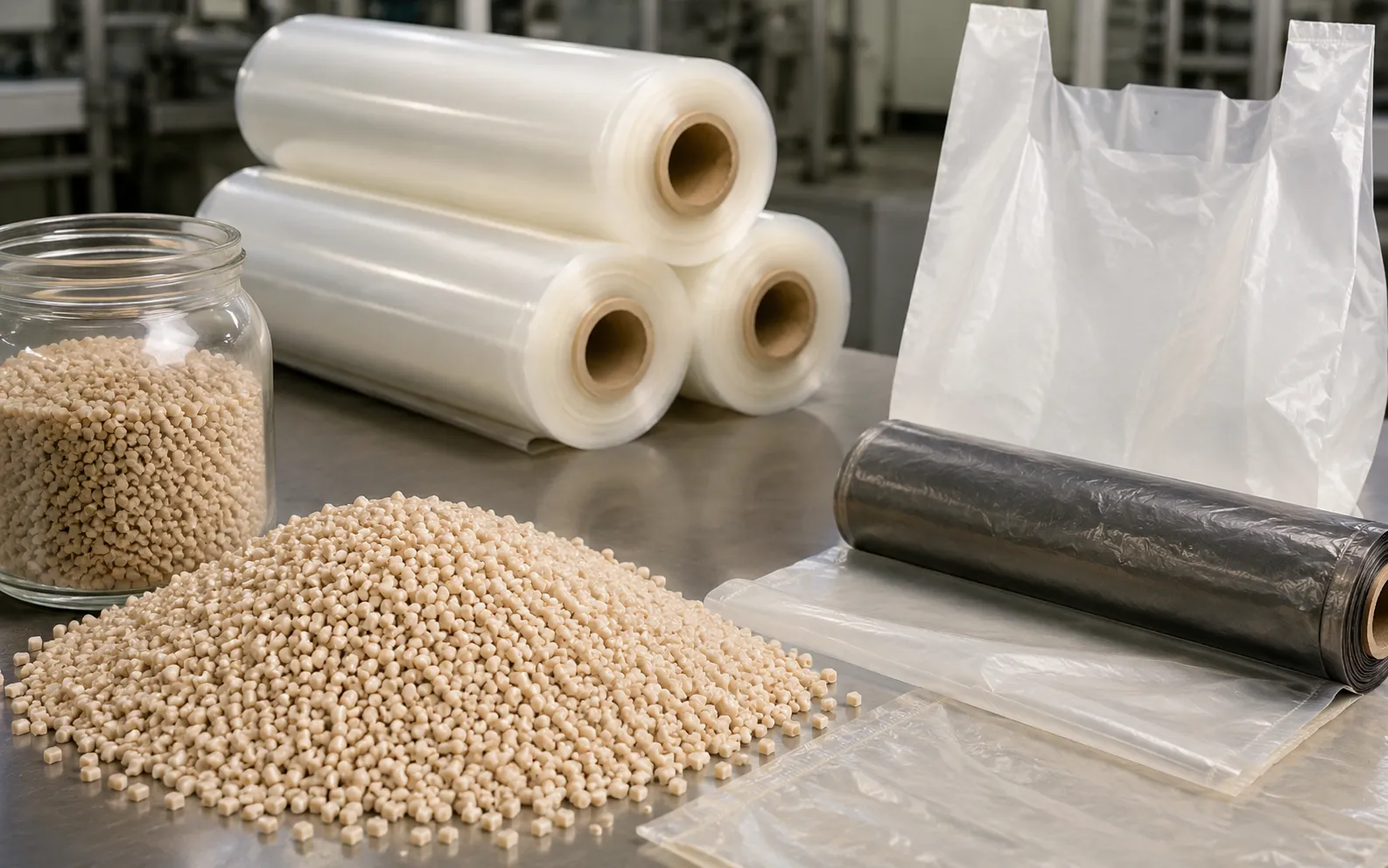
50–70% Loading
Bio-Based / Starch MB
- Compostable bags & film
- Food packaging
- Agricultural mulch film
Filler Masterbatch Compounding Extruder Technical Specifications
Complete parameters to help you select the right model for your filler type, loading rate and capacity requirements.
Filler Loading50–85%
Carrier ResinsPP / PE / ABS / EVA
Screw DesignCo-rotating Twin Screw
L/D Ratio34–44
Temp Control±1°C
PelletizingStrand / Water-Ring / Underwater
Control SystemPLC + Touch Screen
CertificatesCE / ISO / RoHS
| Model | L/D Ratio | Screw Speed (RPM) | Main Power (KW) | Capacity (kg/h) |
|---|---|---|---|---|
| UET55 | 34–38 | 450/600 | 55/75 | 180–280 |
| UET65 | 36–40 | 500/650 | 80/95 | 300–400 |
| UET75 | 38–42 | 500/600 | 120/145 | 500–650 |
| UET85 | 36–40 | 550/650 | 180/200 | 800–1000 |
| UET95 | 40–44 | 500/600 | 260/320 | 950–1200 |
How the Filler Masterbatch Compounding Extruder Works
Working principle of the line — numbered stations ①–⑥ match the step cards below the diagram.
1
Precision Feeding
Loss-in-weight feeders meter carrier resin and CaCO₃/talc at ±0.5% accuracy for a stable filler-to-polymer ratio.
2
High-Torque Drive
The gearbox delivers stable torque to the co-rotating screws, keeping shear consistent even under 85% filling.
3
Mixing, Melting & Venting
Kneading blocks disperse the filler while ±1°C zones protect the carrier; the vacuum vent strips volatiles for odor-free pellets.
4
Melt Filtration & Die
Continuous screen changers capture agglomerates before the purified melt is shaped into strands through the die head.
5
Cooling
Water bath or air cooling calibrates strand temperature and crystallinity before cutting for stable pellet quality.
6
Pelletizing & Packing
Strand or water-ring cutters produce uniform low-dust pellets, followed by screening and automatic packing.
6 Core Components of the Filler Masterbatch Compounding Extruder
Every component engineered for durability and consistent dispersion in demanding high-fill masterbatch applications.
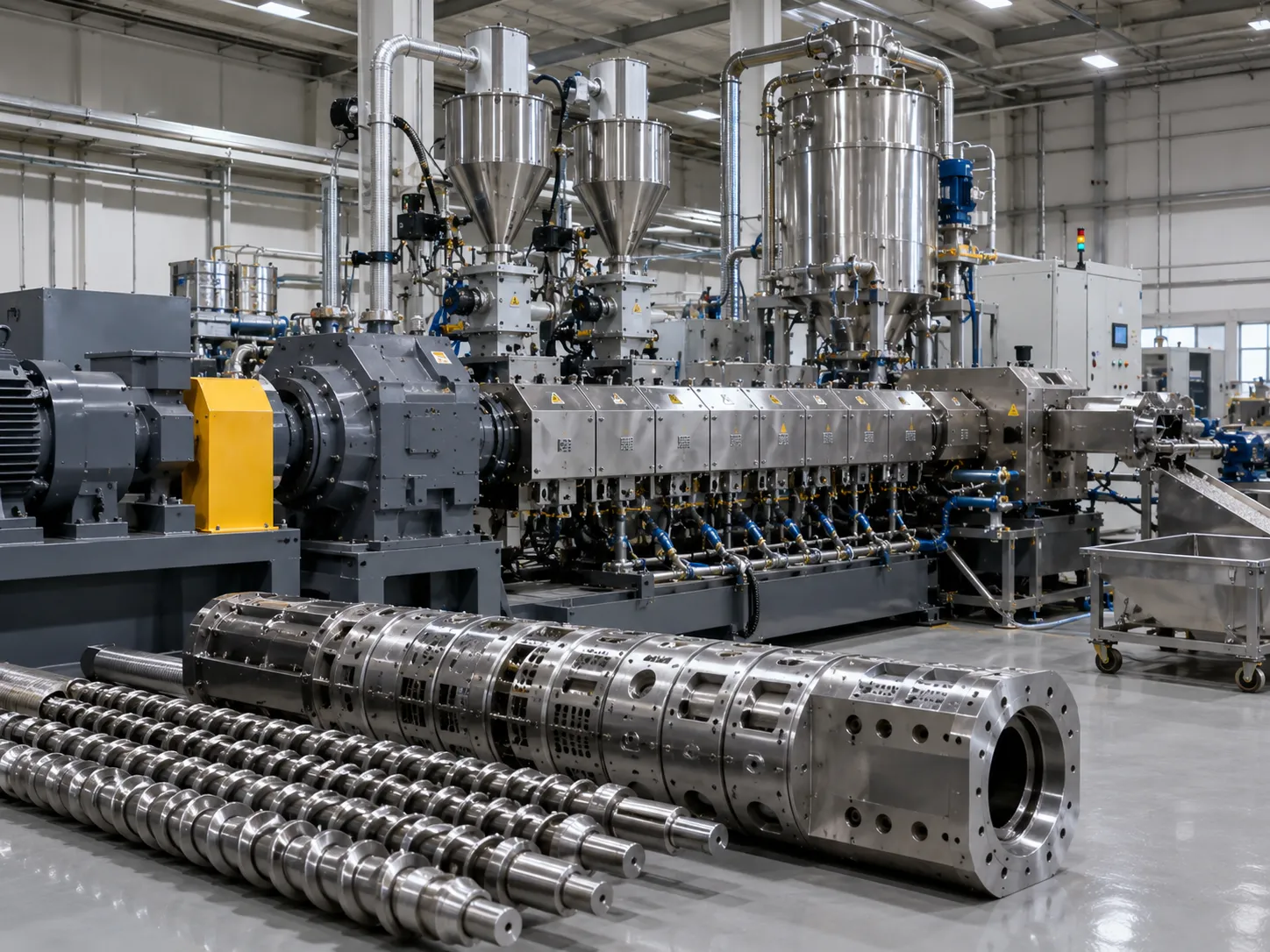
01
Screw Elements
Conveying, kneading and mixing elements in wear-resistant alloy — freely combinable per recipe.
02
Barrels & Liners
Segmented bimetallic barrels withstand abrasive high-fill melts; liners replace in minutes.
03
High-Torque Gearbox
Stable torque under 85% filling for consistent shear and throughput at high screw speed.
04
Loss-in-Weight Feeders
Twin-screw feeders with anti-bridging hoppers keep filler dosing accurate at ±0.5%.
05
Vacuum Devolatilization
Two-stage venting with sealed vacuum removes volatiles for automotive-grade output.
06
Pelletizing System
Strand, water-ring or underwater cutting for spherical, low-dust pellets at high throughput.
How to Choose the Right Filler Masterbatch Compounding Extruder
Five engineering factors our application engineers check first — the same checklist we use to size your line.
1
Target Output (kg/h)
Size the model to your rated output plus ~20% headroom; oversizing wastes energy, undersizing kills dispersion quality.
2
Filler Type & Loading Rate
Abrasiveness (talc > CaCO₃) decides screw/barrel metallurgy; loading rate decides torque grade and feeding strategy.
3
L/D Ratio
36–44 is the proven window for high-fill: enough residence time for dispersion without thermal degradation of the carrier.
4
Pelletizing Method
Strand cutting for economy; water-ring for balance; underwater for spherical, low-dust pellets demanded by film and fiber users.
5
Power Standard & Automation
Match voltage/frequency (e.g. 380V/50Hz/3-phase), PLC presets and feeding accuracy to your staffing and market compliance.
UET Machine — Filler Masterbatch Extruder Manufacturer & Supplier
Factory-direct compounding lines delivered to masterbatch producers in 80+ countries — 5,600+ machines since 2005.
Factory-Direct Pricing
No trading company markup — transparent, itemized quotations with no hidden fees.
Free Material Testing
Send your recipe to our test lab — feasibility confirmation and trial-run video within days.
Custom Engineering
Screw layout, L/D ratio and barrel zones tailored to your specific formula and output.
Export-Ready Packing
Seaworthy crate with CE certification and full shipping documents — door-to-door logistics.
Fast Lead Times
Standard models ship in 1–2 weeks; customized lines 4–6 weeks with expedited options.
Lifetime Support
24-month core warranty, 24/7 engineer response and lifetime spare parts at cost price.
Customer Reviews: Filler Masterbatch Compounding Extruder in Action
Verified feedback from filler masterbatch manufacturers running UET extruders worldwide.

Emma CarterProduction Manager · Pakistan
Verified
★★★★★
“Previous equipment struggled with 60% calcium carbonate. UET’s high-torque screw achieves 98% dispersion uniformity with 30% higher throughput — 15% energy savings paid for the machine in 18 months.”

Sophia RodriguezOperations Director · Mexico
Verified
★★★★★
“We switch between glass fiber and bio-based formulas daily. Changeover dropped from 2 hours to 40 minutes, and the formula storage feature is extremely practical — zero residue after 12 months.”

Olivia WilsonQuality Supervisor · Germany
Verified
★★★★★
“Food-contact grade masterbatch demands extreme cleanliness. REACH/RoHS compliance and stainless construction eliminated contamination risk — qualification rate rose from 92% to 99%.”

Michael BrownPlant Manager · Turkey
Verified
★★★★★
“High-fill flame retardant masterbatch destroyed screws every 3 months on our old line. UET’s chromium alloy shows only 5% wear after 8 months — maintenance cost down 30%.”
Filler Masterbatch Compounding Extruder Investment Guide
Transparent budgetary ranges by configuration. Exact itemized quote within 2 hours of receiving your requirements.
Standard Model
$25K–60K FOB Budgetary Range
Entry-level production with proven reliability for standard CaCO₃ filler masterbatch.
- UET55 / UET65 model
- Standard screw elements
- Basic PLC control
- Strand pelletizing
- 1-year warranty
High-Performance
$60K–150K FOB Budgetary Range
High-torque gearbox and ±1°C control for 800+ hour continuous high-fill operation.
- UET75 / UET85 model
- Wear-resistant alloy screws
- PLC touch-screen control
- Underwater pelletizing option
- 2-year core warranty
Custom Line
$150K–400K+ FOB Budgetary Range
Fully engineered solution with custom screws, integrated downstream and automation.
- UET95 or custom size
- Specialty alloy components
- Full automation package
- On-site commissioning
- Lifetime spare parts
Get your itemized quote within 2 hours — include: ① carrier resin & filler type · ② target loading % · ③ output (kg/h) · ④ plant power standard (e.g. 380V/50Hz/3-phase).
Filler Masterbatch Compounding Extruder: Frequently Asked Questions
Straight answers from the engineers who quote and commission these lines — the questions we hear most on pre-sale calls.
What is a Filler Masterbatch Compounding Extruder?
A Filler Masterbatch Compounding Extruder is a co-rotating twin-screw machine that melts carrier resin (PP/PE) and uniformly disperses high-concentration fillers such as CaCO₃, talc or BaSO₄, then pelletizes the melt into masterbatch granules used to cut downstream plastic product costs.
How does a Filler Masterbatch Compounding Extruder work?
Loss-in-weight feeders dose resin and filler into the barrel; co-rotating screws convey, shear and melt the mixture while kneading blocks disperse the filler; a vacuum vent removes volatiles; the melt is filtered, extruded through the die, cooled and cut into uniform pellets — exactly as shown in the principle diagram above.
Why does the Filler Masterbatch Compounding Extruder use co-rotating twin screws?
Co-rotating intermeshing screws generate strong dispersive and distributive mixing with tight temperature control, keeping dispersion uniform at 50–85% filler loading — a level single-screw designs cannot reach.
What fillers and loading rates can the Filler Masterbatch Compounding Extruder process?
30+ filler types including CaCO₃, talc, BaSO₄, silica, clay, carbon black, glass fiber and bio-based fillers, at 50–85% loading. For CaCO₃ in PP/PE the extruder commonly reaches 70–80% loading with 95%+ coating rate.
How does the Filler Masterbatch Compounding Extruder keep dispersion uniform at 80% loading?
A high-torque gearbox, modular kneading-block screw layout, ±1°C temperature control and ±0.5% loss-in-weight feeding work together to hold batch pass rate above 98% even at 80% CaCO₃ loading.
How long does delivery of a Filler Masterbatch Compounding Extruder take?
Standard models ship in 1–2 weeks; customized lines take 4–6 weeks as screw layout and barrel zones are engineered to your recipe. International shipping adds 7–15 days; expedited production is available.
What warranty and support come with the Filler Masterbatch Compounding Extruder?
A 12-month whole-machine warranty with 24 months on core components (screws, barrels, gearbox), 24/7 engineer response, operator training at commissioning and lifetime spare parts at cost price.
Related Extruder Solutions
Equipment that completes or complements your filler masterbatch production line.
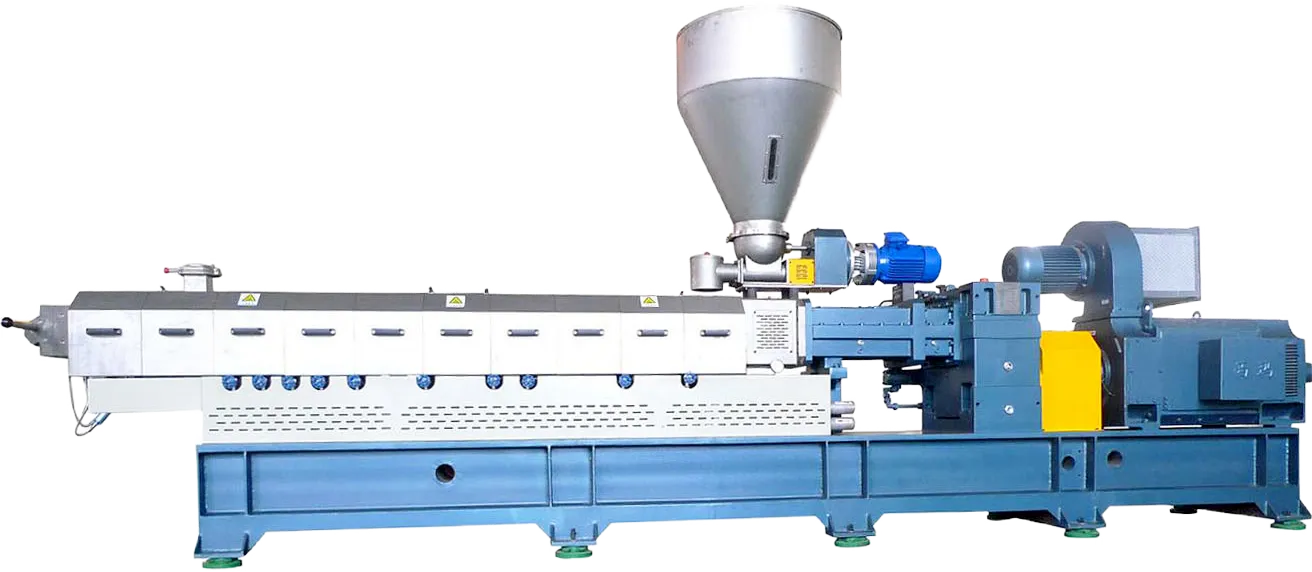
Twin Screw Extruder
The core platform behind every UET filler masterbatch line — high-torque co-rotating compounding, 80–2,500 kg/h.
View Details →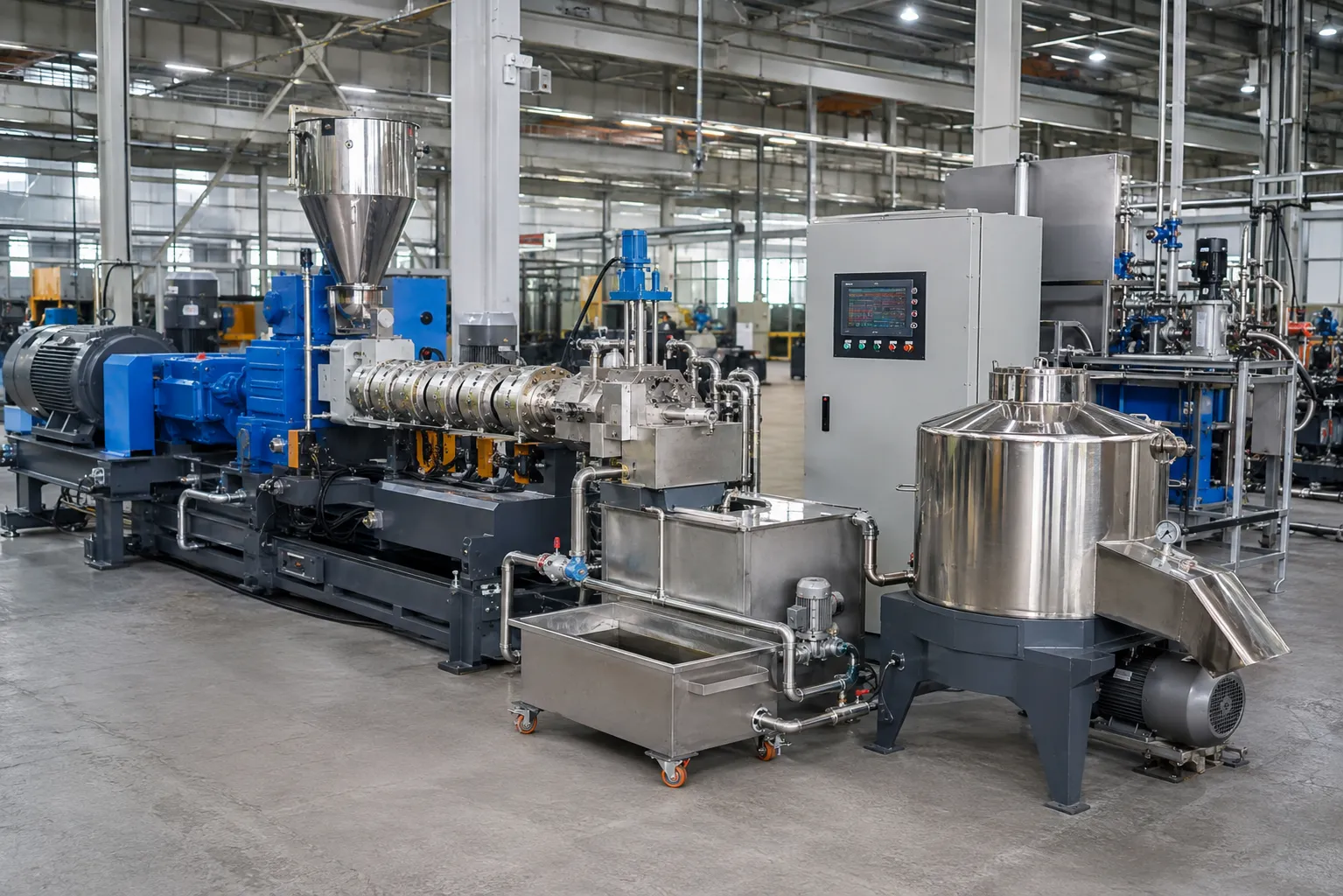
Underwater Pelletizing System
The downstream match for high-fill lines: spherical, low-dust masterbatch pellets at high throughput.
View Details →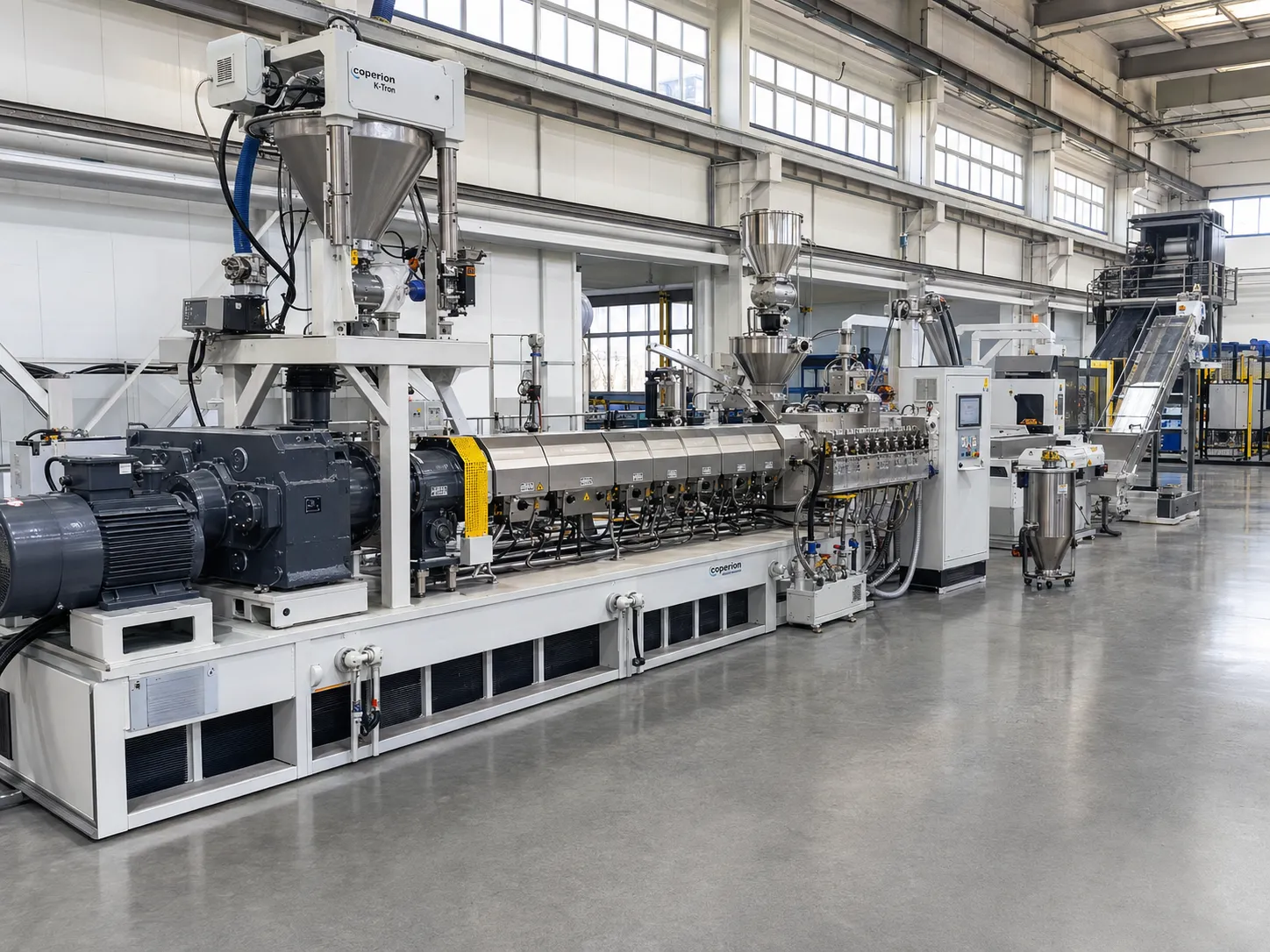
Plastic Compounding Machine
For even heavier fill loads and multi-material recipes beyond standard masterbatch lines.
View Details →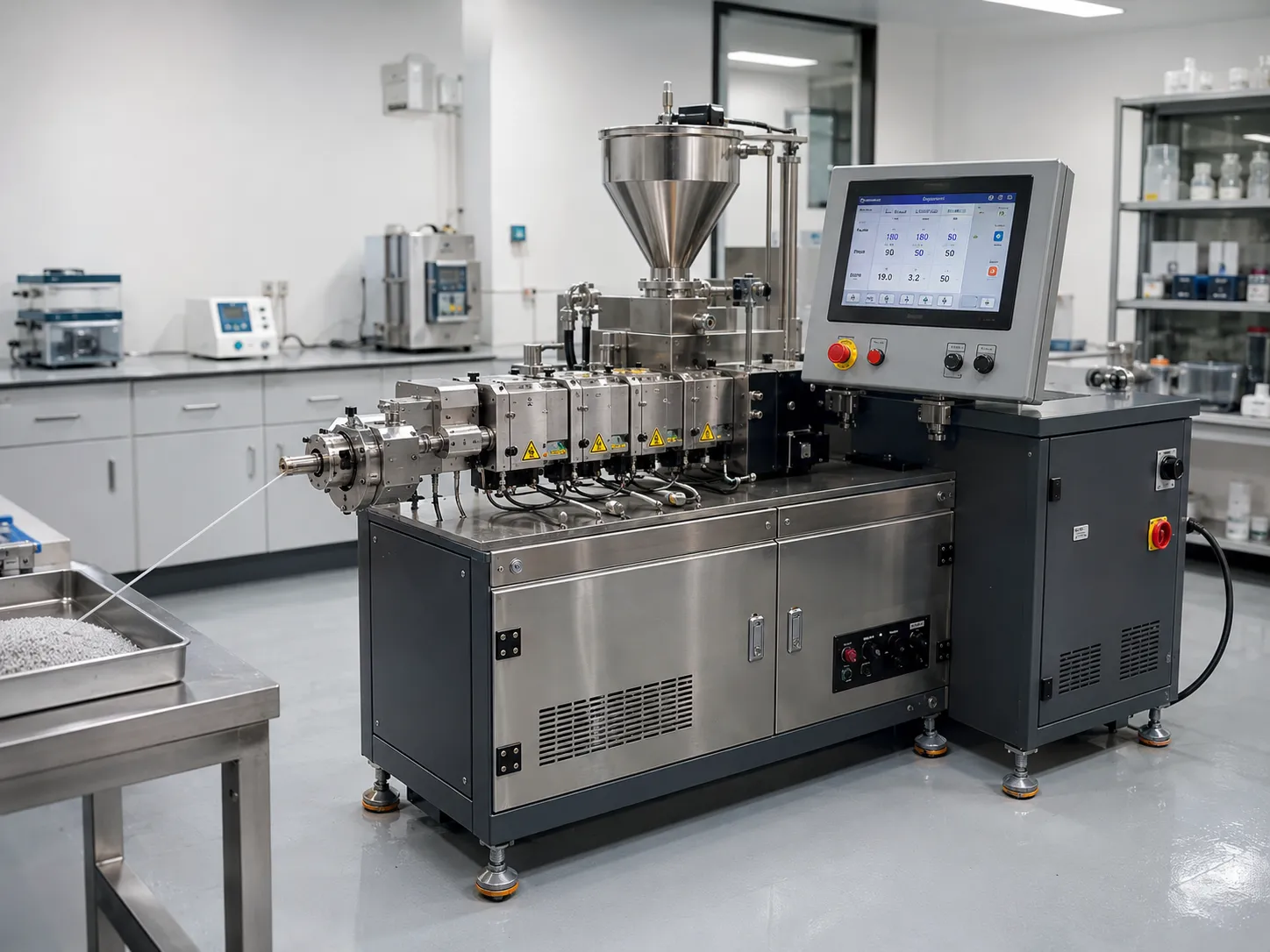
Laboratory Extruder
Validate fillers, loading rates and recipes on 1–5 kg/h lab scale before full-scale investment.
View Details →